
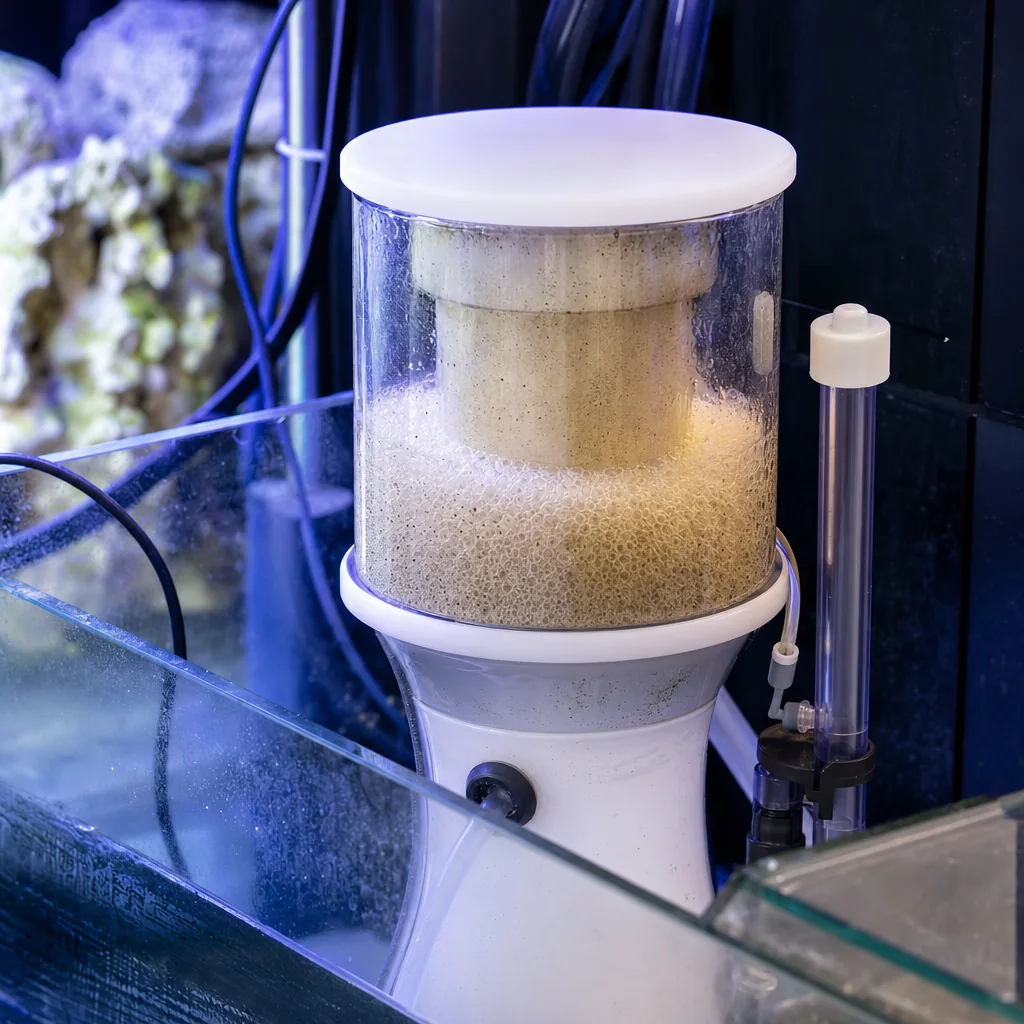
Few pieces of reef equipment generate more confusion than the protein skimmer. New reefers see this tall, bubbling cylinder with a collection cup full of foul brown gunk and wonder whether it’s essential or just an expensive accessory. The honest answer depends on your tank — but understanding what a skimmer actually does makes the decision easy. This guide explains the science in plain terms, covers when a skimmer earns its keep, and shows you how to tune one so it actually works.
What a Protein Skimmer Actually Does
A protein skimmer removes dissolved organic waste from saltwater before it breaks down into nitrate and phosphate. That’s the key distinction. Most filtration deals with waste after it’s already decomposed; a skimmer pulls it out earlier in the process.
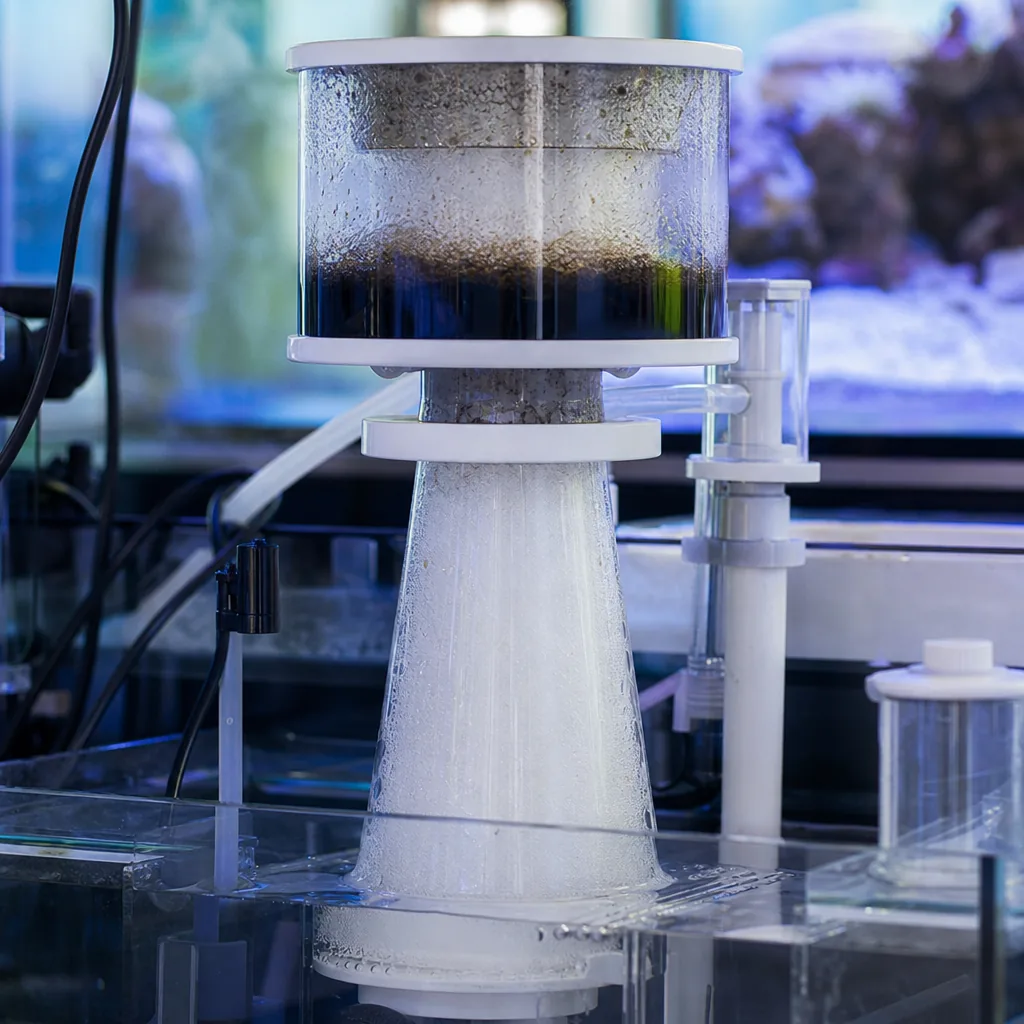
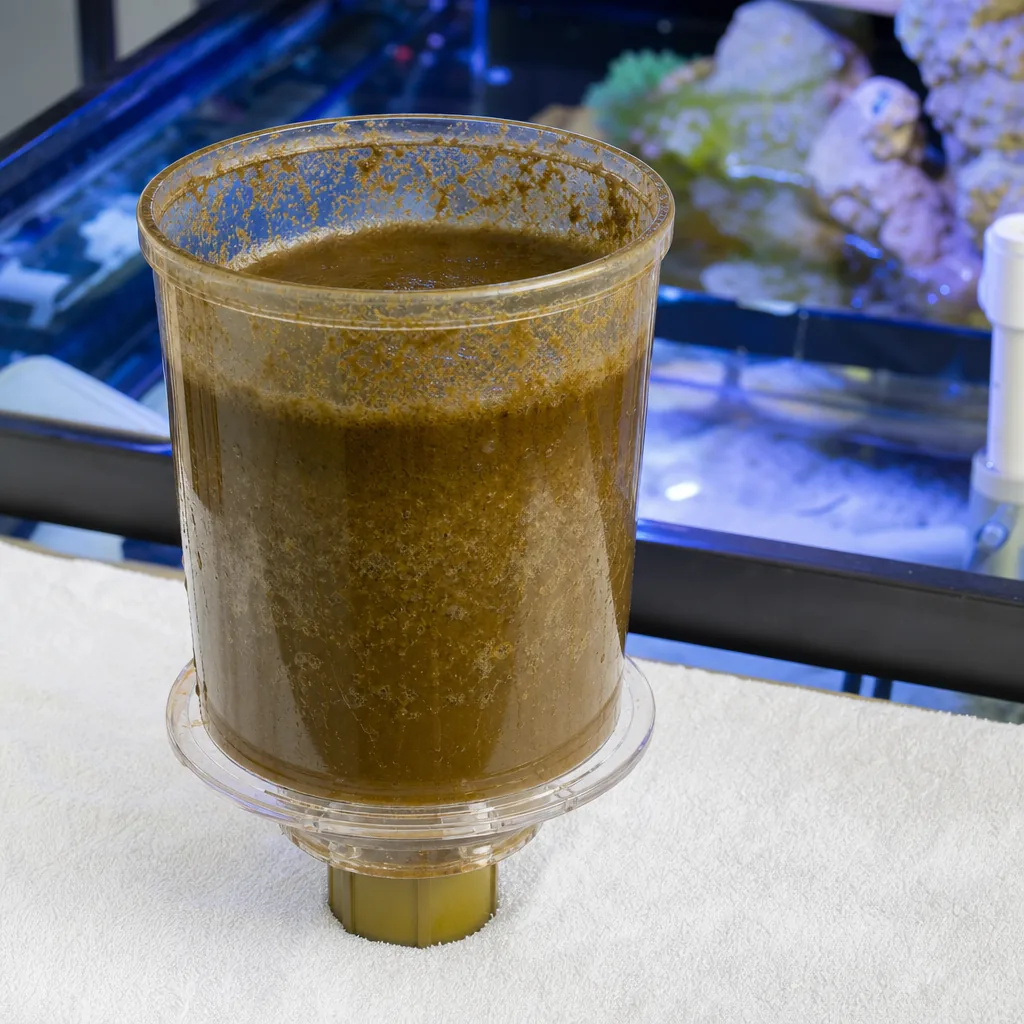
It works on a simple principle: organic molecules cling to the surface of air bubbles. A skimmer injects a dense column of fine bubbles into a contact chamber, and waste-laden bubbles rise into a collection cup as foam. When that foam collapses, you’re left with the dark, smelly liquid (“skimmate”) that you pour down the drain. Every cup you empty is waste that never got the chance to pollute your tank.
Why It Matters in Saltwater
Skimming is far more effective in saltwater than freshwater because of the water’s chemistry — saltwater produces the stable, fine bubbles skimmers depend on. That’s why protein skimmers are a saltwater and reef staple but rarely seen on freshwater tanks.
The benefits in a reef are real:
- Lower nutrients — removing organics before they decay keeps nitrate and phosphate down, which means less nuisance algae.
- Better oxygenation — all that bubble contact boosts gas exchange and raises dissolved oxygen.
- Clearer water — skimmed tanks often have that crisp, polished look.
- More stability — a lower, steadier nutrient load is easier on sensitive corals.

Do You Actually Need One?
Here’s the nuanced truth. A protein skimmer is strongly recommended but not strictly mandatory, and which side you land on depends on your setup.
You probably want a skimmer if:
- You keep a coral reef, especially with higher fish loads.
- Your tank is moderately to heavily stocked.
- You want to stretch the time between water changes.
- You’re battling persistent algae from excess nutrients.
You may be fine without one if:
- You run a lightly stocked nano tank where frequent water changes handle waste export easily.
- You keep a fish-only tank and stay on top of maintenance.
- You’re running an alternative nutrient-export method like a refugium with macroalgae.
For most reef keepers, a skimmer is worth it. On small tanks, diligent water changes can do the same job. Browse skimmer options sized to your tank on our recommended gear page.
Choosing the Right Skimmer
Skimmers are rated by the tank volume they can handle, but those ratings are optimistic, so size up rather than down. The main types:
- In-sump skimmers — the most common and effective, sitting in a sump below the tank. If you have a sump, this is the way to go.
- Hang-on-back (HOB) skimmers — for tanks without a sump. Convenient but generally less powerful.
- Nano skimmers — compact units for small all-in-one tanks.
Match the skimmer to your bioload, not just your gallons — a heavily stocked tank needs more skimming capacity than a sparse one of the same size. See our saltwater equipment guides for more.
Tuning a Skimmer Correctly
This is where new reefers struggle, because a fresh skimmer needs a break-in period. Expect a week or two of erratic, overflowing behavior before it settles — that’s normal as surfaces condition.
The dialing-in process
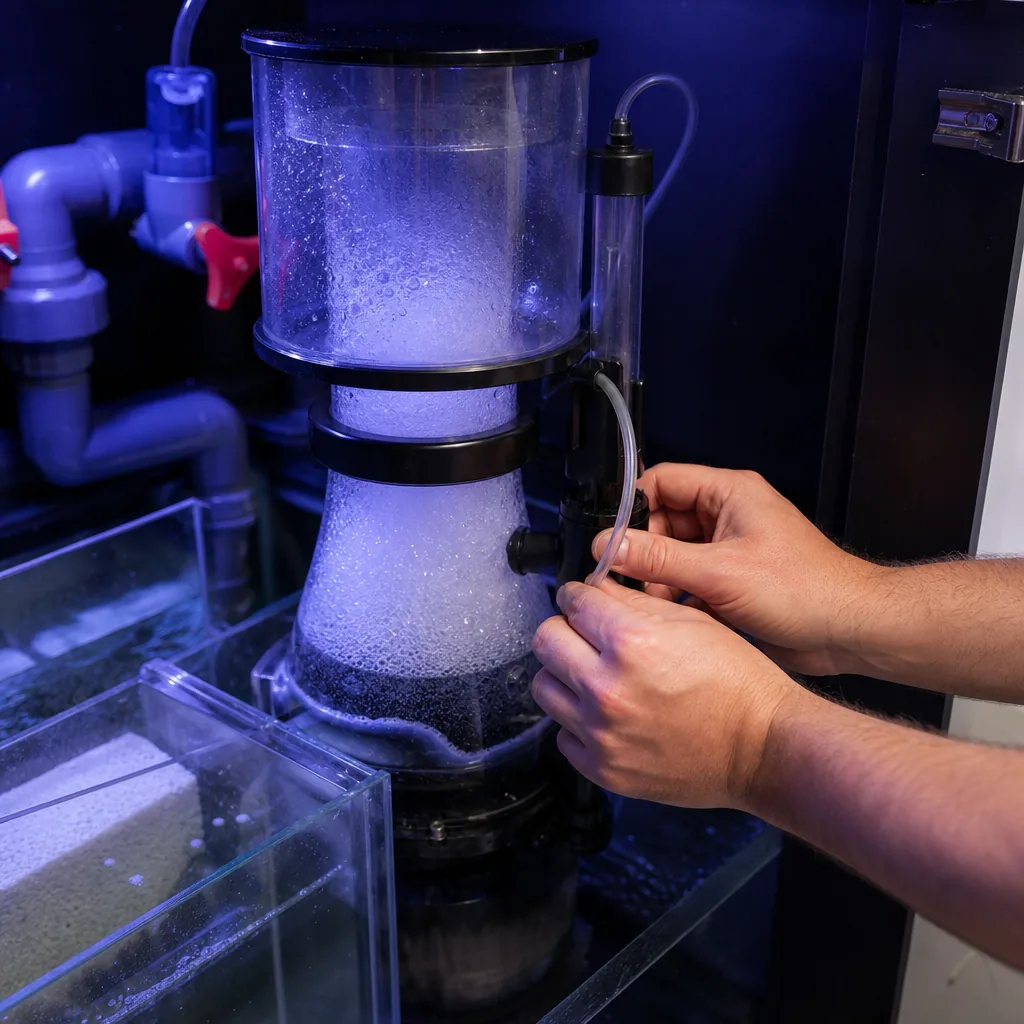
- Set the water level in the body per the manufacturer’s guidance — this controls how high the foam rises.
- Adjust the air or water valve to change foam density. More air makes wetter, faster-overflowing foam; less makes drier, more concentrated skimmate.
- Aim for a steady, controlled foam head that rises into the neck and collects slowly in the cup.
- Tune wet vs. dry to your preference — “wet” skimming pulls more volume of lighter waste, “dry” pulls less but more concentrated.
Be patient. A skimmer that overflows for the first few days hasn’t failed — it’s breaking in. Give it time before adjusting aggressively.
Maintenance
Skimmer upkeep is simple but regular. Empty and rinse the collection cup before it overflows — weekly for most tanks. Clean the neck and cup periodically, since a film of grime there reduces efficiency. And every so often, pull the pump for a deep clean to keep the bubble production strong.
Conclusion
A protein skimmer is one of the most useful tools in reefkeeping: it exports waste before it pollutes, boosts oxygen, and helps keep nutrients and algae in check. It’s not absolutely mandatory — small, lightly stocked tanks with disciplined water changes can manage without one — but for most reef tanks it’s worth the investment. Buy one rated above your tank size, be patient during break-in, and tune it slowly. Explore more reef gear guides on AquaticRig.
Frequently Asked Questions
Do I need a protein skimmer for a saltwater tank?
It’s strongly recommended for reef tanks and moderately to heavily stocked systems, though not strictly mandatory. Small, lightly stocked nano tanks with frequent water changes can often manage without one.
Why is my new skimmer overflowing?
A fresh skimmer needs a break-in period of a week or two during which it often behaves erratically and overflows. This is normal as the internal surfaces condition, so give it time before making aggressive adjustments.
Can I use a protein skimmer in freshwater?
Not effectively — skimmers rely on the fine, stable bubbles that saltwater produces, which freshwater doesn’t. That’s why protein skimmers are a saltwater-only piece of equipment.
Should I skim wet or dry?
Wet skimming pulls a larger volume of lighter waste, while dry skimming removes less but more concentrated skimmate. Many reefers run slightly dry for efficiency, but it comes down to your tank’s needs and preference.
What size skimmer should I buy?
Buy one rated above your actual tank volume, since manufacturer ratings tend to be optimistic. Match it to your bioload too — a heavily stocked tank needs more skimming capacity than a sparse one of the same size.