
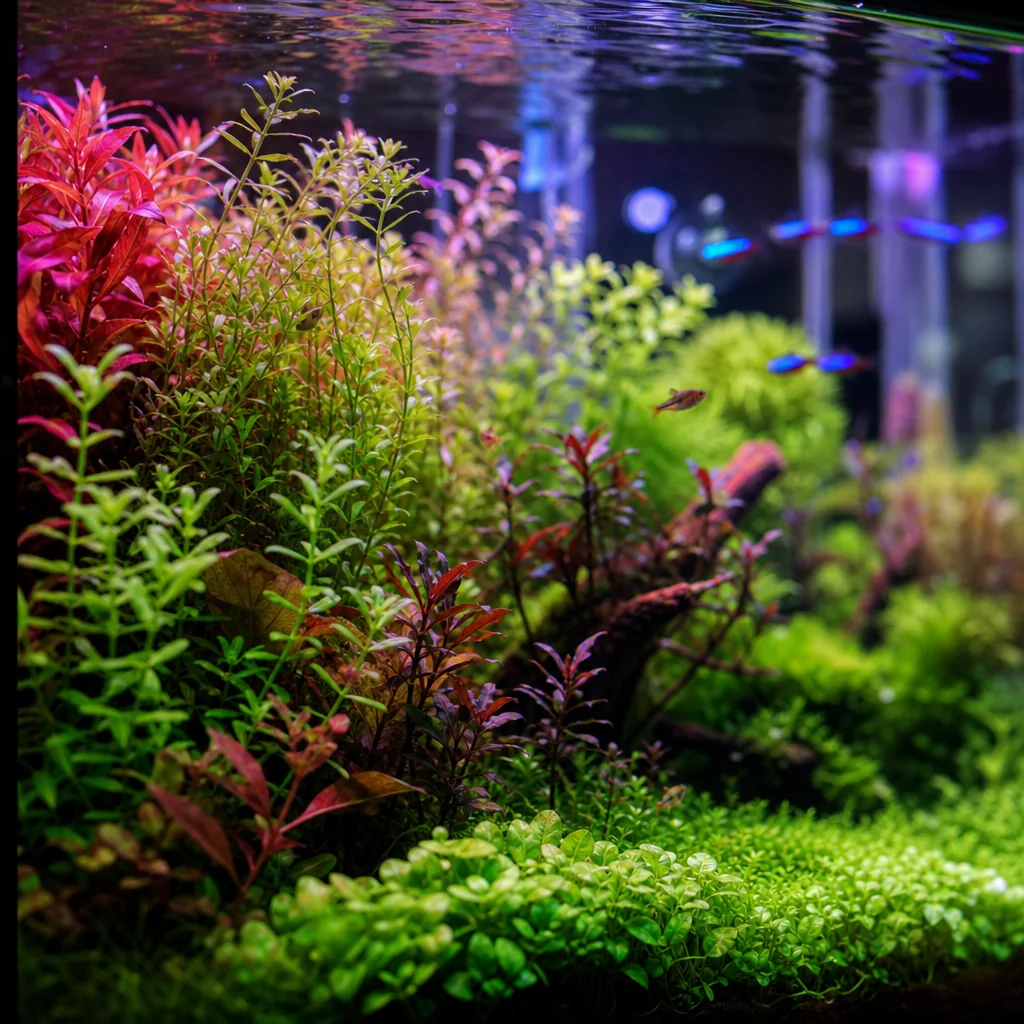
Lighting is one of the most misunderstood parts of the hobby. Too little and your plants stall; too much and you’re scrubbing algae every weekend. The right amount depends almost entirely on what you’re keeping — so let’s match the light to the tank instead of guessing.
First, what lighting actually does
Light serves two jobs in an aquarium. For fish-only tanks, it’s mostly about visibility and showing off your fish. For planted tanks and reefs, light is fuel — plants and corals use it to photosynthesize and grow. That distinction is the key to everything below: a fish-only tank needs very different lighting than a high-tech planted tank or a reef.
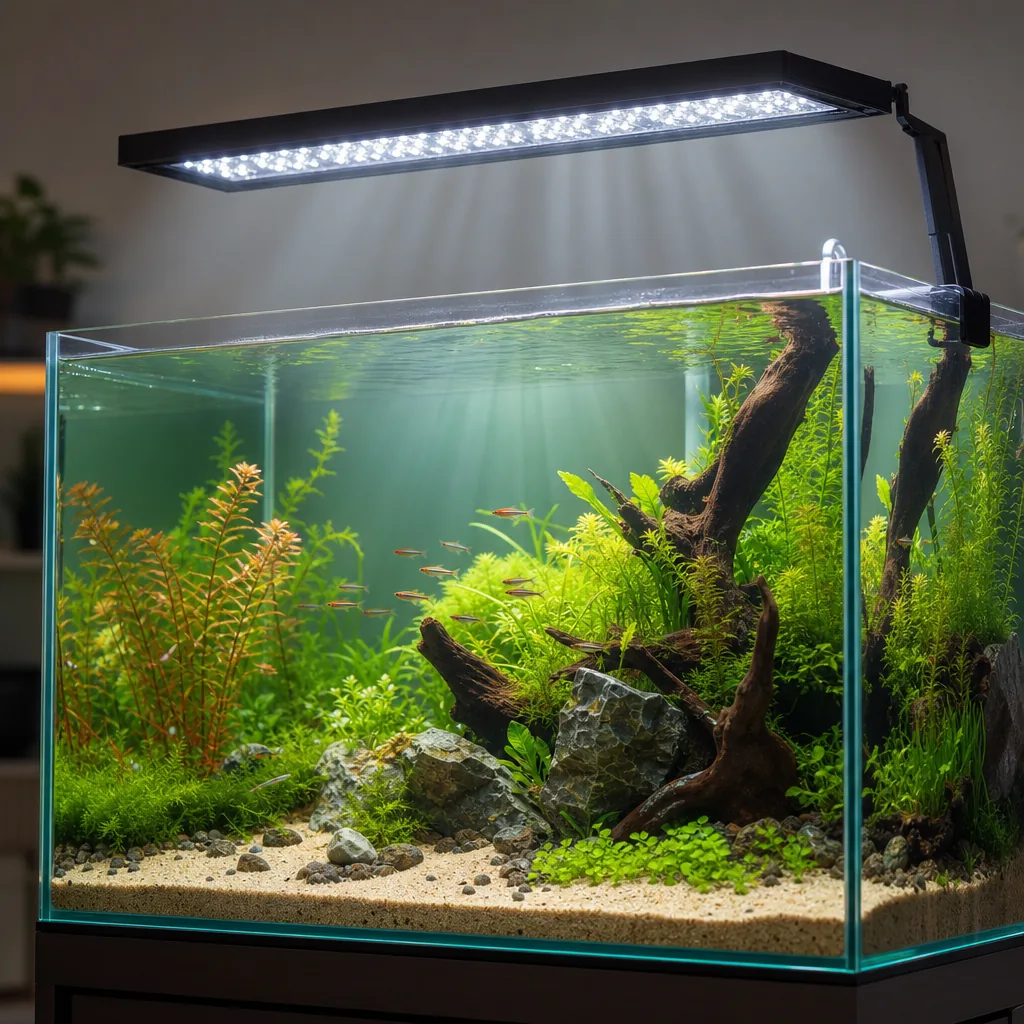
Lighting by tank type
Fish-only tanks
If you’re keeping fish without live plants or corals, your lighting needs are simple. You want enough light to see and enjoy the tank, with a color temperature that makes your fish look good. There’s no growth requirement, so modest, affordable LED lighting is plenty. The main caution: more light than you need just feeds algae, so don’t over-buy here.
Low-tech planted tanks
Low-tech planted tanks rely on hardy plants (think java fern, anubias, cryptocoryne) without injected CO2. These plants thrive under low-to-moderate light. A modest planted-specific LED fixture is ideal — strong enough to grow your plants steadily, gentle enough that you won’t trigger constant algae blooms. This is the sweet spot for most beginners who want greenery without a lot of fuss. Start exploring options on our freshwater page.
High-tech planted tanks
If you’re chasing lush carpets, red plants, and fast growth, you’re in high-tech territory: stronger lighting paired with CO2 injection and regular fertilization. Higher light drives faster photosynthesis — but only if CO2 and nutrients keep pace. This is where balance becomes critical, because intense light without matching CO2 and ferts is a recipe for algae. High-tech is rewarding, but it’s a system, not just a brighter bulb.
Reef tanks
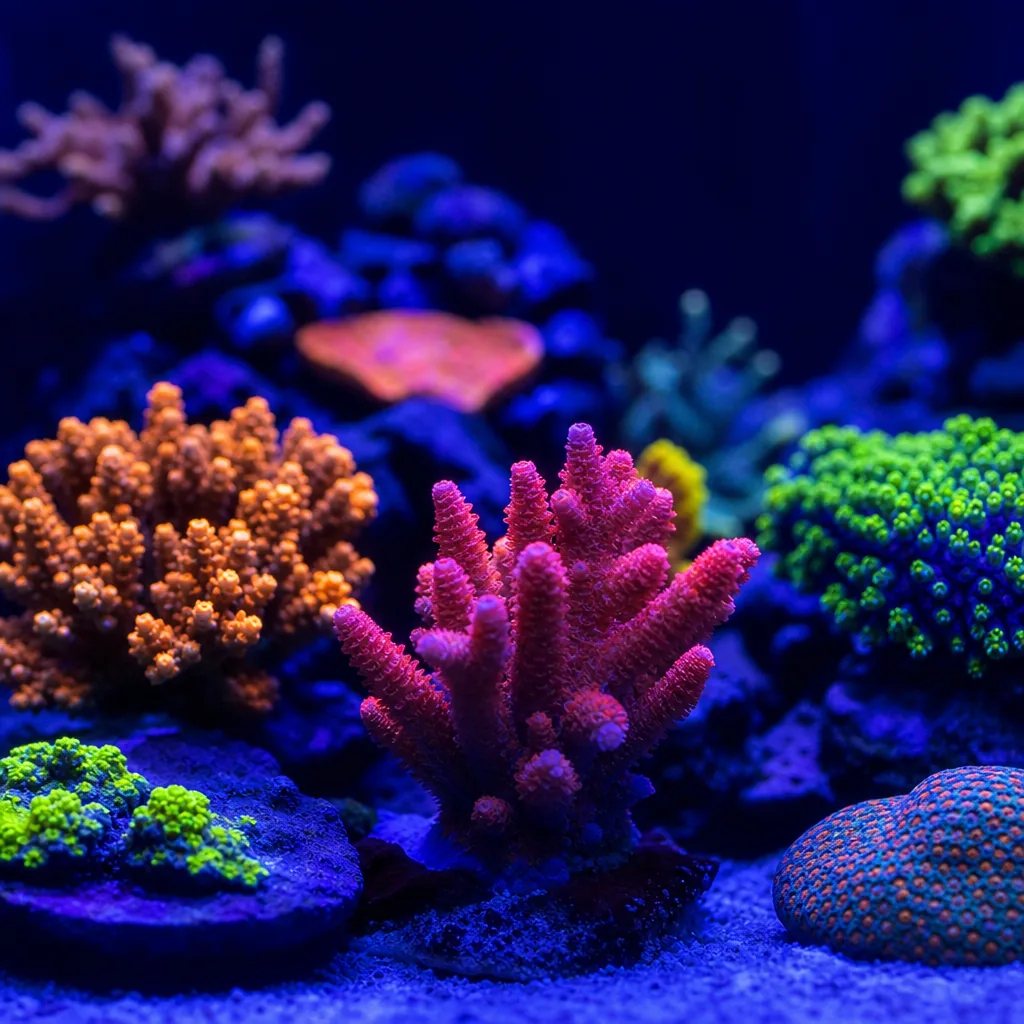
Corals are the most demanding lighting customers in the hobby. Many corals host symbiotic algae that need substantial light to survive, and different corals have different needs — soft corals tolerate lower light, while many SPS corals demand a lot. Reef lighting also leans heavily into the blue spectrum, which corals use efficiently and which makes them fluoresce beautifully. Reef-specific fixtures are designed for exactly this. See what’s involved on our saltwater page.
Spectrum and Kelvin: the color of your light
Kelvin (K) describes the color temperature of light. Lower numbers look warmer (yellow/orange); higher numbers look cooler (blue/white).
- Freshwater and planted tanks generally look great and grow well in the roughly 6,500K to 7,000K “daylight” range, which renders plant greens and fish colors naturally.
- Reef tanks trend much bluer, often well above 10,000K with heavy actinic (blue) output, because corals use blue wavelengths efficiently and pop under them.
The practical point: pick a fixture whose spectrum suits your livestock. A warm bulb that flatters a planted tank isn’t what your corals want, and vice versa.
Intensity and PAR, in plain English
You’ll eventually hear the term PAR (Photosynthetically Active Radiation). It measures the amount of usable light reaching your plants or corals — and unlike watts or lumens, it actually reflects what your livestock can use to grow. PAR drops off with depth and distance, so a tall tank needs more output at the surface to deliver usable light at the bottom.
You don’t need a PAR meter as a beginner. Just understand the principle: deeper tanks and light-hungry livestock need more intense fixtures, while shallow tanks and low-light plants need much less. Match intensity to your goals rather than buying the brightest light available.
Photoperiod: how long to run your light
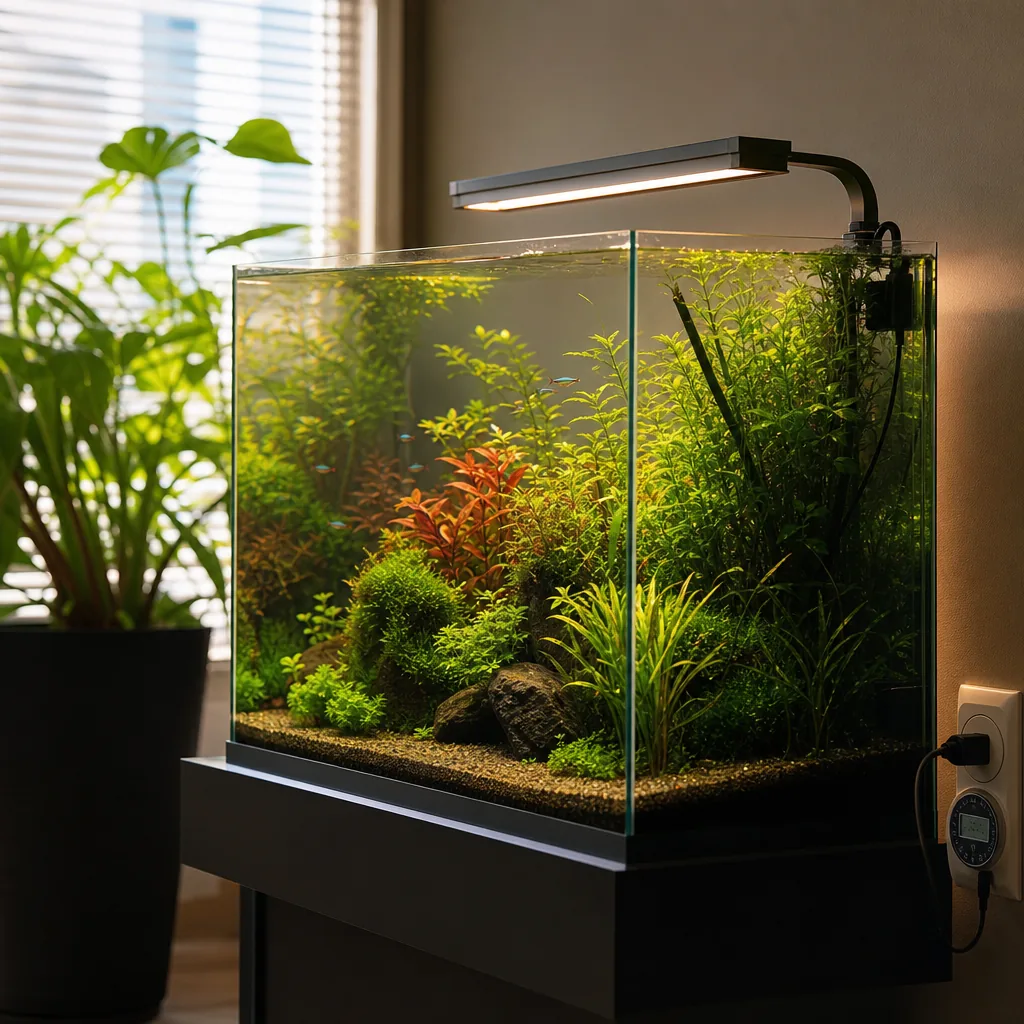
Duration matters as much as intensity. A common, sensible starting point for most tanks is around 6 to 8 hours of light per day. Running lights too long — or leaving them on all day because the tank is in a bright room — is one of the fastest ways to invite algae.
A few practical tips:
- Use a timer. Consistency keeps plants and fish on a stable rhythm and prevents accidental marathon light sessions.
- Start short and adjust. Begin on the lower end and increase only if plants need it.
- Keep tanks out of direct sunlight. Sun plus aquarium light is an algae accelerator.
Avoiding algae: it’s about balance
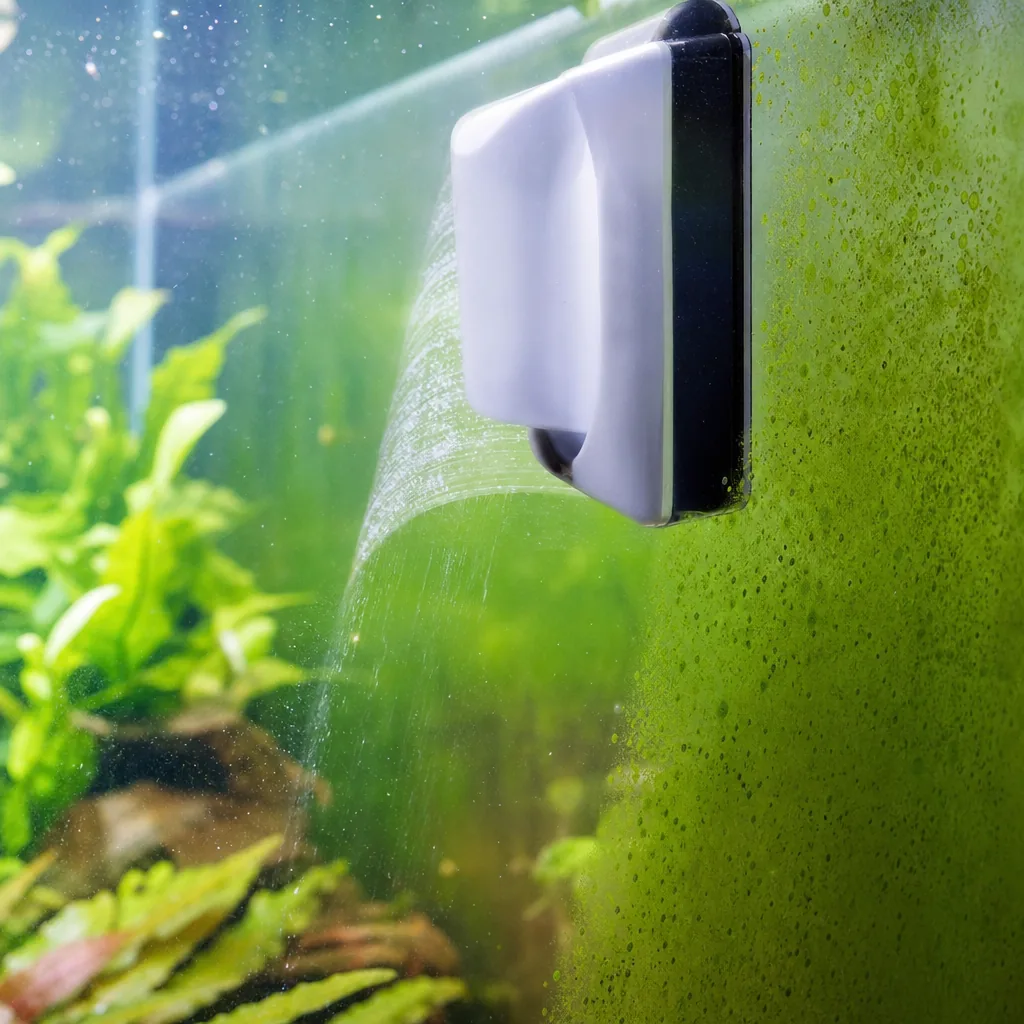
Algae isn’t a sign you have light — it’s a sign your light, nutrients, and CO2 are out of balance. The most common culprit is too much light (too intense, too long) relative to what your plants can use. Excess light energy that plants can’t consume gets claimed by algae instead.
To keep it in check:
- Don’t over-light a low-tech tank.
- Keep your photoperiod reasonable and consistent.
- Stay on top of water changes and avoid overfeeding, since excess nutrients fuel algae.
- In high-tech tanks, make sure CO2 and ferts match your light level.
How to choose a fixture
With the above in mind, here’s a simple decision path:
- Identify your tank type first — fish-only, low-tech planted, high-tech planted, or reef. This dictates everything.
- Match the spectrum to your livestock (daylight-range for freshwater/plants, blue-heavy for reef).
- Match the intensity to your tank depth and how demanding your plants or corals are.
- Confirm fit for your tank’s length, and prefer a fixture with a timer or built-in scheduling.
- Don’t overbuy. The most expensive reef light is wasted (and algae-prone) on a fish-only tank.
When you’re ready to compare, browse lighting options suited to each tank type.
Bottom line
There’s no single “right” amount of light — there’s the right amount for your tank. Fish-only setups need just enough to see by; low-tech plants want gentle, steady light; high-tech tanks and reefs demand strong, properly matched fixtures with the right spectrum. Pick lighting based on your livestock, keep your photoperiod reasonable with a timer, and treat algae as a balance problem rather than a lighting problem. Get those basics right and your tank will look its best with far less hassle.
Frequently Asked Questions
How many hours should aquarium lights be on?
6-8 hours a day suits most tanks. Longer photoperiods mainly encourage algae unless you are running demanding plants or corals.
Do fish-only tanks need special lighting?
No. A fish-only tank just needs enough light to view the fish. Intense full-spectrum lighting matters most for live plants and corals.
Will too much light cause algae?
Yes. Excessive light duration or intensity, especially combined with extra nutrients, is one of the most common algae triggers. A timer keeps it consistent.
Should I use a timer for my aquarium light?
Definitely. A consistent on and off schedule reduces algae and stress. Inexpensive outlet timers and built-in app timers both work well.
What is the difference between watts and PAR?
Watts measure power draw, not usable light. PAR measures the light corals and plants can actually photosynthesize with, so it is the more meaningful number for planted and reef tanks.