
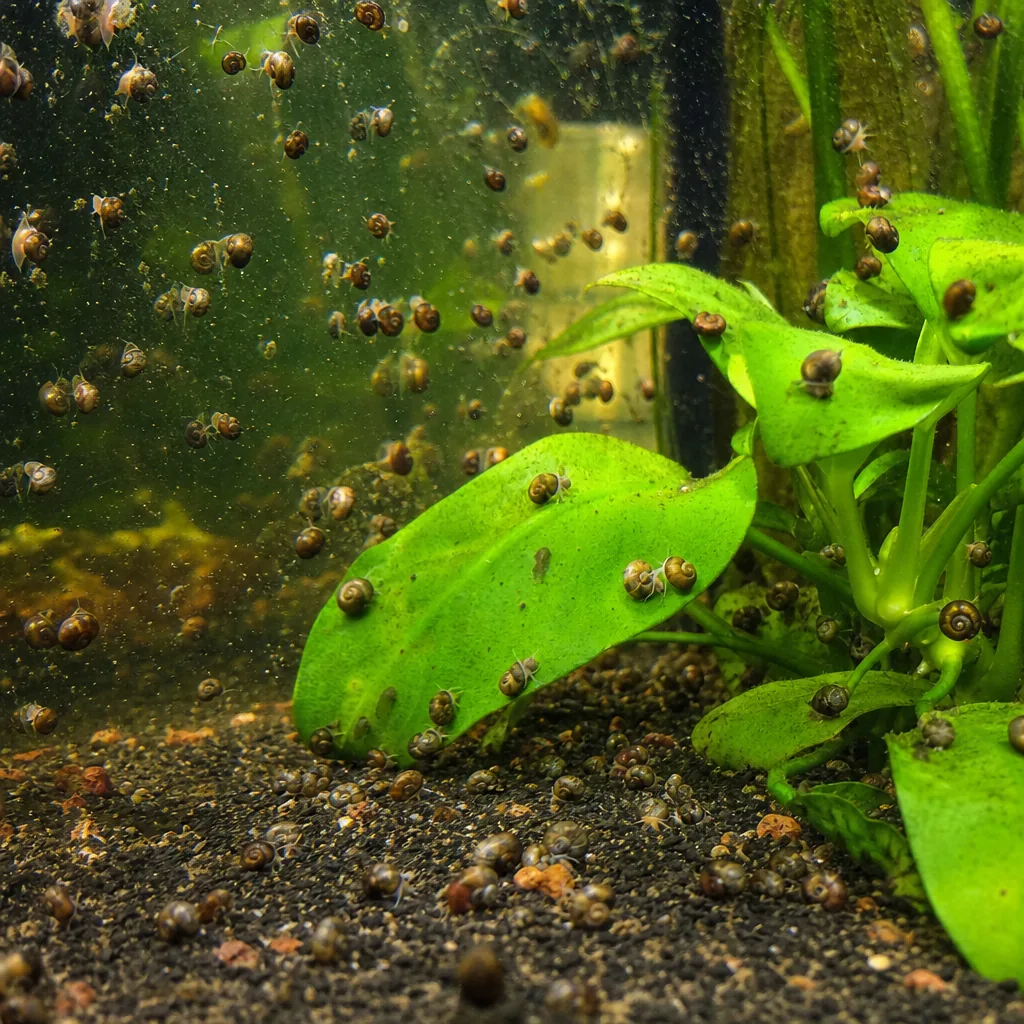
A sudden bloom of tiny snails is one of the most common things aquarists panic about, and I want to start with the part that actually solves it: pest snails are a symptom, not the disease. They exploded because there is excess food in the tank. Remove the food source and you remove the snails’ ability to breed, and every other method works better on top of that. Here is how to clear an infestation and keep it gone.
First, Know What You’re Dealing With
The usual culprits are bladder snails, pond snails, and sometimes ramshorns. They hitchhike in on plants, decorations, or fish bags as eggs, then multiply fast because a young tank with regular feedings gives them endless food. They are not harmful; they won’t hurt fish or eat healthy plants, and they even help break down waste. But their numbers can get genuinely unpleasant.
Step One: Cut the Food Supply
This is the fix that makes everything else stick. Snail populations track the available food, so if the tank is overrun, you are almost certainly overfeeding.
- Feed less, and only what your fish clear in a couple of minutes.
- Remove uneaten food promptly instead of letting it sink and rot.
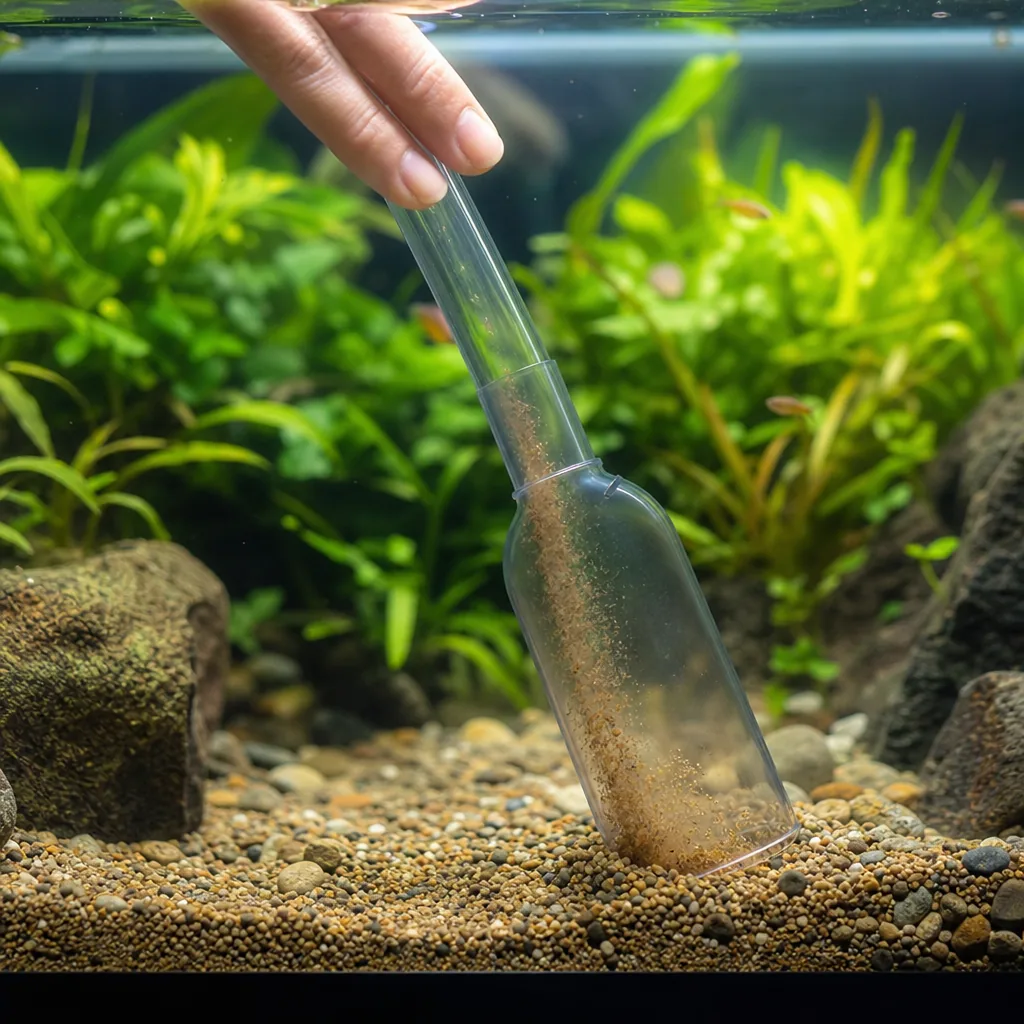
- Vacuum the substrate during water changes to pull out trapped detritus.
- Trim and remove decaying plant matter, a favorite snail food.
Do this consistently and the population will stop growing and begin to shrink on its own. Everything below simply speeds it up. Our maintenance guides cover a feeding routine that keeps snails in check.
Step Two: Manual Removal
The most reliable hands-on method costs nothing and works nightly. Snails are most active after dark, so an evening pass catches the most.
- Pick out visible snails by hand at the end of the day.
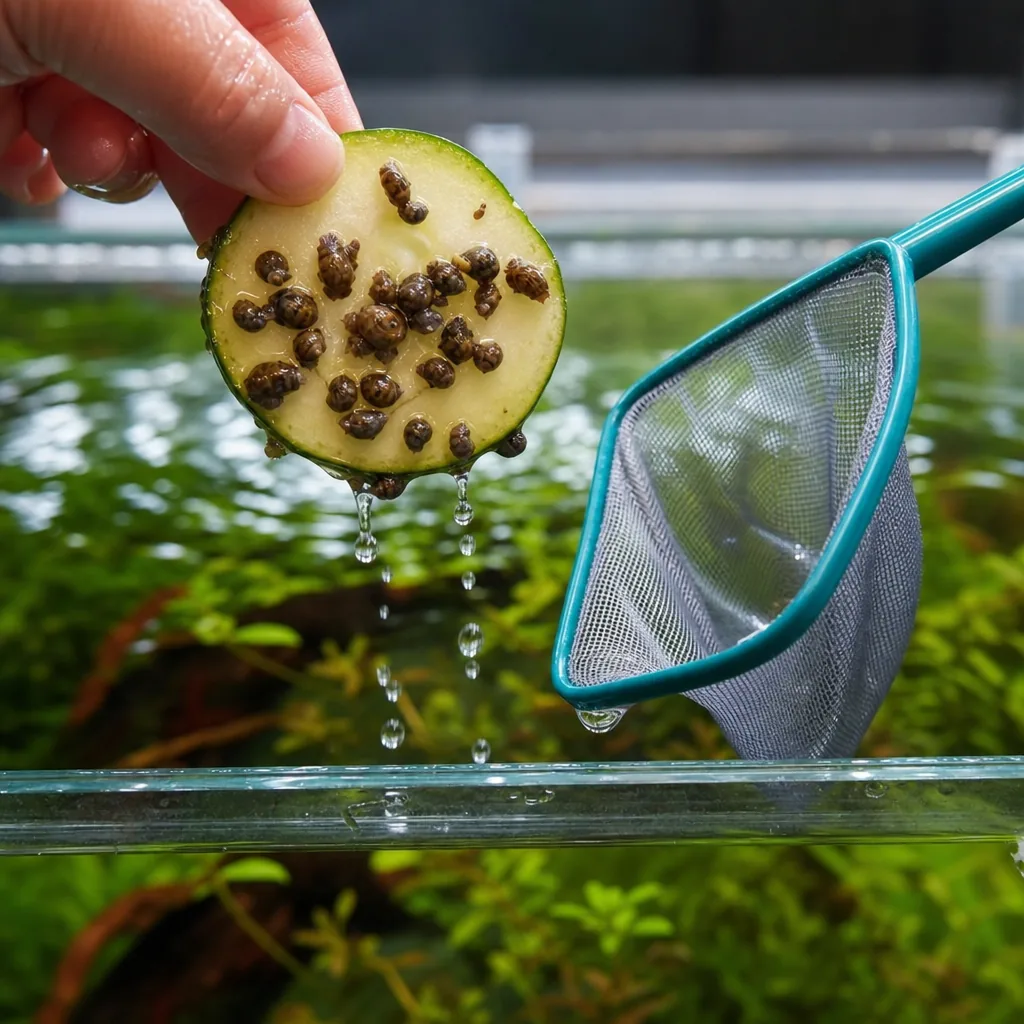
- Set a trap: place a blanched vegetable (zucchini, cucumber, lettuce) or an algae wafer in the tank overnight. Snails swarm it, and in the morning you lift the whole thing out covered in snails.
- Repeat the trap nightly for a week or two. Combined with reduced feeding, it thins the population dramatically.
Step Three: Add a Natural Predator
Certain animals eat pest snails, and used carefully they provide ongoing control. Choose one that fits your tank size and community.
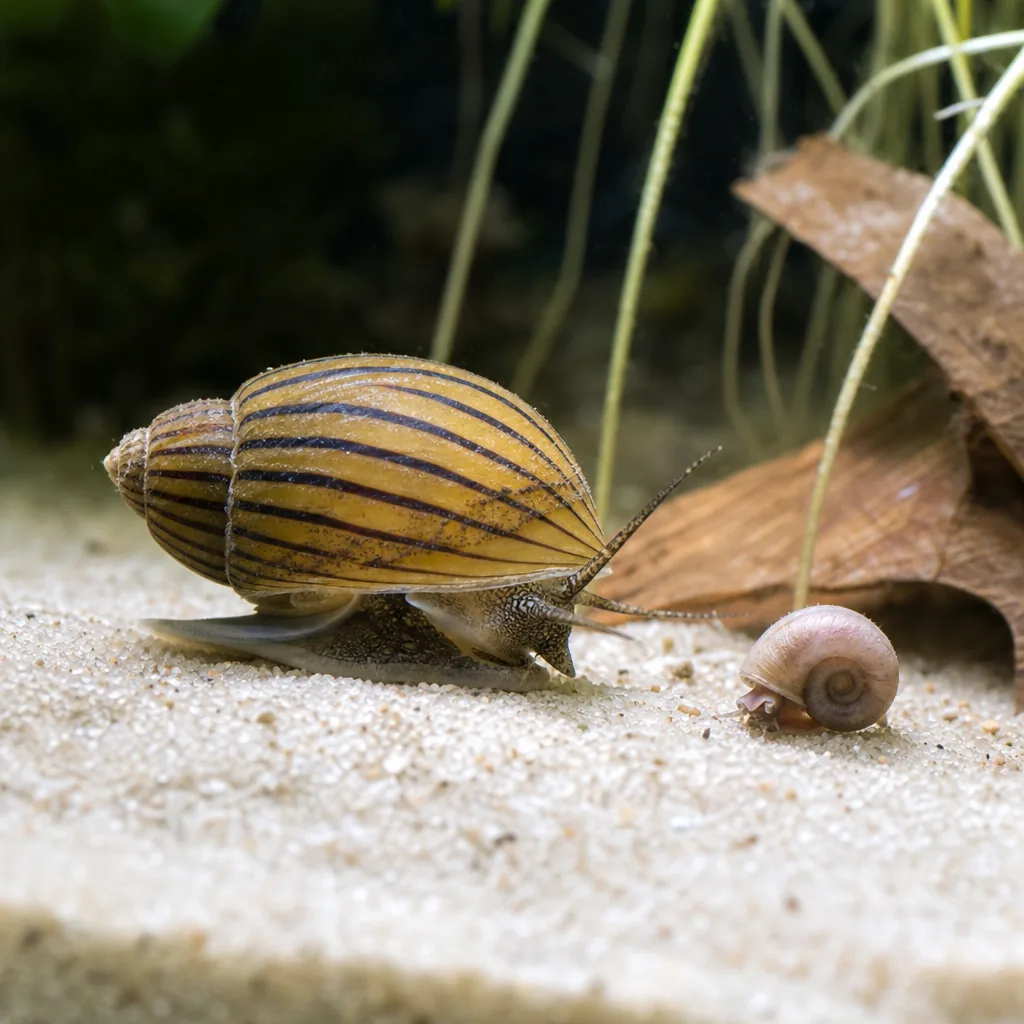
- Assassin snails: they hunt and eat pest snails, are peaceful toward fish, and won’t overrun the tank the way pest snails do. My usual first recommendation.
- Loaches: yoyo and clown loaches eat snails eagerly, but they get large and need bigger tanks, so they suit only some setups.
- Pufferfish (like the pea puffer): effective snail hunters but have specialized care and temperament needs.
Assassin snails are the safest broad choice for most community tanks. They work slowly but steadily, and once the pests are gone they simply persist quietly. Our recommended invertebrate gear covers what to feed them afterward.
What About Chemical Snail Killers?
Copper-based and other snail-killing products exist, and I recommend avoiding them in most tanks. They are a last resort, not a first step, for good reasons:
- Copper is toxic to shrimp and other invertebrates, so it is off the table in any tank you value.
- A mass die-off of snails releases a huge spike of ammonia as the bodies decay, which can crash your water quality and harm fish.
- They treat the symptom and not the overfeeding cause, so the snails often return.
If you ever do use one, remove dead snails aggressively and watch your parameters closely.
Prevention: Stop the Next Outbreak
Once the tank is under control, a little quarantine discipline keeps it that way. Almost every infestation arrives on new plants.
- Dip new plants before adding them. A diluted bleach dip, alum soak, or a dedicated plant dip kills snails and eggs; rinse thoroughly afterward.
- Inspect and rinse new decorations and quarantine new fish.
- Keep feeding tight as your permanent habit. It is the single most effective long-term control.
Should You Even Bother?
Worth saying plainly: a small, stable snail population is harmless and even useful, and many experienced keepers leave a few alone as free cleanup crew. The goal is control, not sterility. If the numbers are modest and not bothering you, tightening your feeding may be all you ever need to do.
The Short Version
Cut the food, trap and remove nightly, add an assassin snail or other predator for steady control, and quarantine new plants so it never happens again. Skip the copper unless you have no invertebrates and no better option. Fix the overfeeding and the snail problem fixes itself.
Pest snail control tools: a siphon vacuum to clear eggs and debris, test strips to catch overfeeding effects, and careful portions of staple flakes.
Frequently Asked Questions
Where do pest snails come from?
They hitchhike in as eggs on new plants, decorations, or fish bags, then multiply quickly in tanks with excess food. Almost every outbreak traces back to a new plant.
What is the best way to get rid of pest snails?
Reduce feeding to cut their food supply, trap and remove them nightly with a vegetable or algae wafer, and add assassin snails for ongoing control. Overfeeding is the root cause.
Do assassin snails get rid of pest snails?
Yes. Assassin snails hunt and eat pest snails, are peaceful toward fish, and do not overrun the tank, making them the safest predator for most community aquariums.
Are pest snails harmful to fish?
No. They do not harm fish or eat healthy plants and actually help break down waste. The issue is purely their numbers, which are driven by overfeeding.
Should I use a chemical snail killer?
Only as a last resort. Copper-based products are toxic to shrimp, a mass die-off can spike ammonia, and they do not fix the overfeeding cause, so snails often return.