
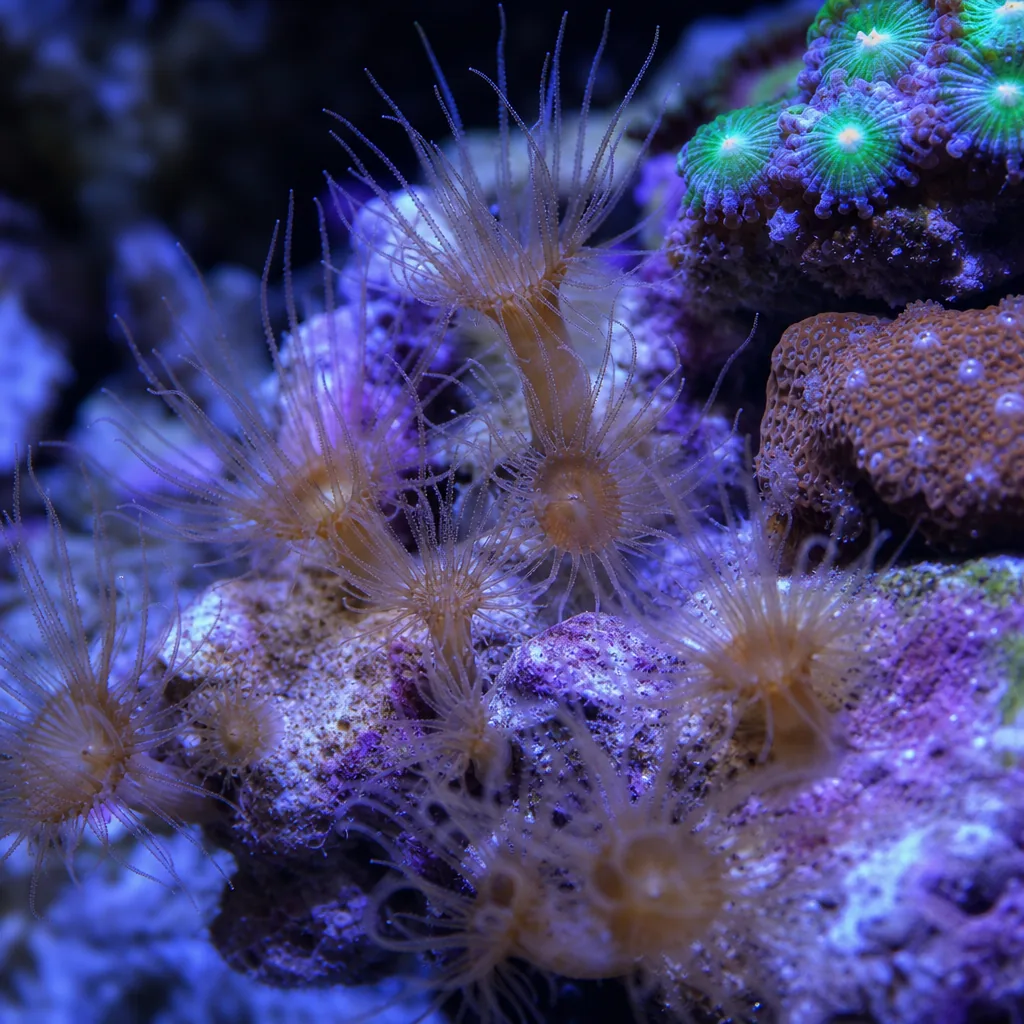
Aiptasia are the reef pest that turns one small brown anemone into a plague. They arrive as hitchhikers on live rock or coral frags, reproduce explosively, and sting nearby corals with potent stinging cells. The single biggest mistake keepers make is trying to tear or scrape them off, because a damaged aiptasia releases fragments that each grow into a brand-new pest. Removing them the right way is what separates a quick fix from a months-long infestation.
Why Aiptasia Are So Hard to Kill
Aiptasia are survivors. Cut one in half and you often get two. Squish one on the rock and the scattered tissue can seed dozens more across the tank. They also retract instantly into rock crevices at the first disturbance, making them hard to reach. Understanding this changes your approach: the goal is to kill the whole animal in place without triggering it to release fragments or retract.
Method 1: Injection Treatments
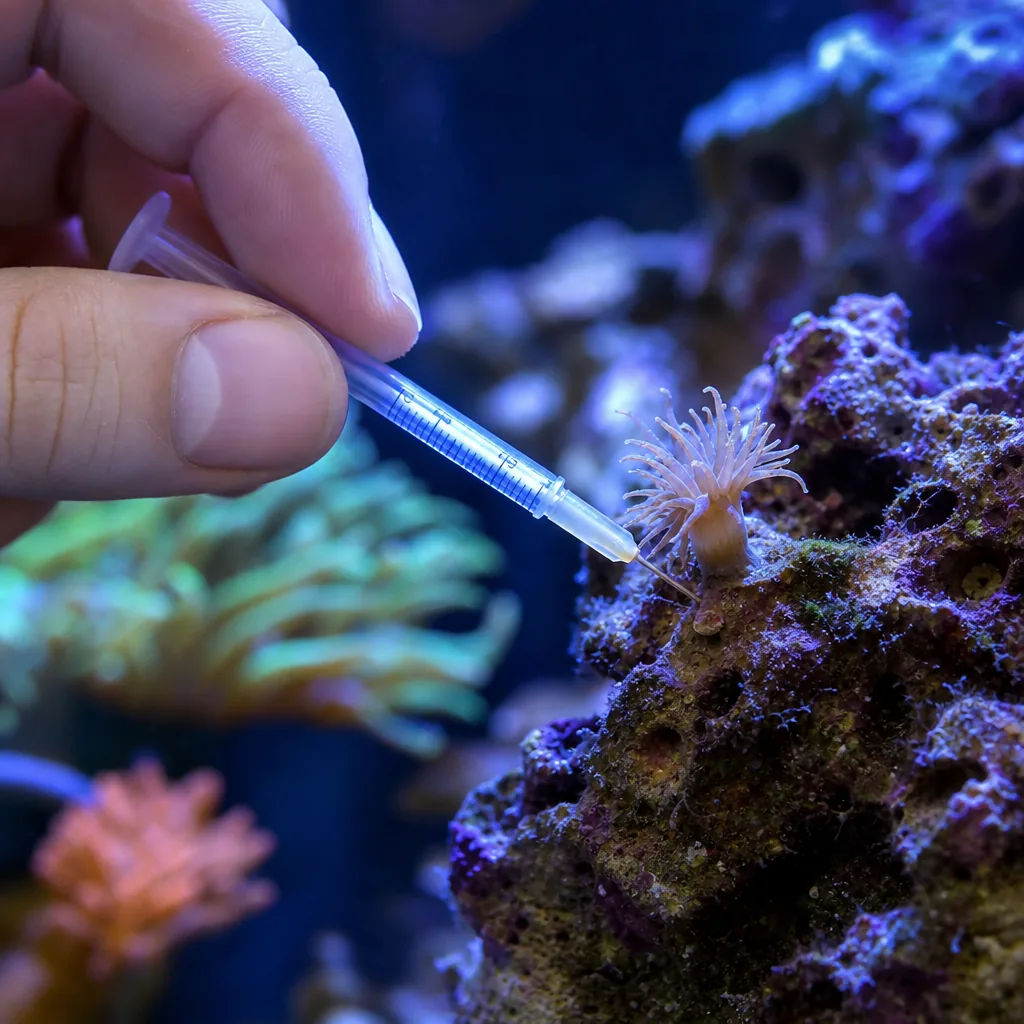
The most reliable manual method is injecting the aiptasia with a product designed to kill them, or with a homemade solution such as a thick kalkwasser (calcium hydroxide) paste. The idea is that the anemone mistakes the injection for food, ingests it, and dies from the inside.
- Use a syringe to deliver the solution directly into the mouth of the anemone when it is open and extended.
- Turn off pumps first so the solution stays put and does not disperse before it works.
- Be patient and precise; a partial hit lets the aiptasia survive and often makes it retract for days.
Commercial aiptasia-killing products and dosing syringes are available in the shop, and our saltwater guides cover safe handling of kalkwasser.
Method 2: Biological Control
Nature offers several aiptasia predators, which are ideal for tanks with populations spread across hard-to-reach spots:
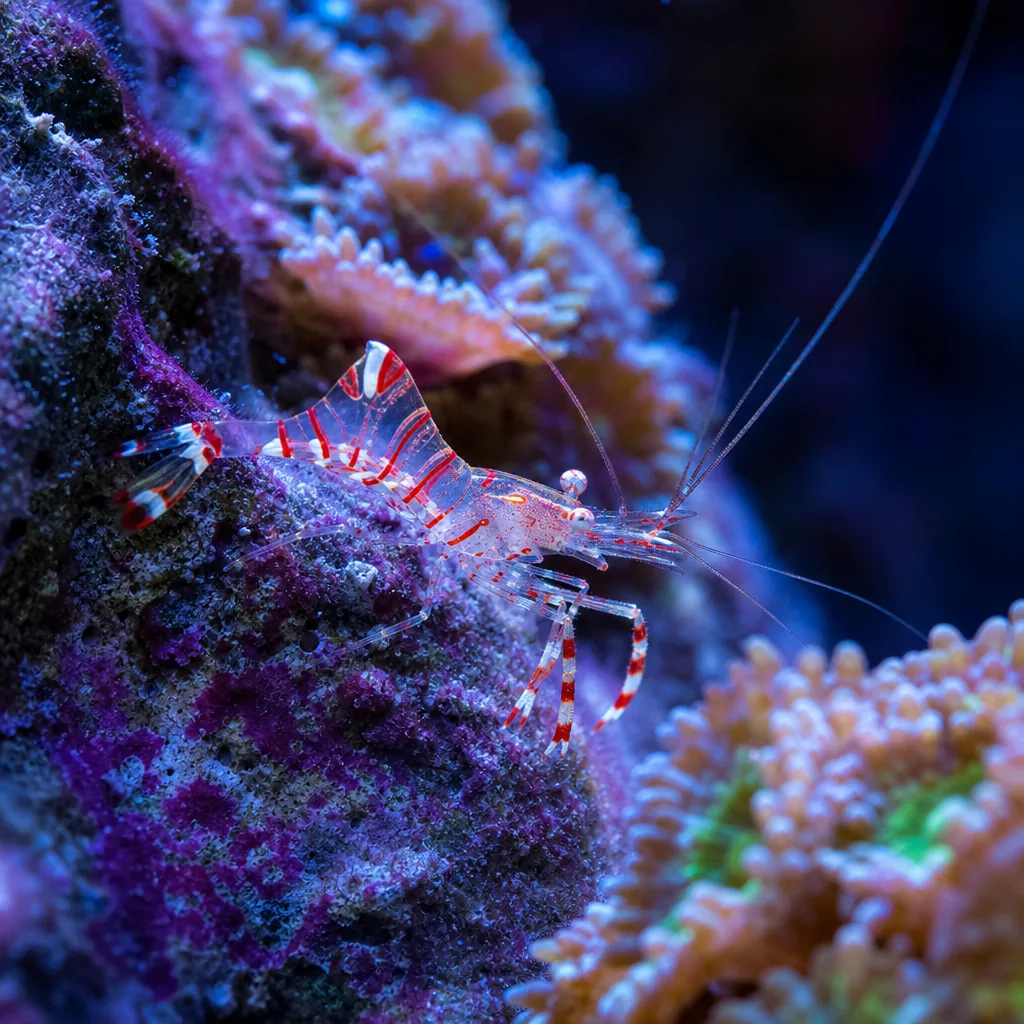
- Peppermint shrimp (the true Lysmata species) will eat smaller aiptasia. Buy from a source that can confirm the correct species, since look-alikes will not do the job.
- Certain filefish and some butterflyfish eat aiptasia, but many are not reef-safe and may nip corals, so research any fish carefully before adding it.
- Berghia nudibranchs feed exclusively on aiptasia and are extremely effective for heavy infestations, though they are small, easily lost, and will starve once the aiptasia are gone.
Biological control works best as part of a strategy, cleaning up what you cannot reach by hand, rather than as a sole solution for a major outbreak.
Method 3: Combining Approaches
For a serious infestation, layer your tactics. Knock down the large, accessible aiptasia with injections, then add a biological predator to hunt the small ones hiding in crevices. This combination catches both the visible offenders and the reinforcements you would otherwise miss.
What Not to Do
- Do not scrape, cut, or squish them. Fragmentation is exactly how they spread.
- Do not use boiling water or other crude field remedies inside a reef tank; you risk your corals and water chemistry.
- Do not ignore a small population. A couple of aiptasia today can be dozens in a month, so act early.
Prevention: Stop Them at the Door
The best aiptasia strategy is never introducing them. Every new frag or piece of live rock is a potential carrier.
- Dip and inspect all new corals and rock before they go into your display tank.
- Quarantine new additions when possible and watch for hitchhikers.
- Cull any aiptasia you spot immediately, while there is still only one.
Aiptasia are beatable, but only with the right technique. Kill them in place, recruit a predator for the stragglers, and lock down your quarantine so no new ones arrive. Find more reef pest walkthroughs on the blog.
Frequently Asked Questions
Why does cutting or scraping aiptasia make it worse?
Aiptasia reproduce from fragments. A damaged anemone releases pieces of tissue that each grow into a new one, so scraping or squishing a single aiptasia can seed dozens across your tank.
Do peppermint shrimp really eat aiptasia?
True Lysmata peppermint shrimp eat smaller aiptasia, but effectiveness varies by individual and look-alike species will not do the job. Buy from a source that confirms the correct species, and treat them as part of a broader strategy.
What is the most reliable way to kill aiptasia?
Injecting the anemone with a commercial aiptasia killer or a thick kalkwasser paste directly into its mouth is the most dependable manual method. Turn off pumps first and be precise so it ingests the full dose.
Are Berghia nudibranchs a good option?
Yes, for heavy infestations. Berghia nudibranchs feed exclusively on aiptasia and are very effective, but they are small, easily lost, and will starve once the aiptasia are gone, so they suit large outbreaks best.
How do I keep aiptasia out of my tank?
Dip and inspect every new coral and piece of live rock, quarantine new additions when you can, and cull any aiptasia the moment you spot one. Preventing introduction is far easier than fighting an infestation.