
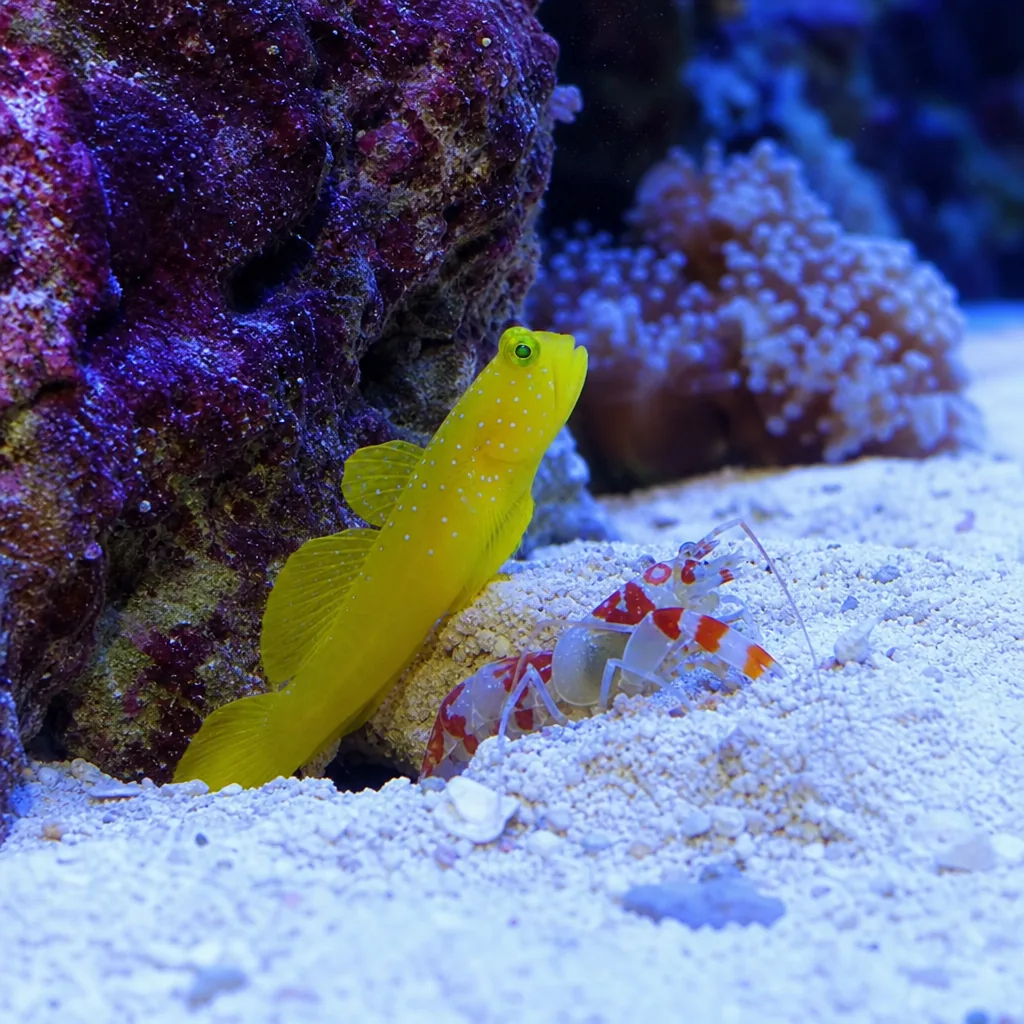
If you want a reef tank that feels alive with behavior rather than just color, few things beat a goby and pistol shrimp pair. The shrimp is nearly blind but a tireless digger; the goby has sharp eyes but no home. Together they run one of the most charming partnerships in the ocean, and you can recreate it in your own tank with a little planning. It is the kind of relationship that makes guests lean in close to the glass.
How the Partnership Works
In the wild, the pistol shrimp digs and constantly maintains a burrow in the sand. The goby stands guard at the entrance. When the shrimp leaves the burrow, it keeps one antenna touching the goby at all times. If the goby senses a threat and flicks its tail, the shrimp instantly retreats into the burrow, and the goby follows. In exchange for the early-warning system, the shrimp provides and maintains the shared home. Both animals genuinely benefit, which is what makes it a true symbiosis rather than one just tolerating the other.
Choosing Compatible Species
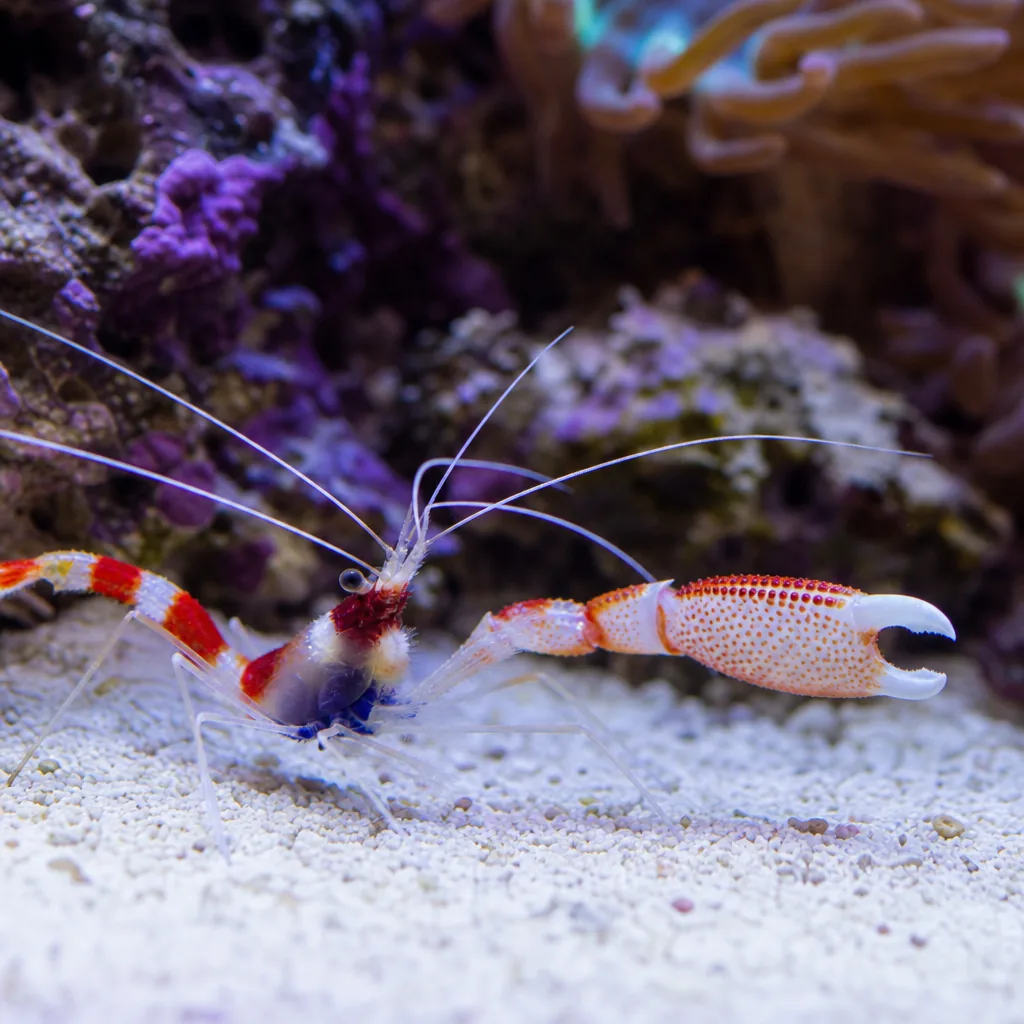
Not every goby and every pistol shrimp will pair. The most reliable partnerships come from species that evolved together, though captive pairs form fairly readily with the right types.
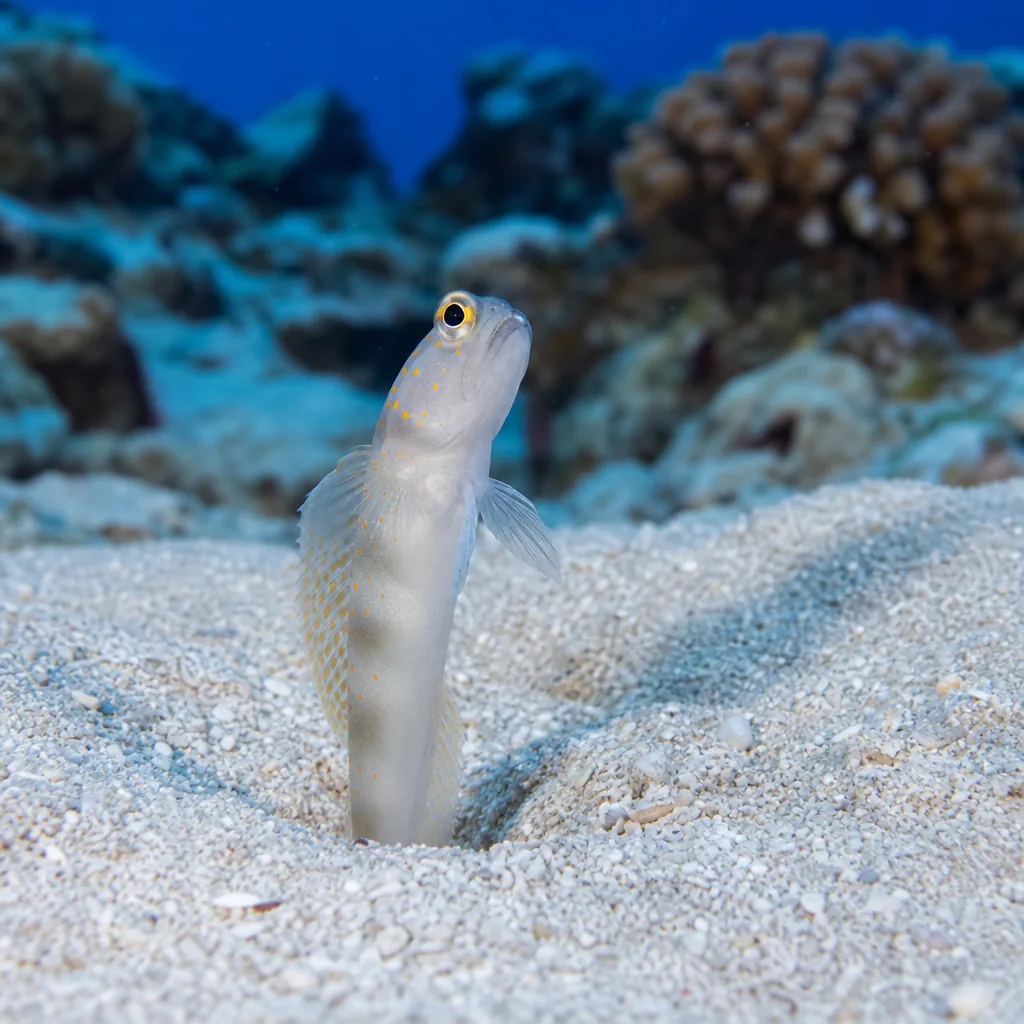
- Gobies: Yasha gobies, watchman gobies (yellow and pink-spotted), and Randall’s gobies are popular, hardy choices that pair readily.
- Pistol shrimp: Tiger pistol shrimp and Randall’s pistol shrimp are common reef-safe partners. Randall’s is a bit smaller and less likely to rearrange your whole aquascape.
Avoid the larger, more aggressive pistol shrimp species sometimes sold as hitchhikers; some are not reef safe and will not pair. If you are buying deliberately, ask for a species known to associate with gobies.
Setting Up the Right Environment
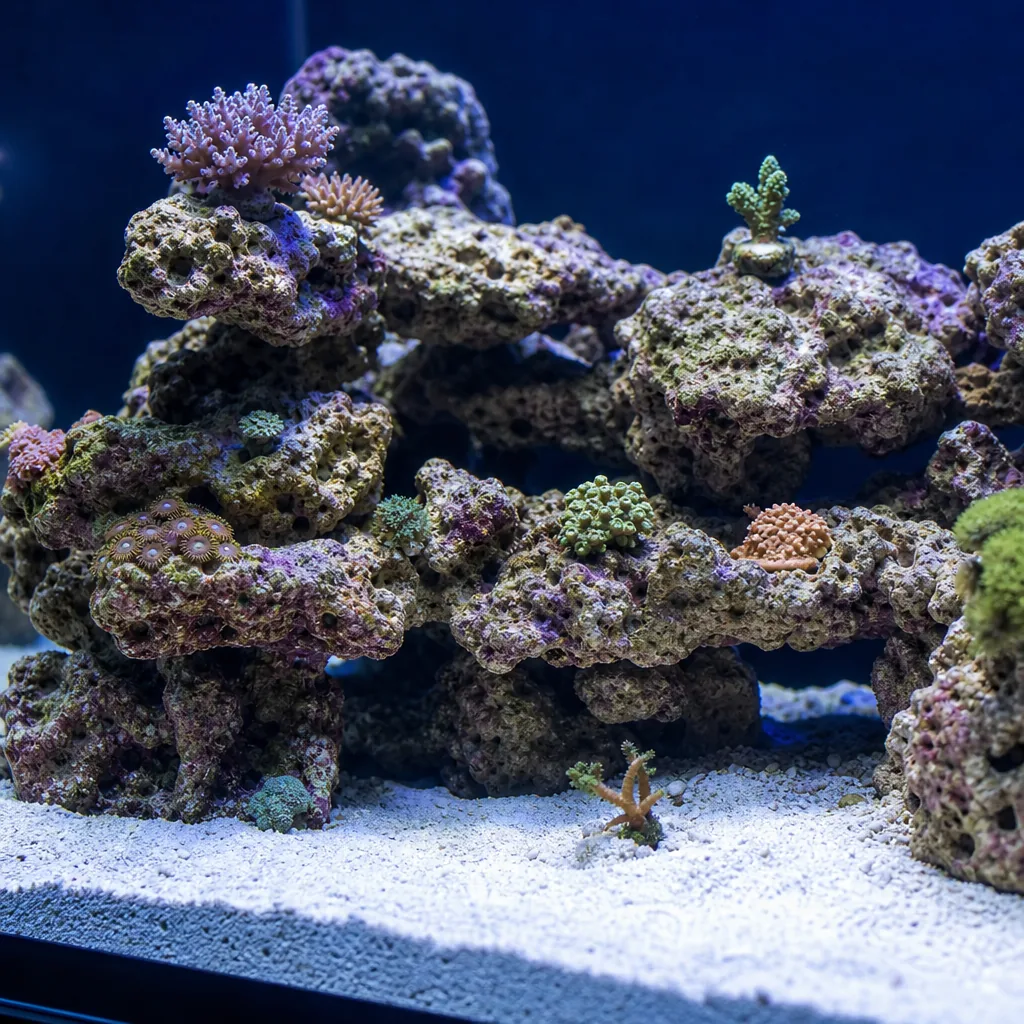
The single most important thing you can provide is a deep, appropriate sand bed. The shrimp needs a couple of inches of substrate to dig and maintain a stable burrow. Fine sand alone tends to collapse, so a mix of fine sand with some larger rubble, crushed coral, or small shell pieces gives the shrimp material to shore up the tunnel walls.
- Provide at least a couple of inches of mixed-grain sand.
- Place rock so it rests on the bottom glass, not on the sand, so a collapsing burrow cannot topple your aquascape.
- Add rubble near the base for the shrimp to use as construction material.
Getting the substrate right is the foundation of the whole setup; our saltwater setup guides cover sand beds and aquascaping in more detail, and you can find substrate options in the shop.
Introducing the Pair
You can add them together or separately. Many keepers add both at the same time so they find each other quickly, but they will often pair even if introduced weeks apart because the instinct is so strong. Add them to an established tank with stable parameters and gentle flow near the sand so the burrow does not constantly wash out. Give them time and quiet; a stressed shrimp may stay hidden for days before it starts digging.
The Pistol Shrimp’s Famous Snap
Pistol shrimp are named for the loud snap they make with a specialized claw. You will hear clicks and pops from the tank, sometimes surprisingly loud, and that is completely normal. In the burrow-building species kept with gobies, the snap is used mostly for defense and is not a threat to your other livestock or your glass. It is one of the odder joys of the hobby: a tank that clicks at you.
Tankmates and Long-Term Care
The pair is peaceful and gets along with most reef-safe community fish. Keep the goby’s known jumpers in mind – many watchman-type gobies will leap, so a lid or mesh top is smart. Feed the goby a varied diet of meaty frozen foods; it will not survive on sand-sifting alone in most tanks. The shrimp scavenges and generally feeds itself from detritus and leftovers.
Watch for the pair splitting up, which sometimes happens if the tank is too large and they simply lose track of each other, or if flow keeps destroying the burrow. Correcting the substrate and flow usually brings them back together. For more on peaceful reef stocking, browse our other reef guides.
Set the sand bed up right, pick compatible species, and be patient. Once the pair settles in, you will find yourself watching that little burrow more than any coral in the tank.
Pair-friendly substrate and food: Arag-Alive special grade sand for burrowing, and frozen mysis for both partners.
Frequently Asked Questions
Which gobies pair best with pistol shrimp?
Yasha gobies, watchman gobies, and Randall’s gobies are hardy, readily pairing choices. Matching a goby with a compatible pistol shrimp species improves the odds.
What sand do I need for a pistol shrimp?
A couple of inches of mixed-grain substrate works best – fine sand combined with rubble, crushed coral, or small shells so the shrimp can shore up its burrow walls.
Is the pistol shrimp’s snap dangerous to my tank?
No. In the burrow-building species kept with gobies, the snap is for defense and will not harm other livestock or crack your glass. The clicking sound is normal.
Do I have to add the goby and shrimp at the same time?
Not necessarily. Adding them together helps them find each other faster, but the pairing instinct is strong enough that they often pair even when introduced weeks apart.
Why did my goby and pistol shrimp stop living together?
Usually the tank is too large and they lost track of each other, or flow keeps collapsing the burrow. Fixing the substrate and flow near the sand usually reunites them.
This article was researched and written with AI assistance and reviewed for accuracy.