
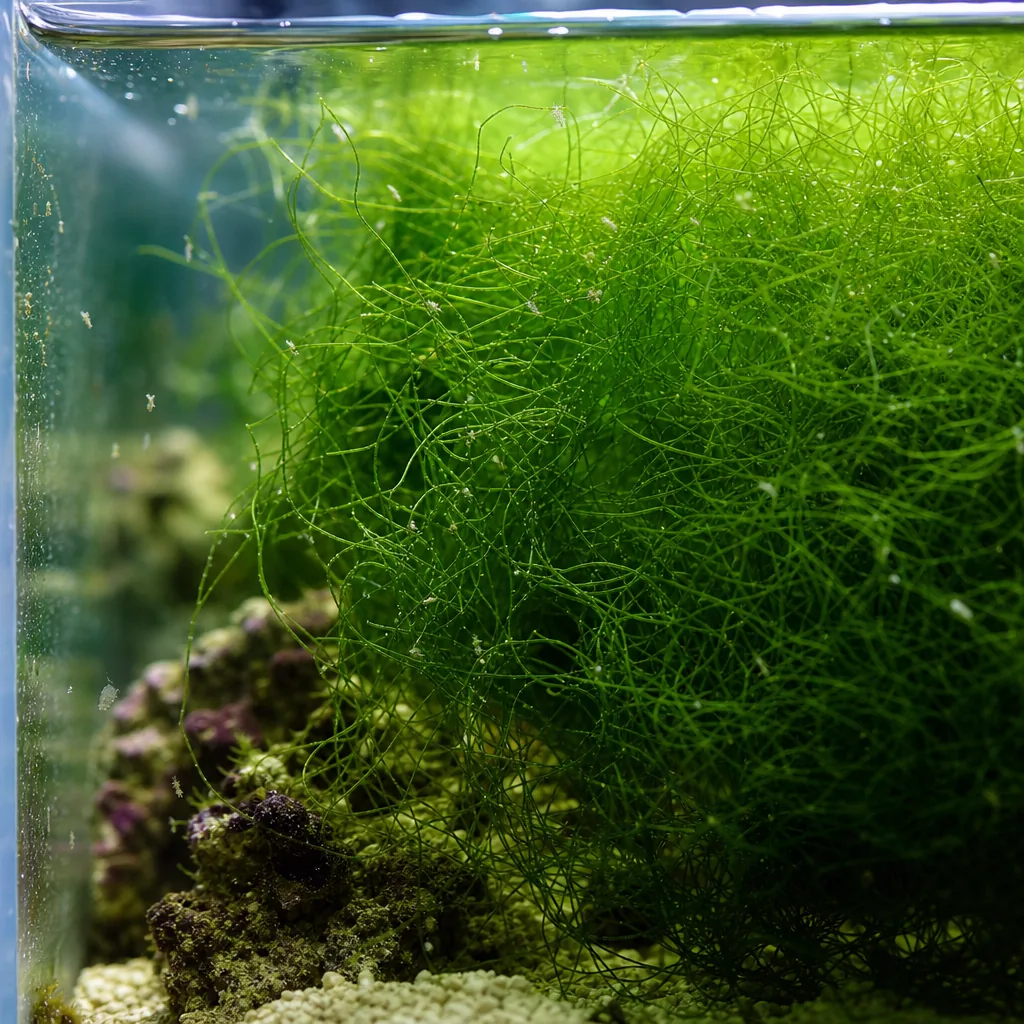
Ask ten reefers whether you need a refugium and you will get ten confident answers, half of them contradictory. The truth is that a refugium is not mandatory, but it is one of the most useful low-tech tools in the hobby. It is essentially a separate compartment, usually in the sump, where you grow macroalgae and let helpful microfauna thrive. What it does for your tank is quiet, steady, and genuinely worthwhile once you understand the mechanism.
What a Refugium Actually Does
A refugium performs several jobs at once, which is why so many long-running reefs have one.
- Nutrient export. Macroalgae like chaetomorpha grows by consuming nitrate and phosphate. When you harvest a handful, you physically remove those nutrients from the system.
- Food production. The sheltered macroalgae becomes a nursery for copepods and amphipods that drift into the display and feed your fish and corals.
- Stability. Growing algae consumes carbon dioxide, and running the refugium light opposite your display light helps buffer pH swings over the day-night cycle.
- A safe haven. The name means refuge – it gives microfauna a place to breed without being immediately eaten.
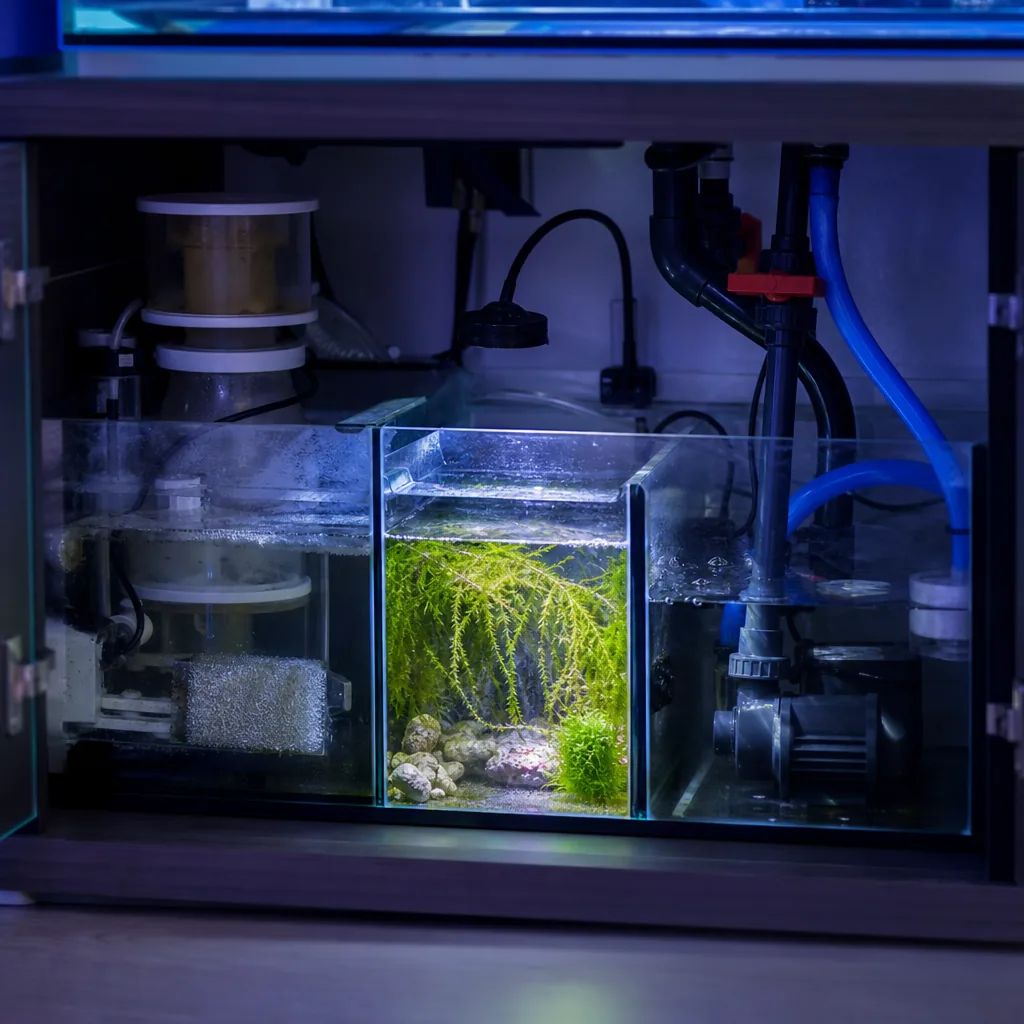
How a Refugium Works
The setup is simple. Water from the display flows into a refugium section, usually a chamber in the sump, that holds macroalgae, sometimes with a bit of live rock rubble or a deep sand bed. A light runs over the macroalgae on a schedule, often reverse-daylight so it is on while the display is dark. The algae photosynthesizes, pulls nutrients and carbon dioxide from the water, and grows. You periodically harvest the overgrowth, and that harvest is your nutrient export. It is genuinely one of the most passive maintenance tools you can add.
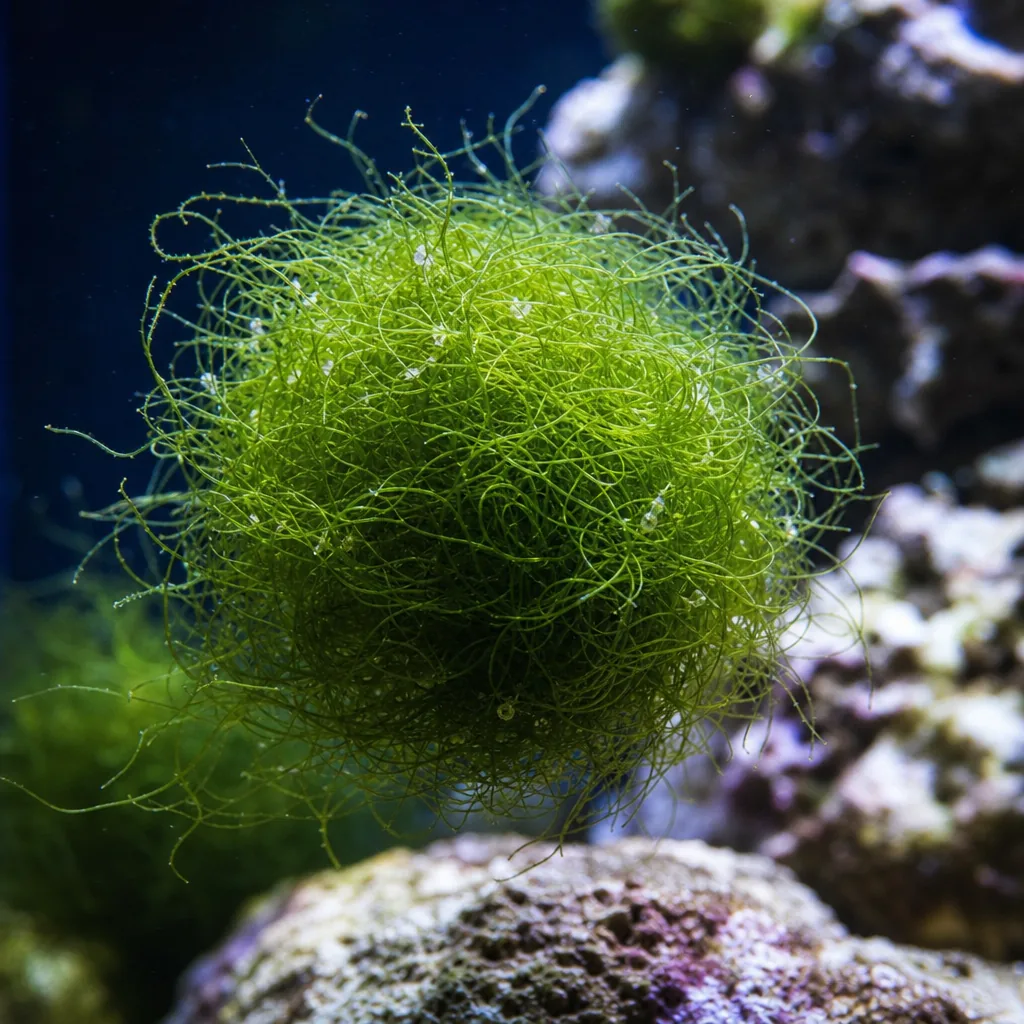
Chaetomorpha and Other Macroalgae
Chaetomorpha, or “chaeto,” is the workhorse because it grows fast, holds together in a ball that is easy to harvest, and does not go sexual and crash the way some other macroalgae can. Others like Caulerpa grow well too but can release nutrients back into the water if they go sexual, so many reefers prefer chaeto for its predictability. Whatever you use, good flow tumbling the algae ball and adequate light are what drive growth. You can find refugium lights and macroalgae options in the shop.
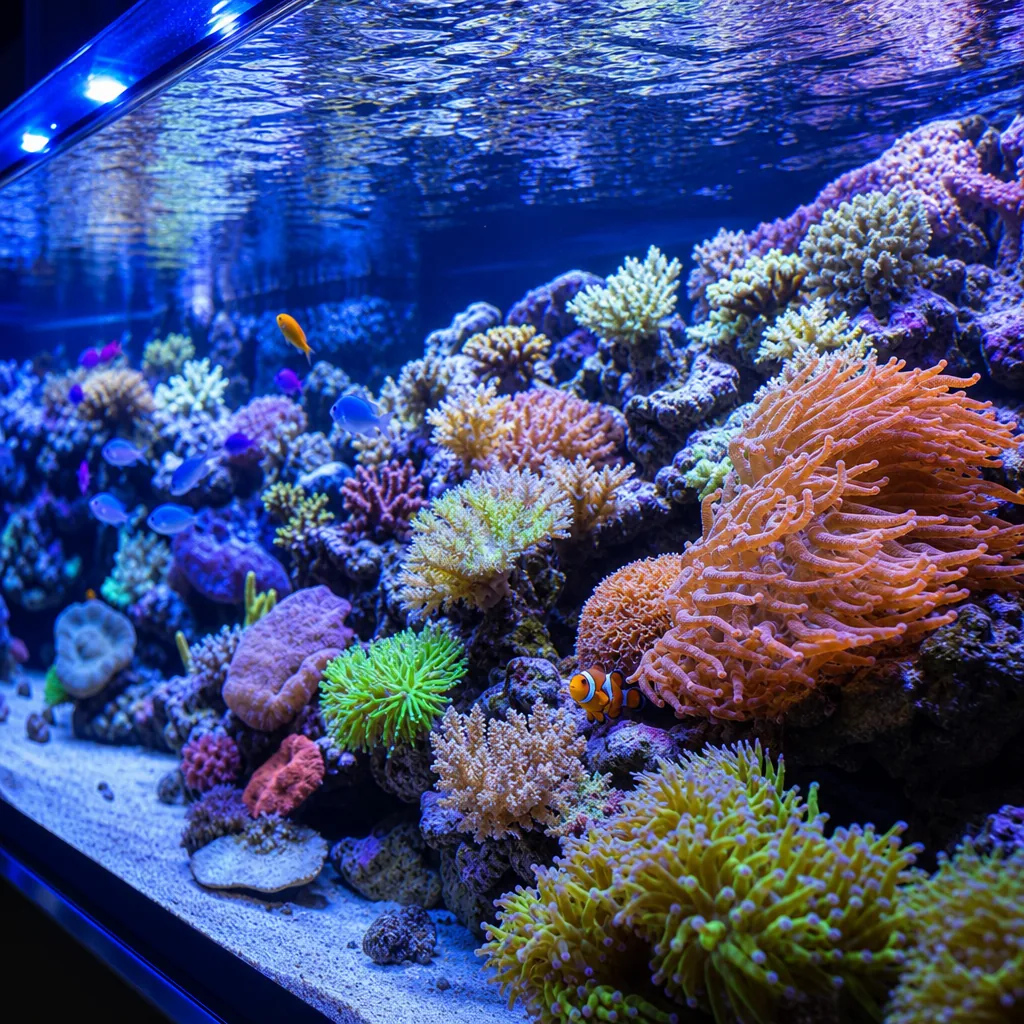
Do You Actually Need One?
Here is the honest answer: no, you do not strictly need a refugium. Plenty of beautiful reefs run on skimming, water changes, and other nutrient-export methods with no fuge at all. But a refugium is worth adding if you want a natural, low-energy way to keep nutrients in check and boost your tank’s food web. It shines in a few situations:
- You are fighting persistent nuisance algae and want to out-compete it for nutrients.
- You keep fish or corals that benefit from a steady supply of live copepods.
- You want steadier pH without dosing.
- You prefer natural methods over relying entirely on equipment.
What a Refugium Won’t Do
Set expectations honestly. A refugium is not a substitute for water changes, and it will not rescue an overstocked, overfed tank on its own. Nutrient export from macroalgae is steady but not instant, so do not expect a fuge to clear a raging algae bloom overnight. Think of it as one reliable pillar of nutrient control working alongside your skimmer and maintenance routine, not a replacement for them. Our saltwater care guides cover the full nutrient-export picture.
Setting One Up
If your system has a sump, dedicating a chamber to a refugium is straightforward: add macroalgae, mount a light on a reverse-daylight timer, and ensure gentle flow through the section. Hang-on-back refugiums exist for tanks without a sump. Keep the light schedule consistent, harvest chaeto when it fills the space, and avoid letting detritus pile up in the fuge itself. Over time you will notice cleaner water, more pods, and one less thing to worry about. For more on building out a reef system, see our other reef guides.
A refugium is not the flashiest piece of gear you will own, but it may be one of the most quietly effective. If you value stability and a natural approach, it earns its space in the sump.
Refugium essentials: live chaeto, a grow light like the hygger 24/7 light, and Arag-Alive sand for the bed.
Frequently Asked Questions
What does a refugium do for a reef tank?
It exports nutrients through macroalgae growth, breeds copepods and amphipods as live food, helps buffer pH, and gives microfauna a safe place to reproduce.
Do I really need a refugium?
No. Many healthy reefs run on skimming and water changes alone. A refugium is worth adding if you want natural nutrient export, more live food, and steadier pH.
What is the best macroalgae for a refugium?
Chaetomorpha is the most popular because it grows fast, is easy to harvest, and resists going sexual and crashing the way some other macroalgae can.
Why run the refugium light opposite the display?
Reverse-daylight lighting keeps algae photosynthesizing and consuming carbon dioxide while the display is dark, which helps buffer the tank’s day-night pH swings.
Can a refugium replace water changes?
No. A refugium steadily exports nutrients but works best as one pillar alongside water changes and skimming, not as a replacement for regular maintenance.
This article was researched and written with AI assistance and reviewed for accuracy.