
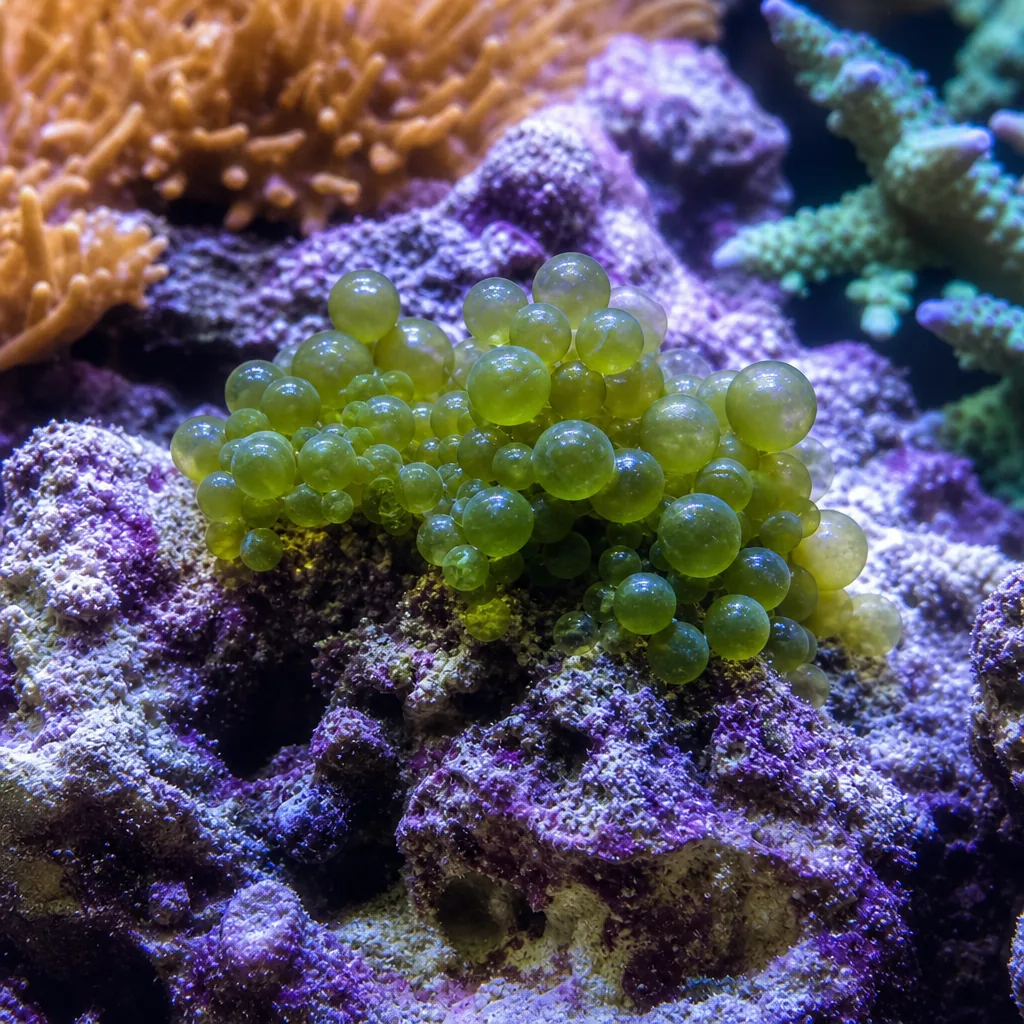
Bubble algae has a nasty reputation, and it is mostly earned by people who tried to squeeze the shiny green spheres and watched a dozen new ones appear the following week. The plant is not that hard to control once you understand the one rule that governs it: each bubble is a sac full of reproductive cells, and rupturing it inside your tank spreads those cells everywhere. Remove it patiently and cleanly and it stays manageable.
What Bubble Algae Actually Is
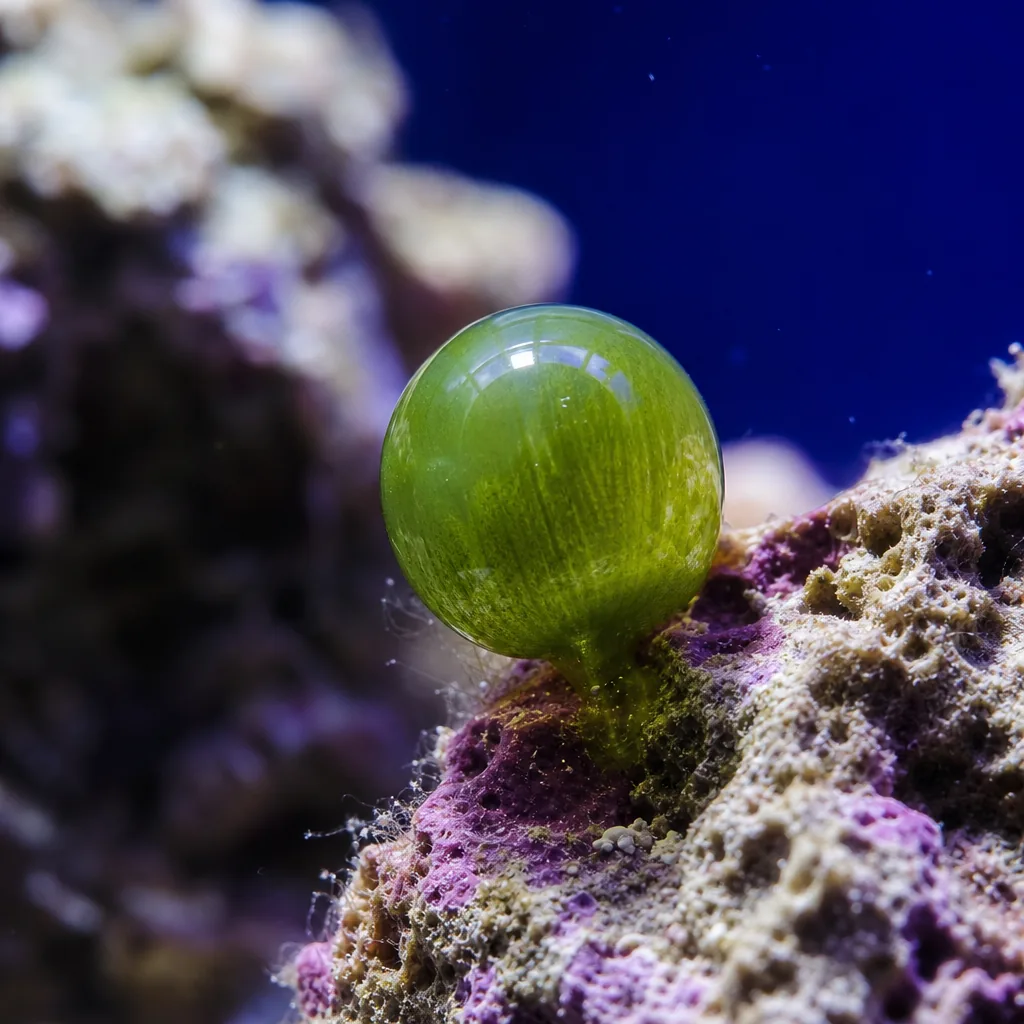
Bubble algae, usually Valonia or Ventricaria, shows up as round, shiny, green-to-dark spheres growing on rock, often in clusters. Each sphere is essentially a single large cell filled with fluid and reproductive material. That is why the popping problem exists: break the membrane in the water and you release a cloud of spores that settle and grow into new bubbles. It is a slow-moving nuisance, not an emergency, but it will steadily take over rockwork if ignored.
Why It Shows Up
Like most nuisance algae, bubble algae is fueled by available nutrients, particularly phosphate, and it often rides into the tank on new live rock or coral frags. You can control it more easily in a tank with low, stable nutrients, so nutrient export is part of the long game even though it is not a fast fix. Check new arrivals carefully and remove any bubbles before they go into your display.
The Right Way to Remove It Manually
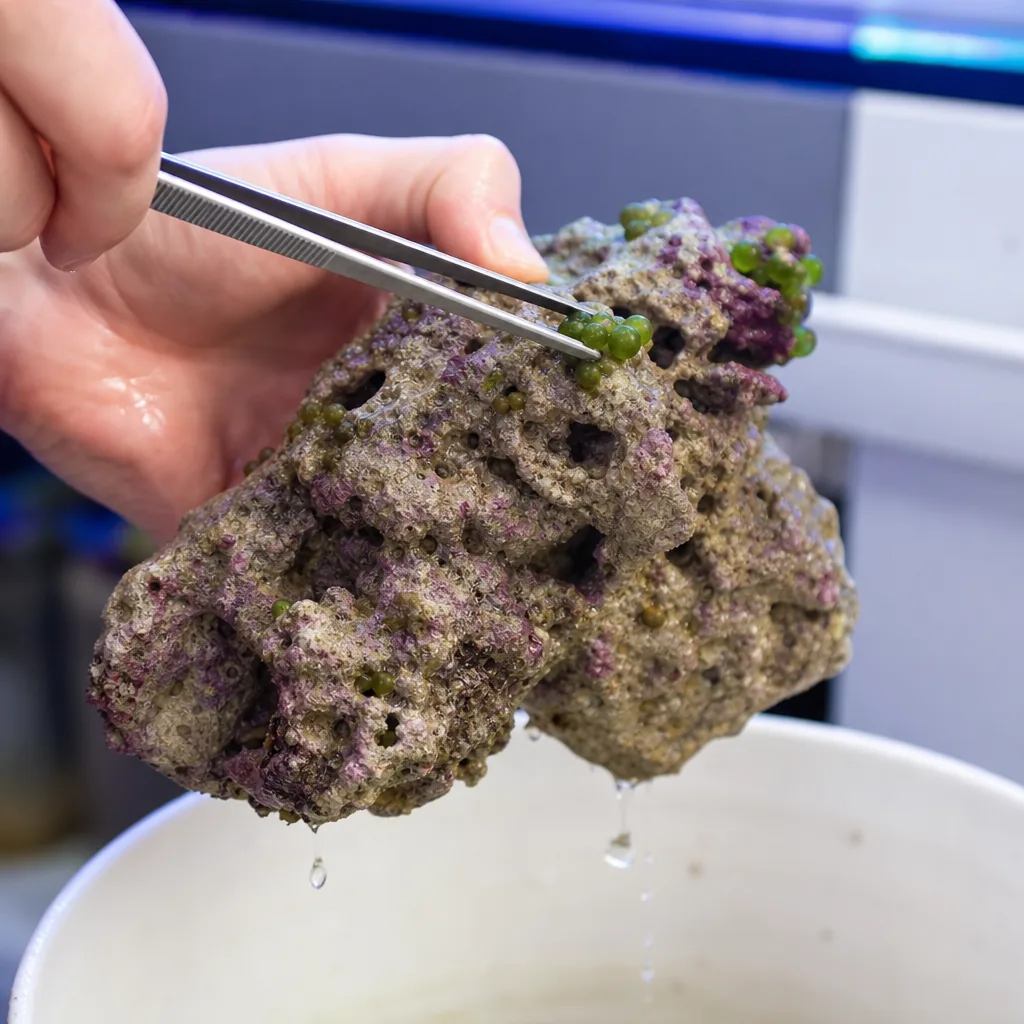
Manual removal is the most reliable method, and the whole game is not popping the bubbles while they are in the water. The best approach is to remove the rock and take the algae out where a rupture cannot seed the tank.
- If the bubbles are on a movable rock, take the rock out of the tank and remove the algae over a bucket or sink.
- Gently work your fingers or tweezers under the base of the cluster and lift it off whole, root and all, rather than plucking individual spheres.
- If a bubble is firmly attached, it is better to remove a little surrounding material than to burst it.
- For rock you cannot remove, use tweezers to grasp the base and pull slowly and steadily; try to lift the whole clump intact.
Accept that you will occasionally pop one. If you do, siphon the area immediately to capture as many released cells as you can. A little water change and siphoning right after removal is cheap insurance.
Can Emerald Crabs Help?
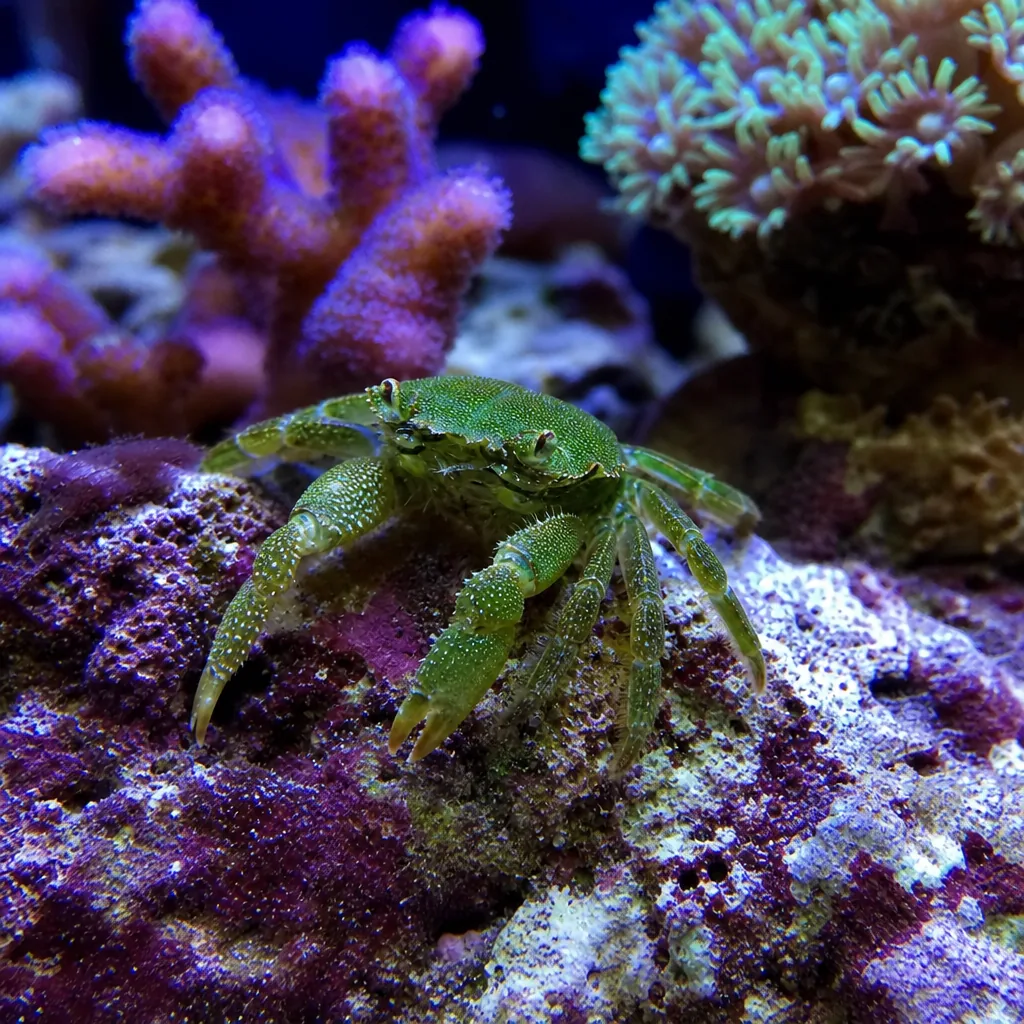
Emerald crabs are the most commonly recommended natural control, and they will sometimes pick at and eat bubble algae. The honest version is that results are unpredictable: some crabs devour it, others ignore it entirely, and a well-fed crab has less incentive to bother. Treat an emerald crab as a helper alongside manual removal, not a standalone solution, and keep to about one per tank to avoid squabbles. You can find crabs and removal tools in the shop.
Nutrient Control for the Long Game
Since bubble algae thrives on excess nutrients, keeping phosphate and nitrate low and stable makes it far easier to stay ahead of. That means a well-run skimmer, sensible feeding, regular water changes, and possibly phosphate-reducing media or a refugium to export nutrients. None of this kills existing bubbles, but it slows regrowth so your manual removal actually gets you ahead of the problem instead of just keeping pace. Our saltwater guides cover nutrient export in depth.
A Realistic Timeline
Do not expect a one-time cleanup to end it. Bubble algae usually takes several rounds over weeks or months: remove what you can, let hidden cells surface, remove those, and keep nutrients in check the whole time. Each pass should leave you with fewer bubbles than the last. Stay consistent and you will grind it down to the occasional stray sphere you pick off during regular maintenance.
What Not To Do
- Do not squeeze or scrub bubbles in the tank – that is exactly how it spreads.
- Do not rely solely on a crab and skip manual removal.
- Do not add new rock or frags without inspecting them first.
- Do not expect nutrient control alone to remove existing bubbles.
Patience is the whole strategy. Bubble algae rewards the reefer who removes it carefully and consistently and punishes the one who wants it gone overnight. Keep at it during your normal maintenance and check our other reef how-tos for the nutrient-control habits that keep it from coming back.
Bubble algae removal kit: long tweezers, a siphon to catch loose bits, and the Salifert nitrate kit to watch nutrients.
Frequently Asked Questions
Why does popping bubble algae make it worse?
Each bubble is a cell filled with reproductive material. Rupturing it in the water releases spores that settle and grow into new bubbles, spreading the problem across your rock.
What is the best way to remove bubble algae?
Remove the rock if you can and take the algae out over a bucket or sink, lifting whole clusters from the base with tweezers rather than plucking individual spheres.
Do emerald crabs eat bubble algae?
Sometimes. Some crabs eat it eagerly, others ignore it. Use one as a helper alongside manual removal, not as a standalone fix, and keep about one per tank.
What causes bubble algae in the first place?
Excess nutrients, especially phosphate, fuel it, and it often hitchhikes in on new rock or frags. Inspect new arrivals and keep nutrients low and stable.
How long does it take to get rid of bubble algae?
Usually several rounds over weeks or months. Remove what you can, let hidden cells surface, remove those, and control nutrients the whole time to slow regrowth.
This article was researched and written with AI assistance and reviewed for accuracy.