
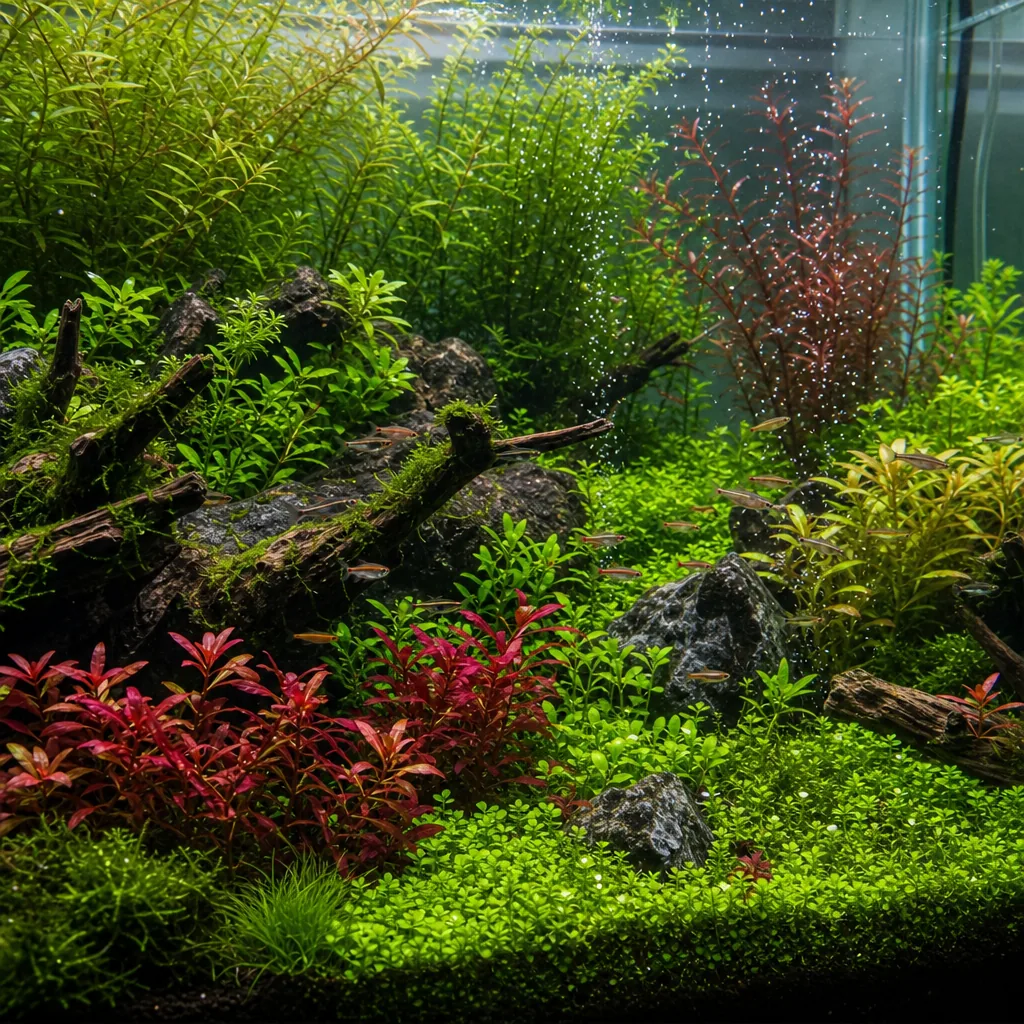
If your plants are pale, stunted, or losing older leaves while algae creeps across the glass, the usual culprit is not too much light or bad luck. It is a nutrient shortfall that starves the plants and hands the leftovers to algae. The Estimative Index, or EI, is the method a lot of high-light growers use to end that guessing game for good.
What EI Dosing Actually Is
EI was popularized by Tom Barr as a deliberately simple idea: instead of measuring your water constantly and dosing precisely, you deliberately add more nutrients than the plants can use, then reset the water each week with a large water change. The word “estimative” is the whole point. You estimate generously, keep everything in surplus, and let the weekly water change stop the surplus from stacking up forever.
The logic is that a growing plant should never run out of anything. Nitrogen, phosphorus, potassium, and the trace metals like iron are all kept above what the plant demands, so growth is limited only by light and carbon (usually injected CO2). Because you never let a nutrient hit zero, you never get the deficiency symptoms that stress plants and open the door to algae.

The Two Halves: Macros and Micros
EI splits fertilizer into two groups so they do not react with each other in the bottle or the tank.
- Macronutrients – nitrogen (from potassium nitrate, KNO3), phosphorus (from monopotassium phosphate, KH2PO4), and potassium. These are the elements plants use in the largest amounts.
- Micronutrients – iron and the trace metals, usually dosed as a premixed CSM+B blend or a commercial trace mix.
The classic schedule alternates them: macros on some days, micros on others, so the phosphate and the iron are never dumped in together (they can bind and precipitate). A common weekly rhythm is macros on days one, three, and five, micros on days two, four, and six, and a large water change on day seven.
The Weekly Reset Is Non-Negotiable
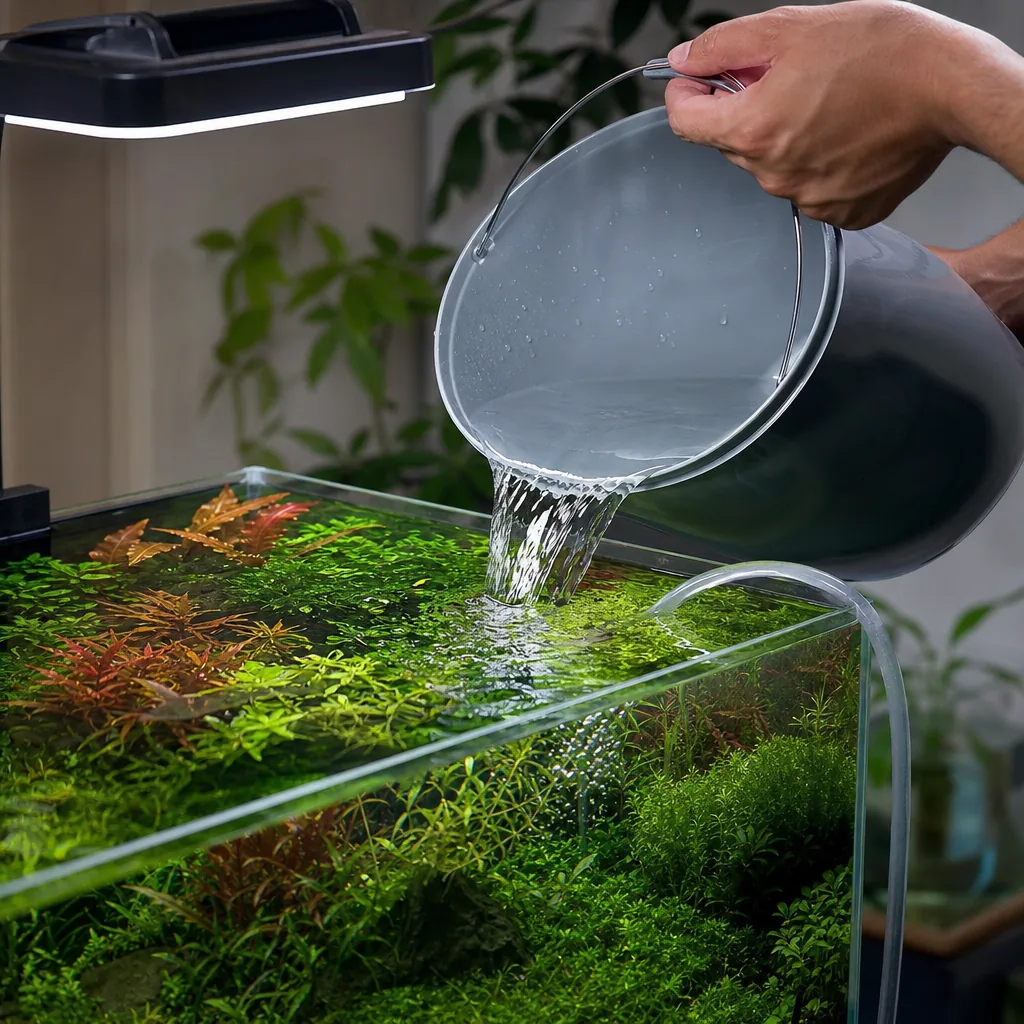
Because you are intentionally overdosing, something has to remove the excess before it accumulates to genuinely high levels. That something is a 50 percent water change every week. This is the single step people skip and then blame EI when their tank goes sideways.
The water change caps the maximum concentration any nutrient can reach. After six days of dosing, a 50 percent change roughly halves everything, and you start the next cycle from a known-ish baseline. Skip it for a few weeks and nutrients climb, total dissolved solids rise, and you lose the built-in safety margin that makes the method forgiving.
Do You Need to Test the Water?
This is the part beginners find strange: with EI you mostly do not. The whole design removes the need for precise nitrate and phosphate testing because you are keeping everything in surplus on purpose. Chasing exact numbers defeats the reason the method exists.
That said, a few tests are still worth owning. Keep an eye on general hardness and carbonate hardness so you understand your source water, and watch pH if you inject CO2. For the actual dosing, you trust the schedule, not a test tube. If you want a broader primer on gear for a heavily planted build, our freshwater section covers lighting and filtration that pair with this kind of feeding.
Who EI Is Right For (and Who Should Wait)
EI shines in high-light, CO2-injected tanks with a lot of fast-growing stem plants. Those tanks have huge nutrient appetites, and undershooting them is the fast road to algae. Feeding heavily is exactly what they want.
EI is overkill, and can even cause problems, in a low-tech tank with no CO2 and modest lighting. In that setup the plants grow slowly and cannot use a big nutrient surplus, so you are just adding chemicals that algae may exploit. For low-tech tanks, a leaner method like a reduced or “lean” EI, or a simpler all-in-one dosing at half strength, tends to work better. Match the feeding to the growth rate, not the other way around.
A Realistic Starting Routine
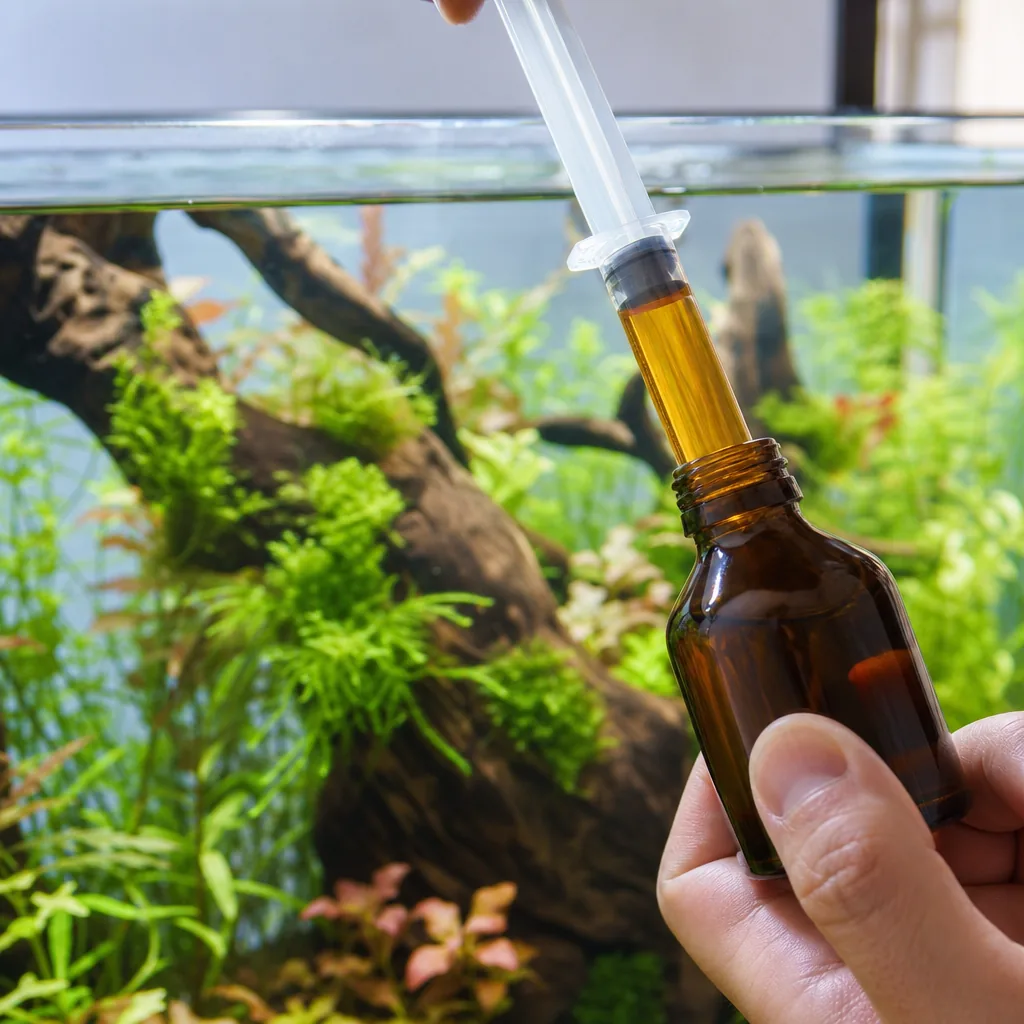
You can buy dry salts and mix your own solutions, which is by far the cheapest way, or use ready-made bottled versions of the same salts. Whichever you pick, treat the manufacturer or calculator dosing as your starting point and adjust based on what the plants tell you.
- Days 1, 3, 5: dose your macro solution (nitrogen, phosphorus, potassium).
- Days 2, 4, 6: dose your micro/trace solution.
- Day 7: 50 percent water change, then begin the cycle again.
Watch the plants for two or three weeks before changing anything. New growth that is compact, richly colored, and free of pinholes means you are close. Yellowing between the veins on new leaves points to iron or trace shortfall; yellowing on old leaves that then drop points to a mobile nutrient like nitrogen. Adjust one group at a time so you can tell what moved the needle. If algae still appears, look at CO2 stability and light duration first, because those cause far more algae than a fertilizer surplus does.
Common Mistakes to Sidestep
The failures I see repeat over and over. Skipping the water change and letting nutrients pile up. Mixing macros and micros in one dose so phosphate and iron bind. Running EI on a tank with no CO2 and weak light, then wondering why algae thrives. And treating dosing as the fix for an algae problem that is really a light or CO2 problem. Stock and hardscape choices matter too; if you keep sensitive shrimp, ease into the routine, and browse compatible plants and gear in the shop before committing to a heavy dosing regime.
Done right, EI is one of the most reliable ways to grow demanding plants. It trades a little fertilizer cost and one weekly water change for a tank that is almost never nutrient-limited. For most planted keepers chasing lush, fast growth, that is a trade worth making. If you want to go deeper on aquascaping approaches that lean on this kind of feeding, the rest of our blog has style-specific guides.
EI-friendly products on AquaticRig: NilocG Thrive, Seachem Flourish, and the Python Pro-Clean for the weekly reset change.
Frequently Asked Questions
How much should I dose with EI?
Start from a dosing calculator or the bottle instructions for your tank volume, then adjust based on plant response over a few weeks. EI is meant to keep nutrients in surplus, so precision matters less than consistency and the weekly water change.
Do I need a test kit for EI dosing?
Not for the dosing itself, since the method keeps everything in surplus on purpose. It is still useful to know your general and carbonate hardness and to watch pH if you inject CO2.
Can I do EI without CO2?
Full-strength EI is designed for high-light, CO2 tanks. In a low-tech tank plants grow too slowly to use the surplus, so use a leaner dose or a simpler all-in-one at reduced strength instead.
Why is the weekly water change so important?
Because you deliberately overdose, the 50 percent weekly change caps how high any nutrient can climb and resets your baseline. Skip it and nutrients accumulate, removing the safety margin that makes EI forgiving.
Is EI safe for shrimp and sensitive fish?
It can be, but ramp up gradually and keep water changes consistent so parameters stay stable. Sudden swings stress shrimp more than the nutrient levels themselves.