
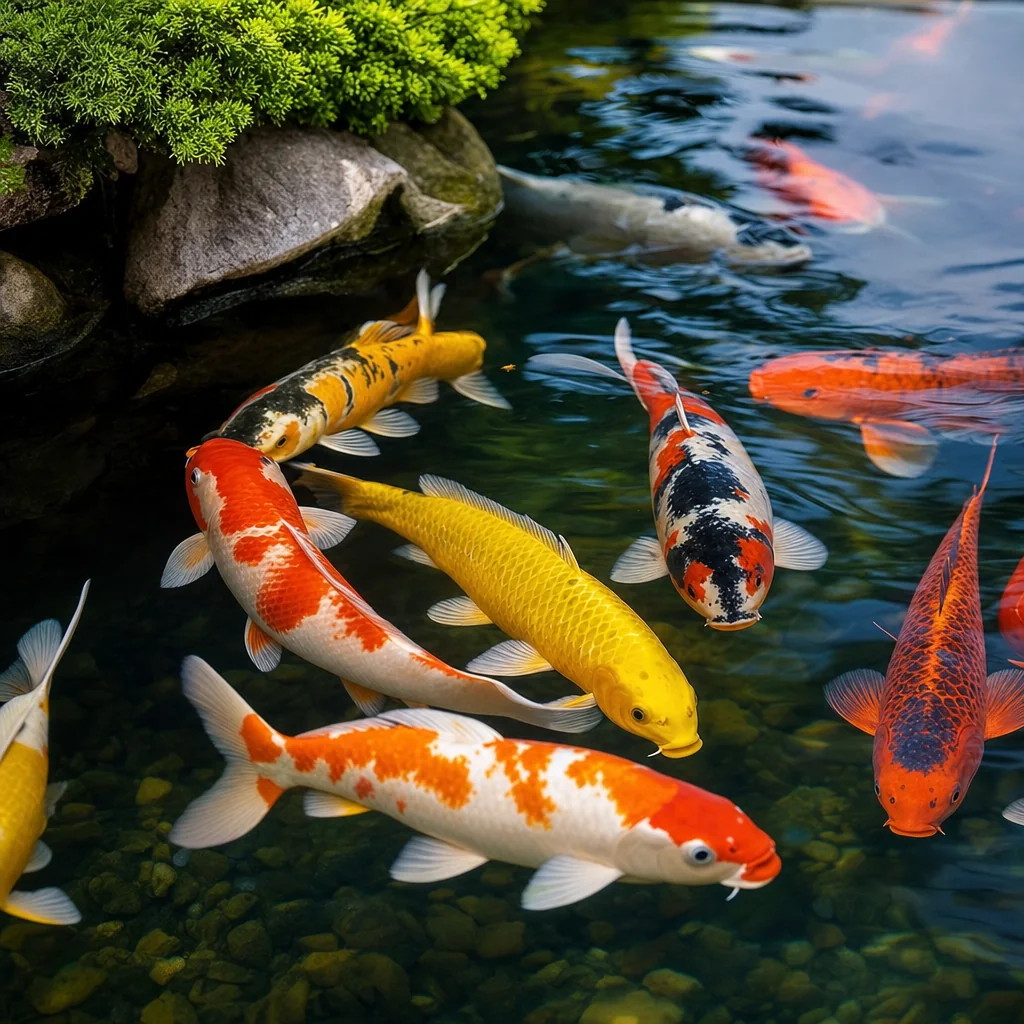
Koi are not big goldfish, and treating them like goldfish is the single most common mistake new koi keepers make. These are large, long-lived, heavy-waste fish that can reach a foot and a half or more and live for decades when kept well. That means a koi pond has to be built around their real needs from day one, because retrofitting more volume and filtration into a finished pond is painful. Get the size, depth, and filtration right up front and koi are some of the most rewarding fish in the hobby.
Here’s what actually matters before you stock a single fish. If you’re still in the build phase, pair this with our backyard pond build guide.
Why Koi Need More Pond Than You Think
Three traits drive every koi-pond requirement:
- They grow large. A koi that looks tiny in the bag becomes a substantial fish, and stunting them in cramped water is both unhealthy and a welfare problem.
- They produce a lot of waste. More fish mass means more ammonia, which means you need serious biological filtration to keep up.
- They live a long time. You’re building for the fish they’ll become and the decades they’ll live, not the size they are today.
Plan generously and the rest of koi keeping gets dramatically easier.
Pond Size for Koi
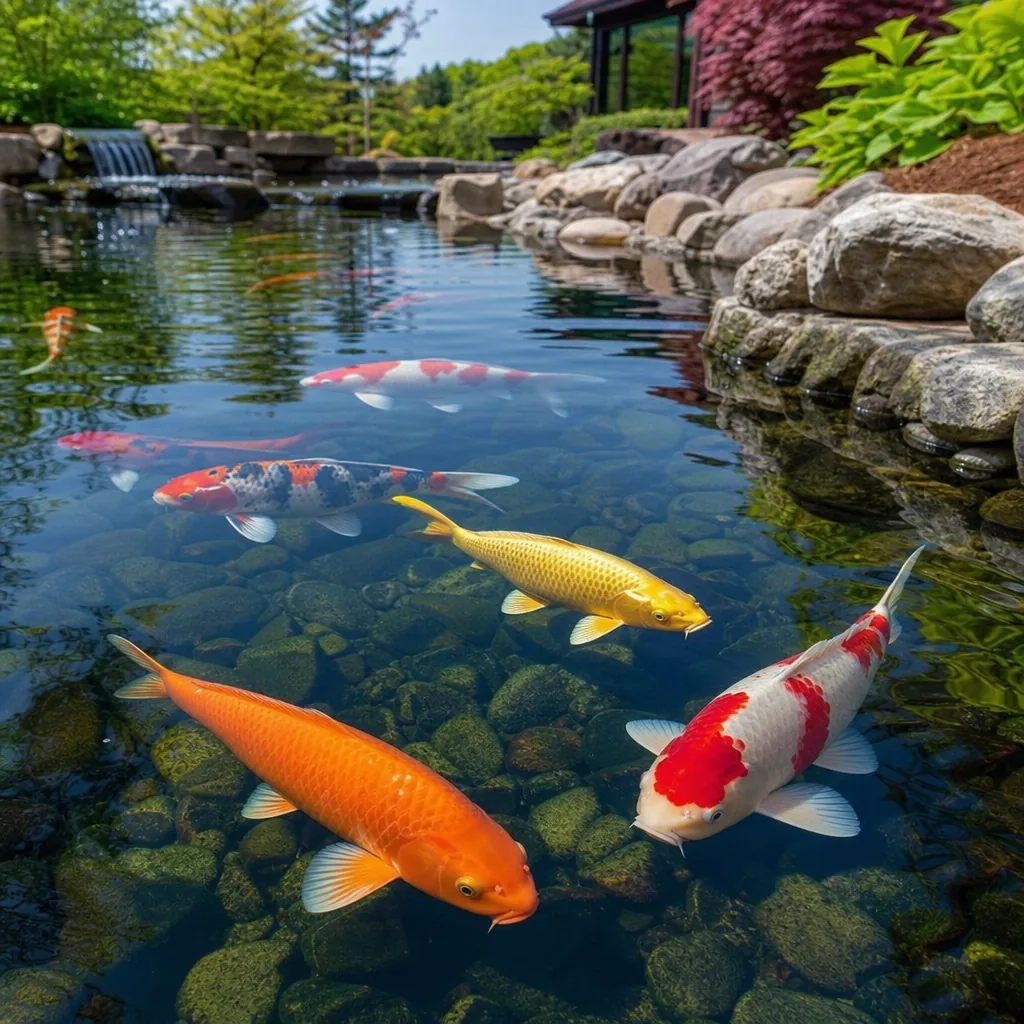
Bigger is genuinely better with koi, for two reasons. First, large water volume gives the fish room to grow and thrive. Second, a big body of water is far more stable; temperature and water chemistry swing slowly in a large pond and violently in a small one, and stability is what keeps fish healthy.
As a planning mindset, think in terms of generous gallons per koi rather than counting fish into a fixed box. A common beginner error is starting small and then adding fish faster than the volume can support. Build big, stock conservatively, and let the pond grow into its capacity over time.
Depth Matters: Don’t Build Shallow
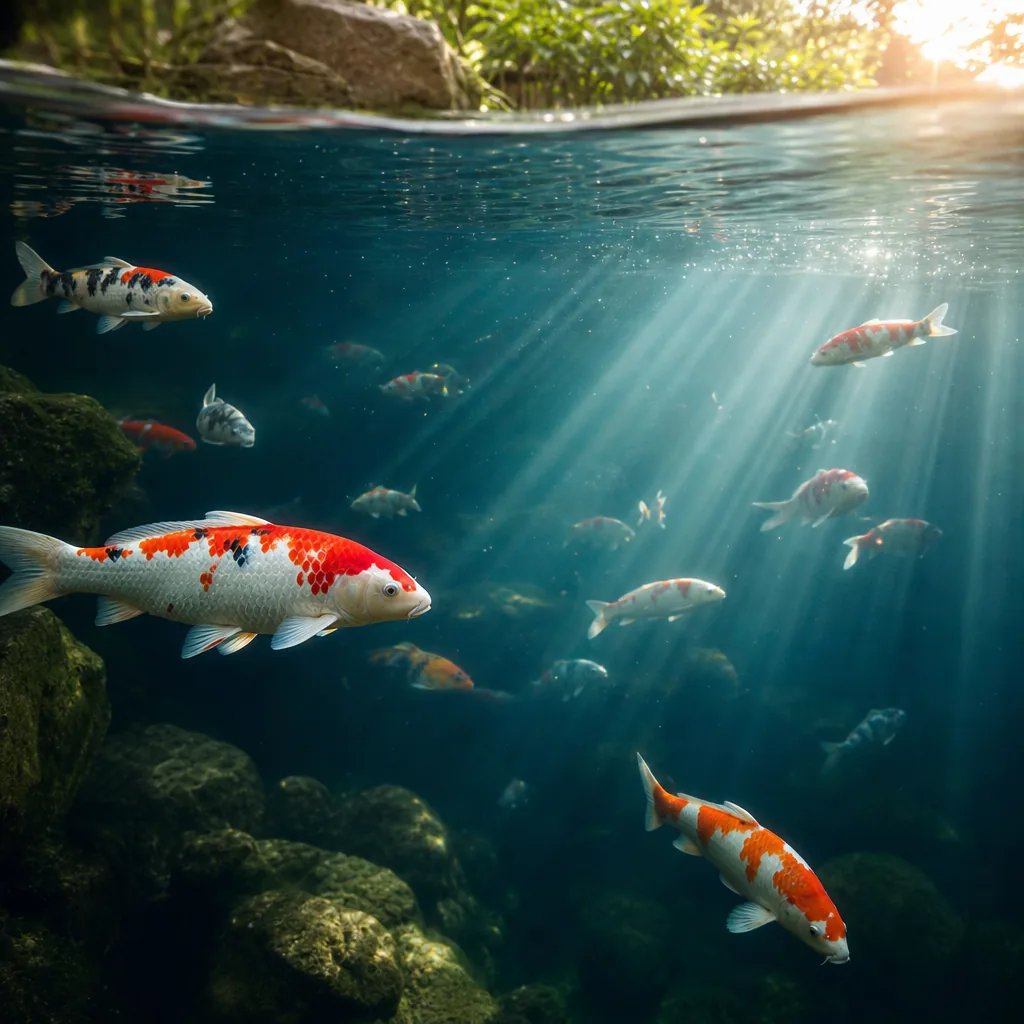
Depth is non-negotiable for koi, and it does several jobs at once:
- Temperature stability. Deeper water resists the rapid heating and cooling that stresses fish.
- Winter survival. In cold climates, koi overwinter in the deeper, warmer layer near the bottom while the surface ices. Too shallow and there’s nowhere safe to ride out winter.
- Predator protection. A deep zone gives koi somewhere to retreat from herons and other predators that pick off fish in shallow water.
For koi, aim for a substantial deep section rather than a uniformly shallow pond. Many keepers in cold regions consider a minimum deep zone of around three feet, and deeper is better where winters are harsh. Build the deepest part you reasonably can.
Filtration: The Heart of a Koi Pond
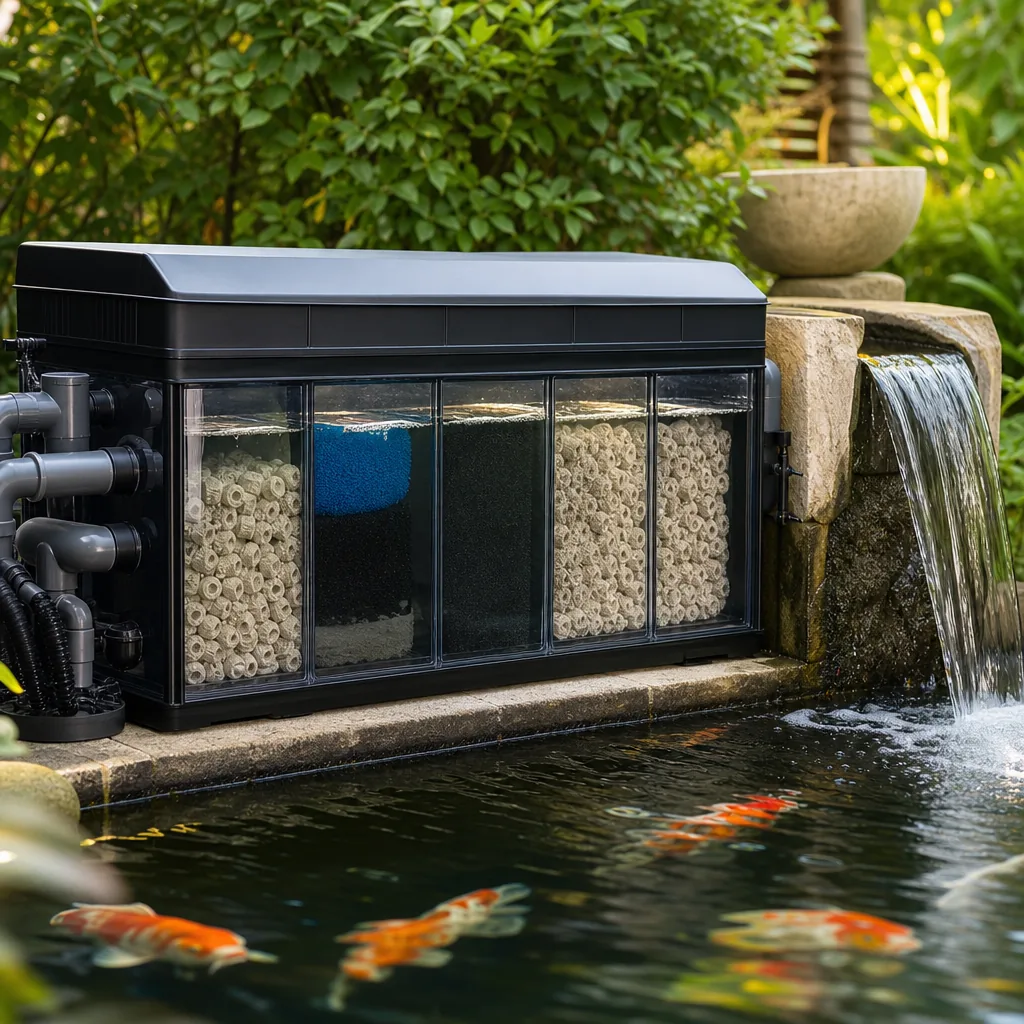
If there’s one place not to cut corners, it’s filtration. Koi’s heavy waste load means a system sized for goldfish will be overwhelmed. A solid koi setup combines several stages.
Mechanical filtration
This traps solid waste, uneaten food, and debris before it breaks down. Settlement chambers, brushes, and pads pull solids out so they don’t rot in the pond and feed algae.
Biological filtration
This is where beneficial bacteria convert toxic ammonia and nitrite into far less harmful nitrate. Koi ponds need substantial bio-media surface area to house enough bacteria for the bioload. Undersize this and you’ll battle ammonia spikes constantly.
Mechanical extras
- UV clarifier to control the suspended algae that causes green water.
- Aeration to keep oxygen high, which both koi and your filter bacteria depend on, especially in warm weather.
- Bottom drain in serious builds, to pull settled waste from the lowest point.
Whatever you choose, oversize it. A filter rated for more than your pond’s volume gives you headroom as your koi grow. Browse pond filtration and aeration options in our pond gear picks.
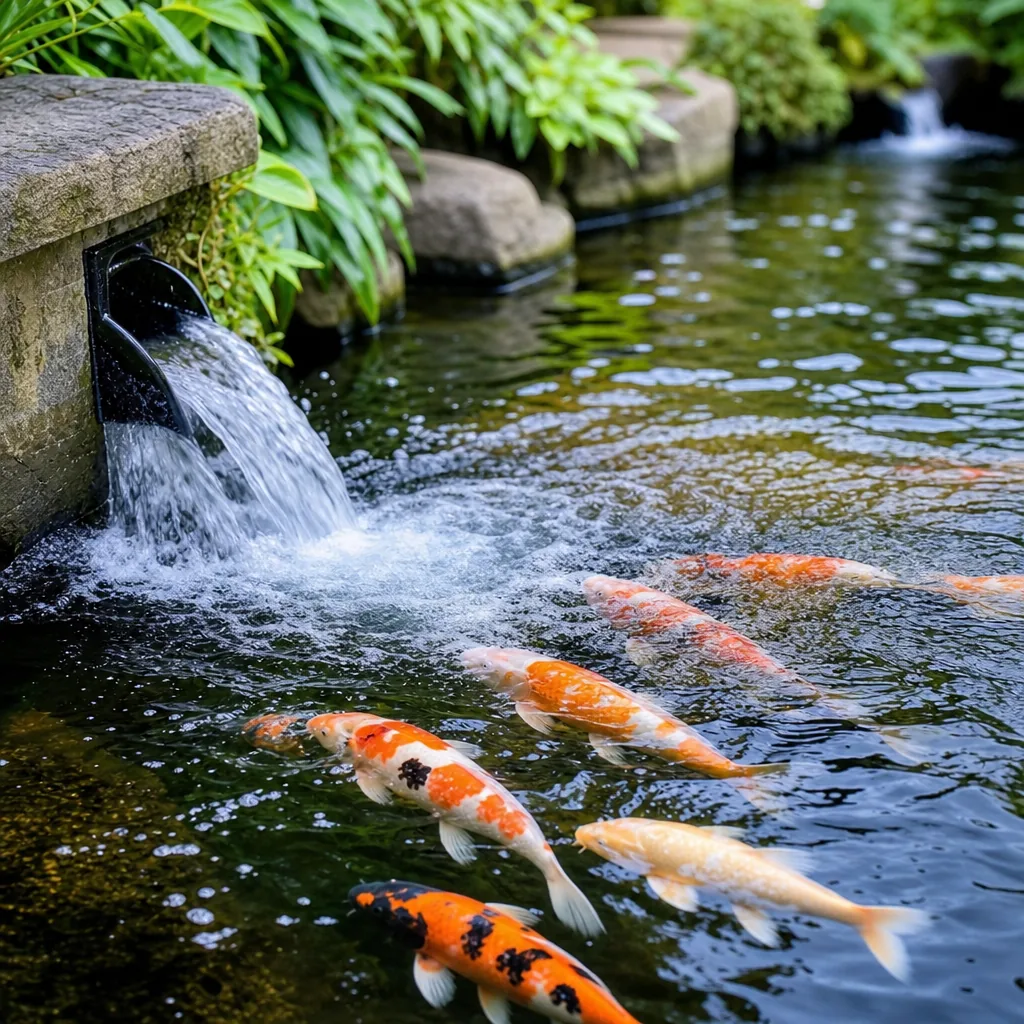
Circulation and Turnover
Water needs to move through the filter often enough to actually process the waste. For a koi pond, plan on turning over the full pond volume frequently, ideally circulating the entire pond at least once an hour. Stagnant zones let waste accumulate and oxygen drop, so position your pump and returns to keep the whole pond moving.
A Quick Koi-Keeping Sanity Check
- Build big and deep before you stock fish.
- Oversize the biological filtration for the waste load you’ll eventually have.
- Stock gradually so the filter can keep pace.
- Keep oxygen high with aeration, especially in summer.
- Plan for winter depth if you’re in a cold climate.
Do those five things and you’ve avoided nearly every beginner koi disaster. For seasonal care, see our guides on keeping pond water clear and winterizing your pond.
The Bottom Line
Koi reward keepers who build for the fish’s future, not its current size. Go bigger and deeper than feels necessary, invest in serious filtration, and stock slowly. Do that and you’ll keep healthy, colorful koi that outlive most pets in the hobby.
Frequently Asked Questions
How big does a koi pond need to be?
Bigger than most beginners expect. Koi grow large and produce heavy waste, so they need generous water volume per fish to stay healthy and for the pond to remain stable. Build as large as your space and budget allow, then stock conservatively.
How deep should a koi pond be?
Koi need a substantial deep zone, often considered a minimum of around three feet, and deeper in cold climates. Depth stabilizes temperature, gives koi a warmer layer to overwinter in below the ice, and provides protection from predators like herons.
Can koi live with goldfish?
Koi and goldfish can share a pond, but remember koi grow much larger and produce far more waste. Size the pond and filtration for the koi, not the goldfish, and watch that goldfish aren’t outcompeted at feeding time. Both appreciate the same deep, well-filtered conditions.
What kind of filter does a koi pond need?
A koi pond needs strong mechanical filtration to trap solids plus substantial biological filtration to process their heavy ammonia load. Many setups add a UV clarifier for green water and aeration for oxygen. Always oversize the filter relative to pond volume to leave headroom as koi grow.
Do koi ponds need a pump running all the time?
Yes. Continuous circulation keeps the biological filter supplied with oxygenated, waste-laden water to process, and prevents stagnant low-oxygen zones. Aim to turn over the full pond volume at least once an hour. Stopping the pump for long periods can crash water quality quickly.