
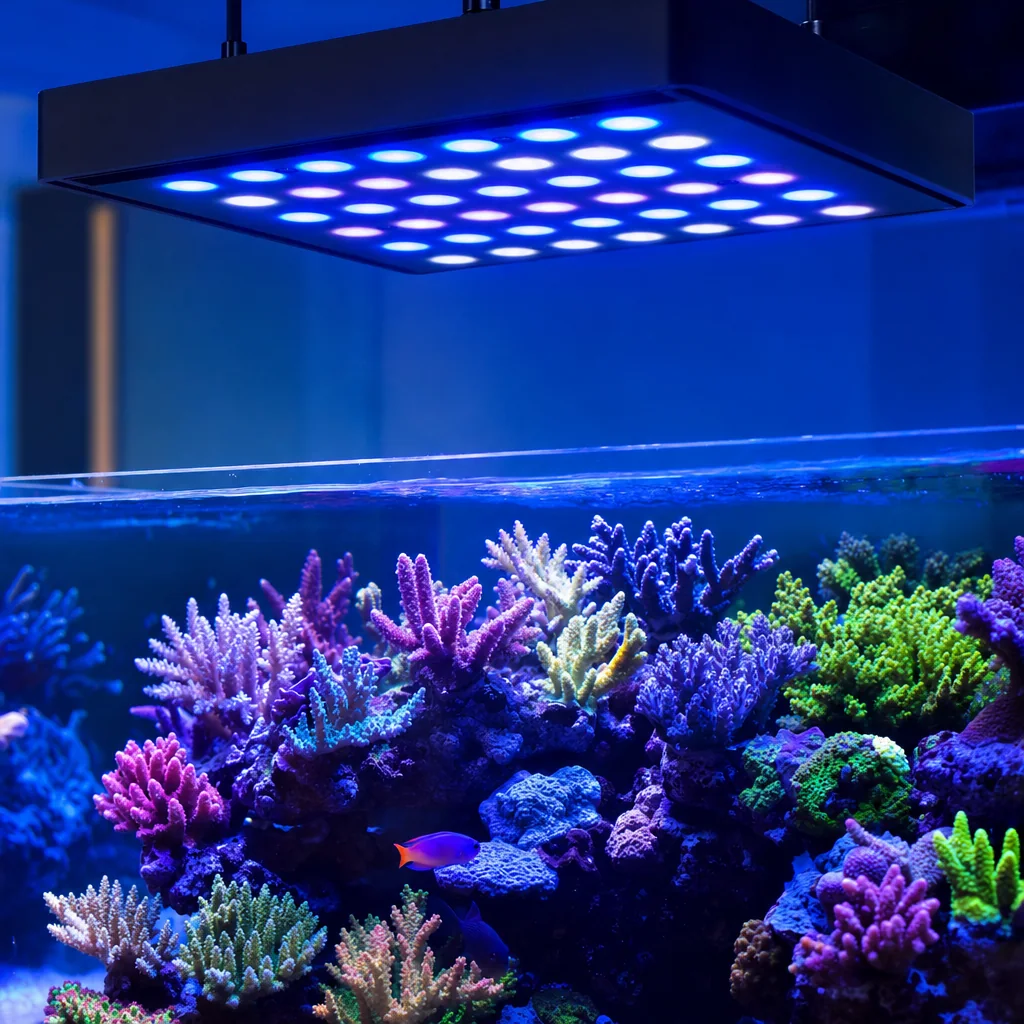
Reef lighting confuses more new hobbyists than almost any other topic, partly because corals are photosynthetic animals and partly because the marketing around reef lights is dense with numbers. Strip away the jargon and it comes down to three things: how much usable light reaches your corals, what colors that light contains, and how the light behaves over the course of a day. Get those three right and your corals grow and color up. Get them wrong and you either starve your corals or fuel an algae bloom.
Let’s take each in turn so you can buy and program a light with confidence rather than guesswork.
PAR: How Much Light Corals Can Use
PAR stands for Photosynthetically Active Radiation, and it measures the portion of light that corals can actually use for photosynthesis. This is the number that matters, not raw brightness as your eye perceives it. A light can look blinding and still deliver mediocre PAR, or look modest and deliver plenty.
Why Corals Have Different Needs
Different corals evolved at different depths, so their light requirements vary widely.
- Soft corals and many beginner corals are adapted to lower light and thrive in the shaded lower regions of a tank.
- Large-polyp stony corals generally sit in a moderate range and tolerate a fairly wide window.
- Small-polyp stony corals are the light-hungry ones, often placed high in the tank where intensity is greatest.
The practical lesson is that one PAR level does not suit every coral. You build a tank with brighter zones up top and shaded zones below, then place corals where their needs are met.
Spectrum: The Colors That Matter
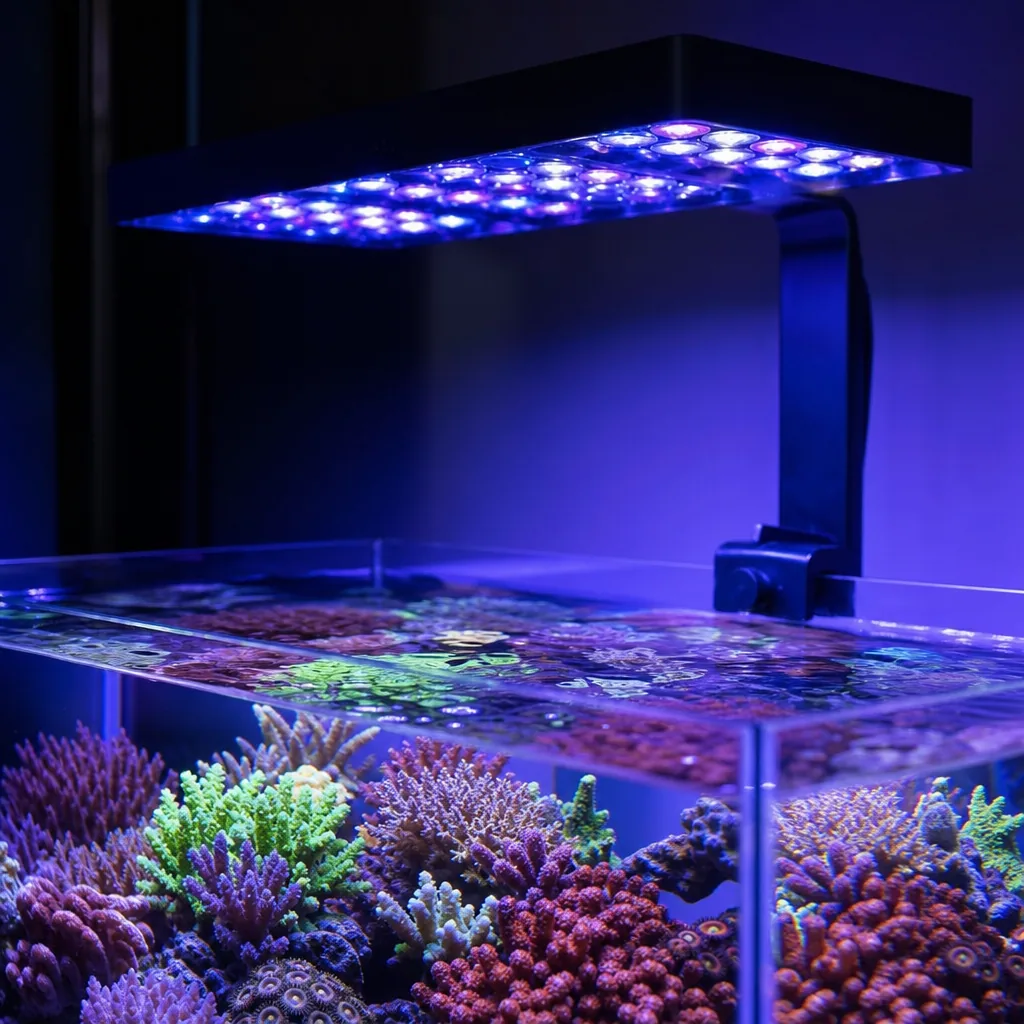
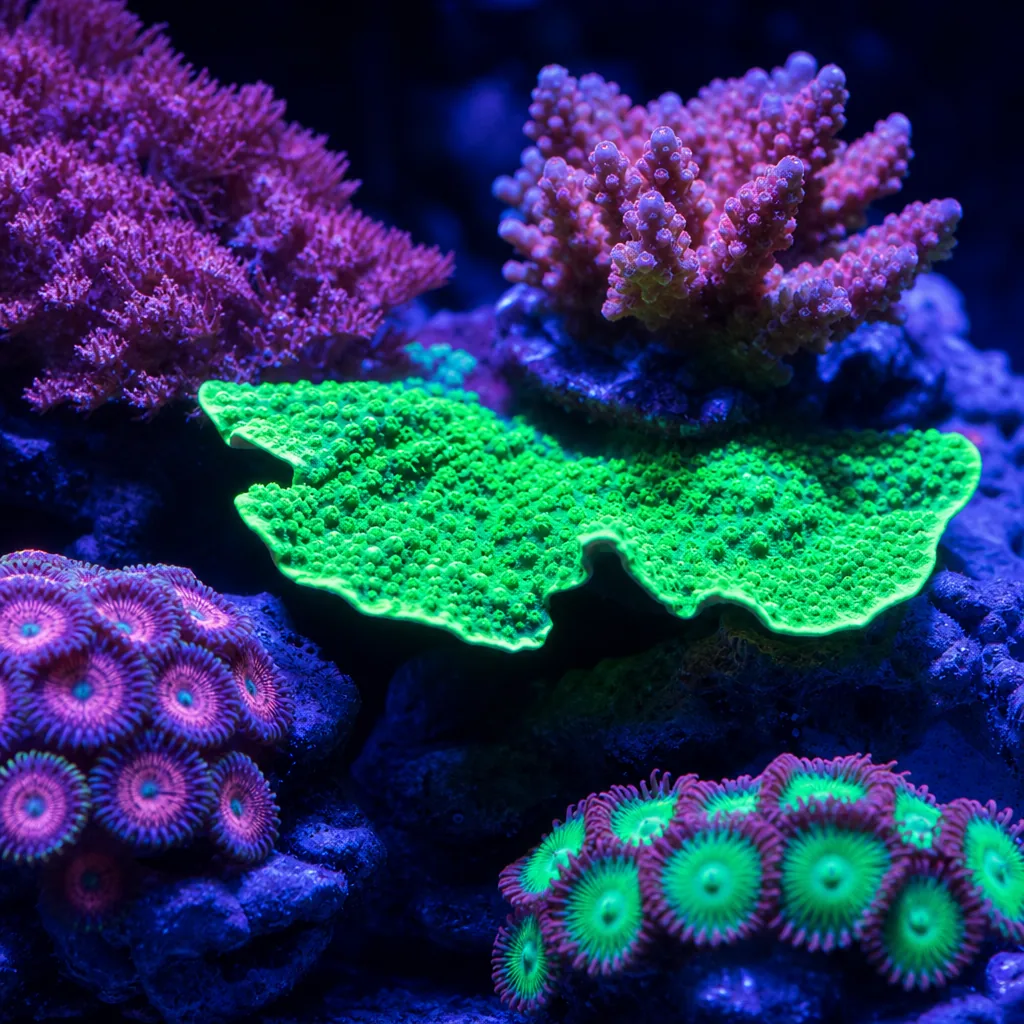
Spectrum is the mix of wavelengths your light emits, and it does two jobs. First, certain wavelengths drive photosynthesis more efficiently. Second, spectrum is what makes corals glow with the fluorescent colors reefers chase.
Why Reef Tanks Look Blue
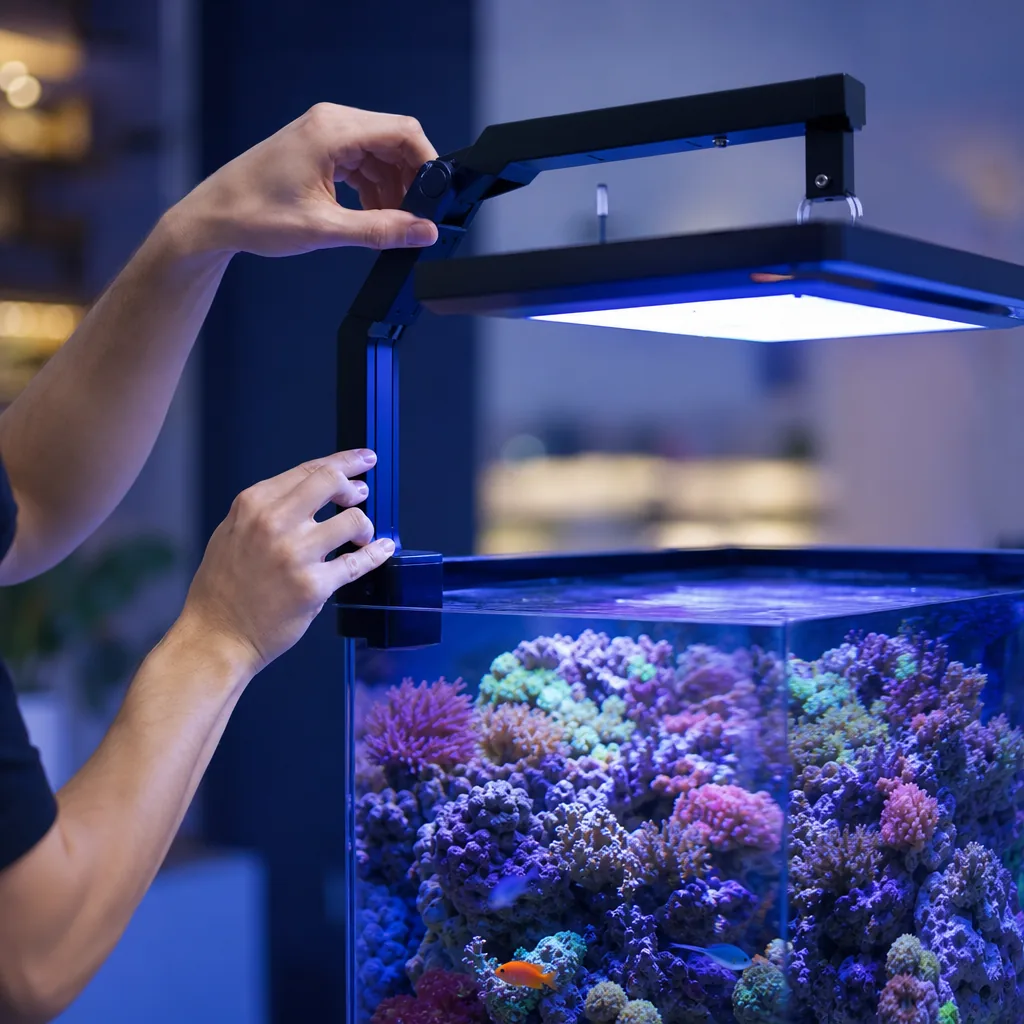
In the ocean, red and warm wavelengths get filtered out quickly with depth, so corals adapted to a blue-dominant world. Heavy blue and violet output both suits coral photosynthesis and triggers the fluorescent pigments that make a reef pop. A whiter, warmer light may look pleasant to your eye but often makes corals look dull and can favor nuisance algae.
Most quality reef lights let you tune the spectrum. The common approach is a blue-heavy mix with enough other wavelengths to keep the tank from looking purely violet.
Schedules: Lighting Over the Day
Corals do not benefit from being blasted at full power the moment the lights flip on. A natural-feeling schedule keeps them healthier and gives you more control over algae.
- Ramp up and down gradually. A sunrise and sunset cycle mimics nature and avoids shocking corals and fish.
- Run a peak period in the middle of the day. This is when intensity reaches its maximum, for a limited window rather than all day.
- Keep the total photoperiod moderate. Longer is not better; excessive lighting hours feed algae more than corals.
If you are dialing in a new fixture, increase intensity slowly over weeks rather than starting at full output. Corals acclimate to light gradually, and a sudden jump can bleach them.
Choosing and Placing a Fixture
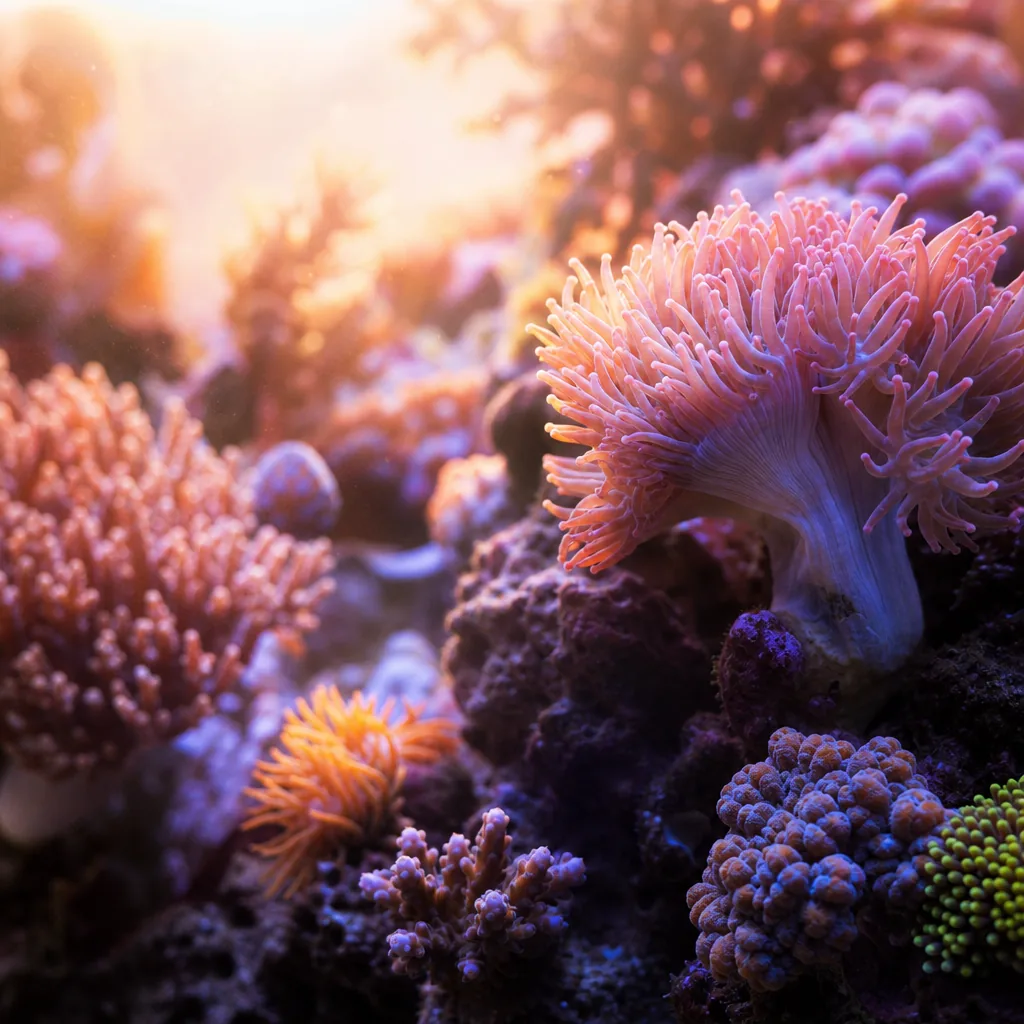
The right light depends on your tank’s depth and footprint and the corals you intend to keep. A deep tank needs more punch to push usable light to the bottom; a shallow tank needs less. Coverage matters too, since a light that only covers the center leaves dim corners.
You can compare reef-ready fixtures in our gear shop, and the saltwater hub covers how lighting pairs with flow and filtration. If you suspect your light is feeding algae, our guide on controlling saltwater algae walks through the connection.
Common Lighting Mistakes
- Buying on brightness alone. The number that matters is usable light at coral level, not how intense the fixture looks.
- Starting at full power. New corals and freshly upgraded lights both call for a slow ramp.
- Running lights too long. Extended photoperiods fuel algae and stress corals.
- Ignoring placement. Even the best light fails corals if they sit in a shadowed zone or far below their preferred intensity.
Bringing It Together
Reef lighting is just three levers: enough usable light for the corals you keep, a blue-leaning spectrum that drives photosynthesis and color, and a gentle daily schedule that ramps and peaks without running too long. Match those to your tank and your corals, ramp in slowly, and you will have a system that grows coral instead of algae. For more on building out the rest of your reef, browse the saltwater guides.
Frequently Asked Questions
What PAR do I need for my corals?
It depends on the coral. Soft corals do well in lower light, large-polyp stony corals prefer a moderate range, and small-polyp stony corals need the highest intensity. Build brighter and shaded zones and place each coral accordingly.
Why are reef tanks usually blue?
Corals evolved in deeper water where warm wavelengths are filtered out, so a blue-heavy spectrum suits their photosynthesis and triggers the fluorescent pigments that make them glow. Whiter light often makes corals look dull and can favor algae.
How long should reef lights stay on?
Keep the total photoperiod moderate with a ramped sunrise and sunset and a limited peak in the middle of the day. Running lights too long feeds nuisance algae more than it helps your corals.
Can I put a new light on full power right away?
No, ramp intensity up gradually over several weeks. Corals acclimate to light slowly, and a sudden jump to full output can bleach them. The same applies when upgrading to a stronger fixture.
Is a brighter light always better?
Not at all. What matters is usable light, or PAR, reaching your corals, plus the right spectrum and schedule. A very bright fixture can still deliver poor results if the spectrum is wrong or corals are placed in shadow.