
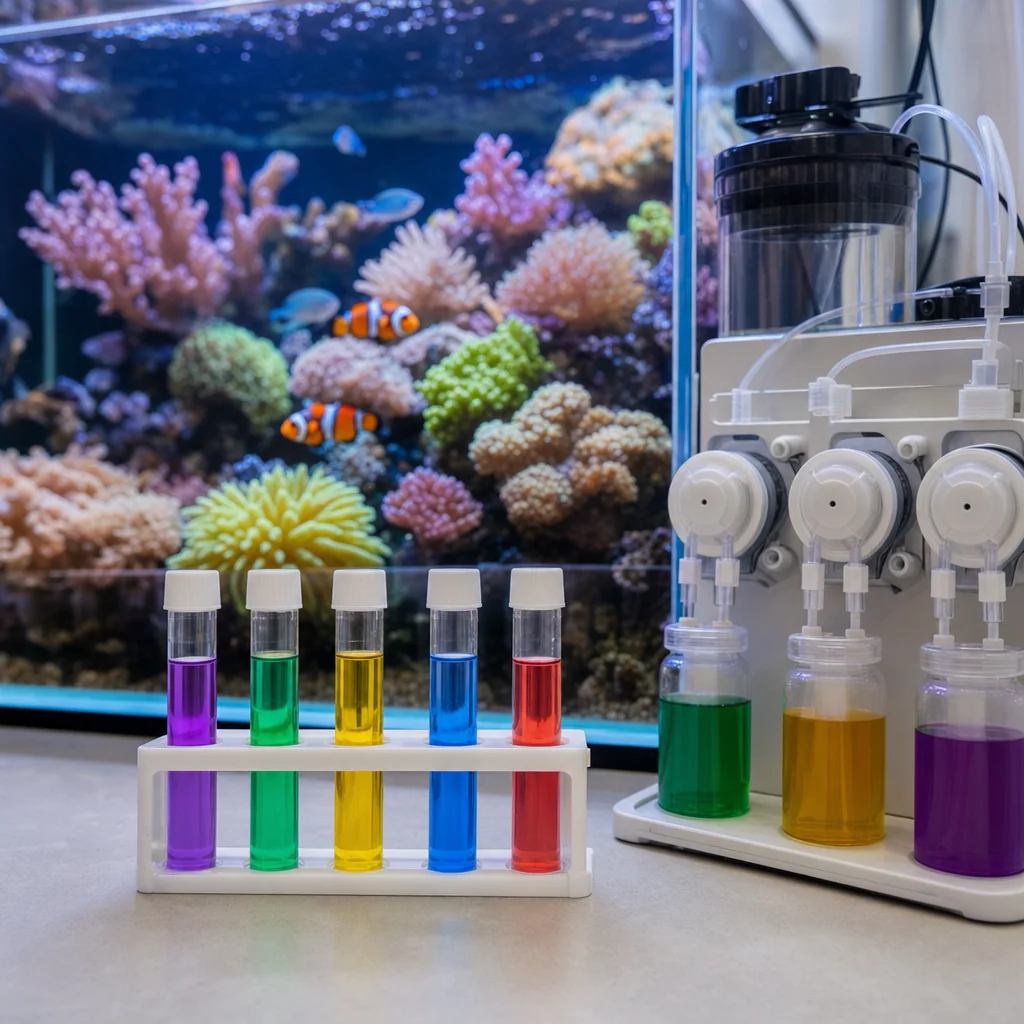
The single biggest predictor of whether your corals thrive or slowly fade is not hitting some textbook-perfect number. It is stability. Reef-building corals evolved in an ocean that barely moves chemically from one day to the next, and they punish sudden swings far more than they punish being a touch off the “ideal.” If your tank reads slightly low on alkalinity but holds rock-steady there, you will almost always have happier corals than someone bouncing all over the place chasing a target.
So the goal of this guide is not to chase perfection. It is to help you hold a sensible set of values flat, week after week.
The Parameters That Actually Matter
There is a long list of things you can test in a reef tank. Only a handful drive day-to-day coral health, and those are the ones worth your attention as a beginner or intermediate reefer.
Salinity
Salinity sets the baseline for everything else. Most reef keepers aim for natural seawater levels and hold it there with a refractometer rather than guessing. The key habit is topping off evaporated water with fresh RO/DI, not saltwater, because only the water evaporates while the salt stays behind.
Alkalinity, Calcium and Magnesium
These three work together to build coral skeletons, and they are the parameters most likely to drift as corals consume them.
- Alkalinity is your early-warning system. It moves fastest and tells you when consumption is outpacing replenishment.
- Calcium is the other half of the skeleton-building equation and usually stays put once dialed in.
- Magnesium keeps calcium and alkalinity in solution together. Let it fall and the other two get hard to control.
Temperature
A stable temperature in the typical reef range matters more than the exact figure. A reliable heater and a controller to guard against failure are worth far more than constant manual tweaking.
Why Stability Beats Perfection
When alkalinity swings several points in a day, corals visibly stress, recede at the tips, and can develop tissue burn. The mechanism is simple: corals constantly lay down skeleton at a rate tuned to their surroundings, and a sudden chemistry change forces them to re-regulate fast. Holding a slightly-off number steady gives them a consistent environment to adapt to.
This is why experienced reefers will tell a new hobbyist to pick a target and defend it, rather than nudging the tank toward a magazine number over a weekend.
Building a Simple Testing Routine
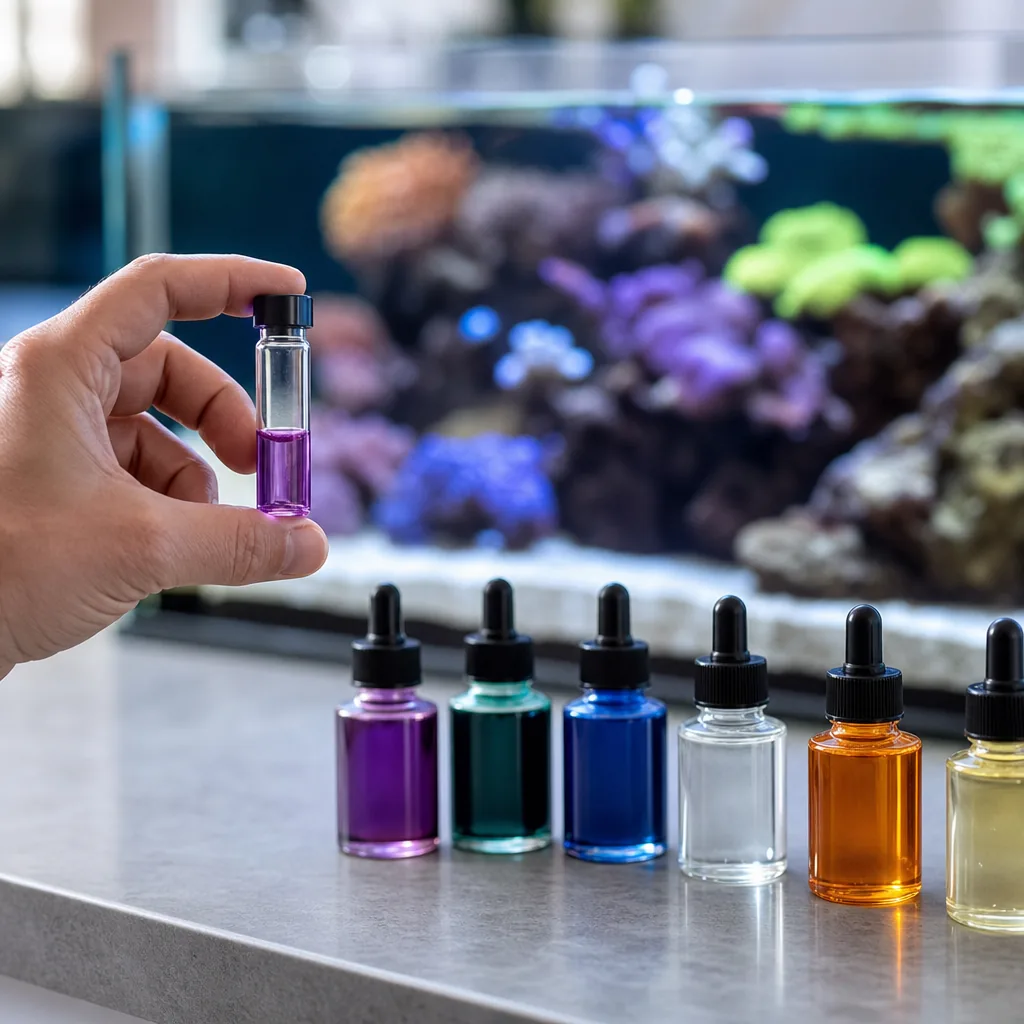
You cannot keep stable what you do not measure. A routine removes guesswork and catches drift before it becomes a swing.
- Test alkalinity two to three times a week at first. It is your fastest-moving value and the best signal that demand is rising.
- Test calcium and magnesium weekly until you know your tank’s consumption, then back off as it proves stable.
- Check salinity and temperature at every water change and any time something looks off.
- Log every reading. A trend over weeks tells you more than any single number ever will.
Good test kits and a quality refractometer are the foundation here. You can browse reliable testing and dosing options in our gear shop, and there is more reef-specific reading on the saltwater hub.
Dosing to Replace What Corals Use
As a coral collection grows, it consumes alkalinity and calcium faster than weekly water changes can replace. That is when dosing enters the picture.
Start With Water Changes
For a young or lightly stocked tank, consistent water changes with a quality salt mix often hold parameters well enough on their own. Do not over-engineer a tank that does not need it yet.
Move to Daily Dosing When Demand Rises
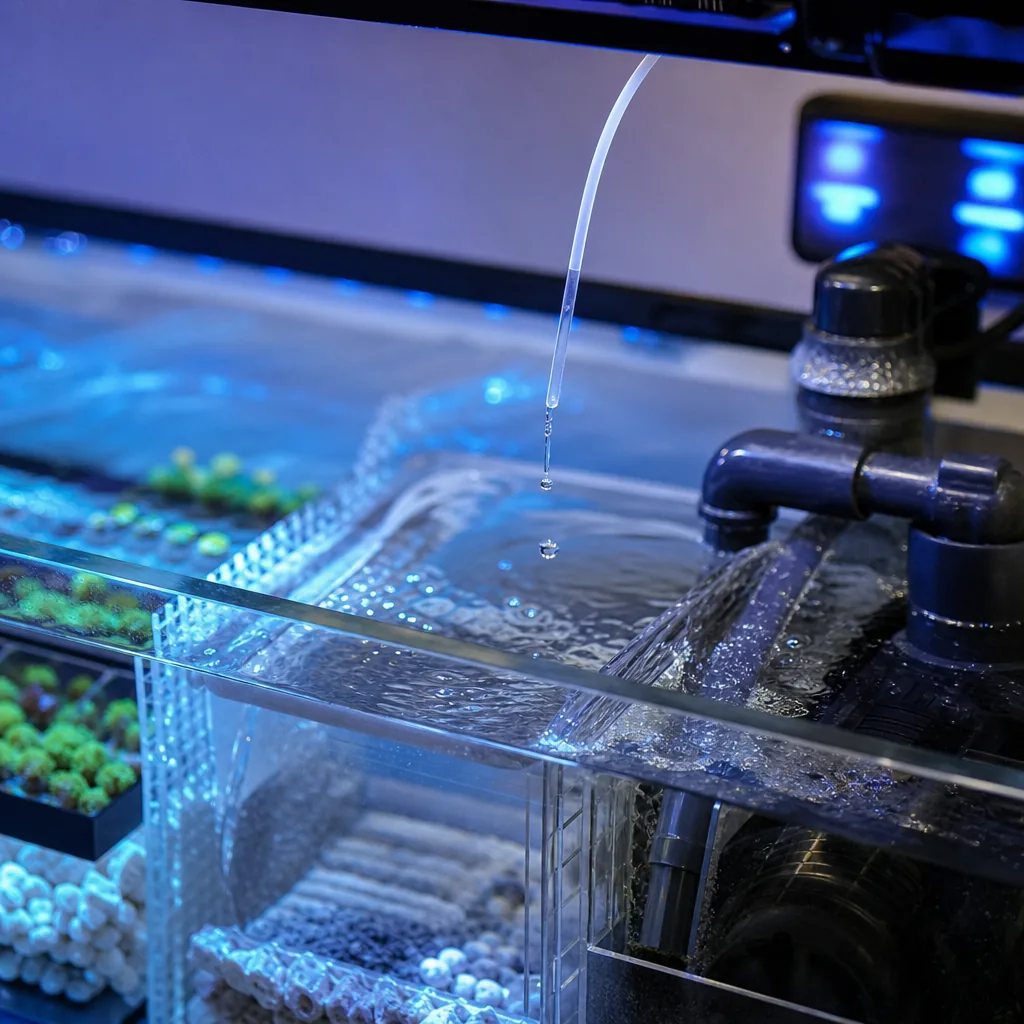
Once you can measure a clear daily drop in alkalinity, begin dosing to replace exactly what is consumed. The cleanest approach is to add a small, consistent amount on a schedule so the tank never swings, rather than a big correction once a week. A doser or a simple manual routine both work; consistency is what counts.
Common Mistakes That Wreck Stability
- Chasing numbers. Testing, adjusting, retesting, and adjusting again within a day creates the exact swings you are trying to avoid.
- Topping off with saltwater. This steadily raises salinity as water evaporates and salt accumulates.
- Ignoring magnesium. Low magnesium makes calcium and alkalinity nearly impossible to hold.
- No backup on heating. A single stuck heater can undo months of careful work overnight.
Putting It Together
Stable reef parameters come down to a few quiet habits: pick sensible targets, test on a schedule, log the trend, top off with fresh water, and replace what your corals consume in small steady amounts. Do that and you will spend far less time worrying about your tank and far more time enjoying it. If you are still setting up the rest of your system, our saltwater guides and the blog walk through lighting, flow, and stocking in the same practical spirit.
Frequently Asked Questions
How often should I test my reef tank?
Test alkalinity two to three times a week while you learn your tank, and calcium and magnesium weekly. Once your readings prove stable over several weeks, you can reduce testing frequency. Always retest after any major change.
Is it better to hit perfect numbers or keep them stable?
Stability wins almost every time. Corals adapt well to a slightly off value that stays flat, but they stress badly under sudden swings. Pick a sensible target and defend it.
Why is my alkalinity dropping?
Growing corals consume alkalinity to build their skeletons, so a drop usually means healthy demand. Replace what is used with consistent water changes or daily dosing rather than one large correction.
Do I need a dosing pump?
Not at first. Lightly stocked tanks often hold parameters with regular water changes alone. Add dosing once you measure a clear daily decline in alkalinity that water changes cannot keep up with.
What happens if magnesium is too low?
Low magnesium makes it very hard to keep calcium and alkalinity in solution together, so both become unstable no matter how much you dose. Keep magnesium in range first, then the other two are far easier to control.