
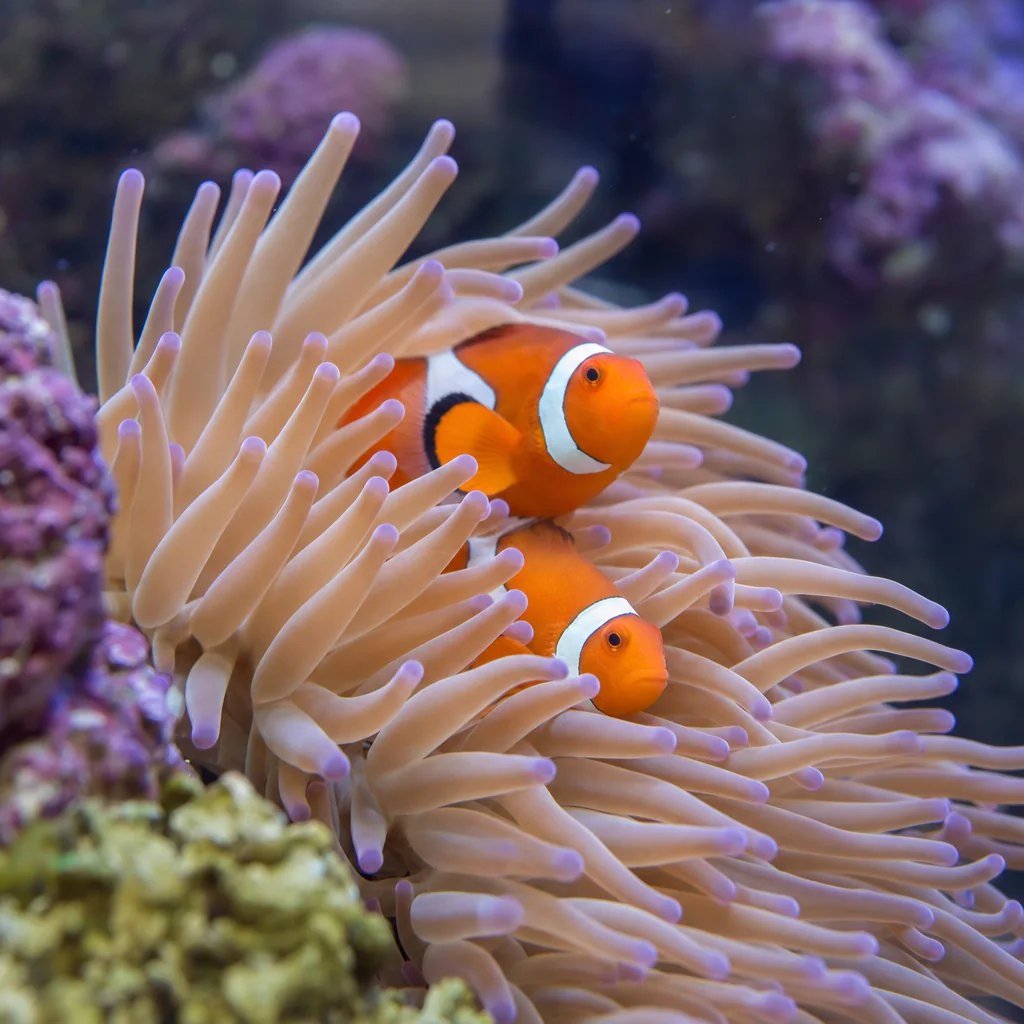
There’s a reason the clownfish is the most iconic saltwater fish in the hobby, and it isn’t just a famous animated movie. Clownfish are hardy, tank-bred in huge numbers, bursting with personality, and forgiving of the small mistakes every new reefer makes. If you’re setting up your first saltwater tank, a pair of clowns is almost the perfect starting point. This guide covers everything you need — tank requirements, the anemone myth, feeding, behavior, and how to keep them happy for the long haul.
Why Clownfish Make the Ideal First Fish
Several things put clownfish at the top of the beginner list:
- They’re hardy. Clownfish tolerate the minor parameter swings of a young tank better than most saltwater species.
- They’re tank-bred. The vast majority sold today are captive-bred, which means they’re already adjusted to aquarium life, eat prepared foods readily, and don’t deplete wild reefs.
- They stay small. A pair fits comfortably in a modest tank.
- They have personality. Clownfish are bold, interactive, and quick to recognize the person who feeds them.
If you’re still building your system, our saltwater setup guide walks through getting the tank ready before any fish go in.
Tank Requirements
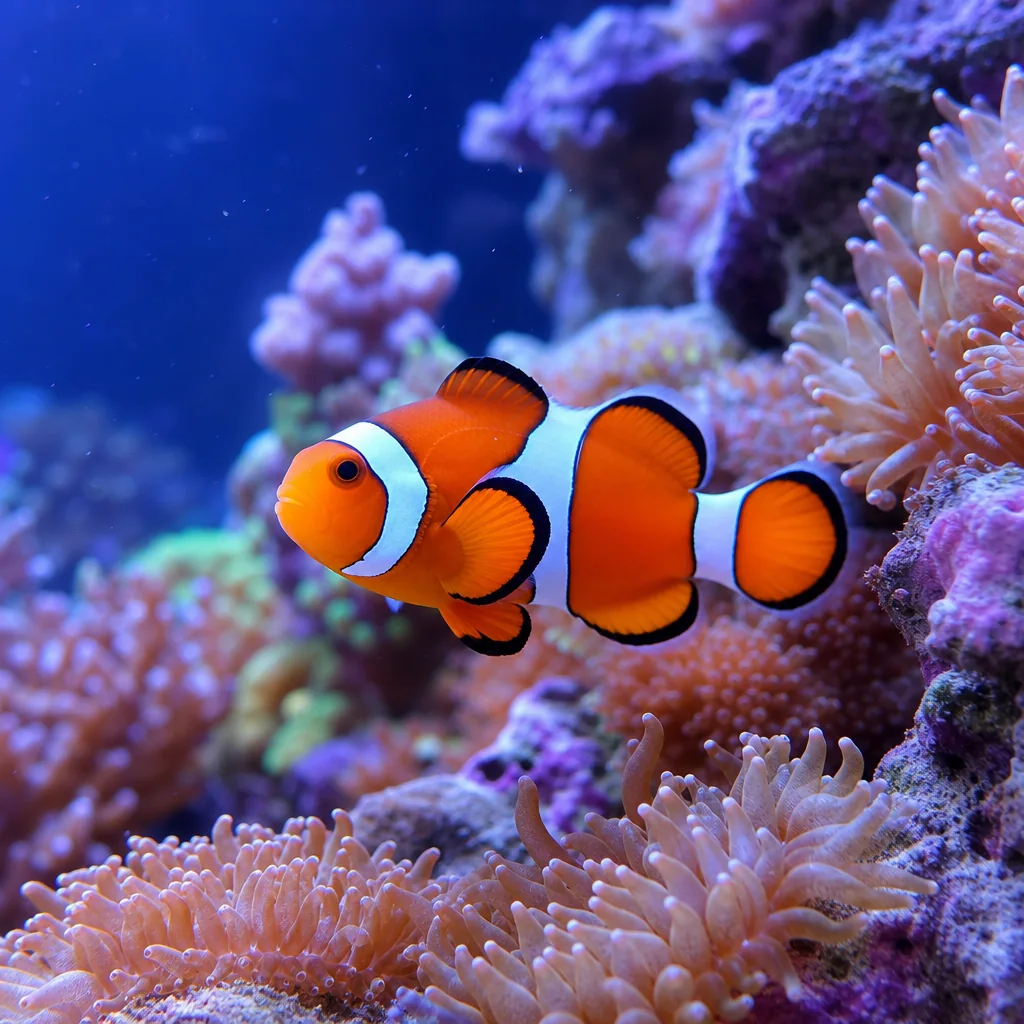
Clownfish aren’t demanding, but they need a properly run saltwater system like any marine fish.
Tank size
A single clownfish or a bonded pair can live in a tank as small as 20 gallons, though a bit more room is always better and gives you flexibility to add tankmates. Avoid the tiny desktop nanos sometimes marketed for clowns — small volumes are harder to keep stable.
Water parameters
- Temperature around 78°F, held steady.
- Salinity near 1.025 specific gravity.
- Zero ammonia and nitrite — the tank must be fully cycled first.
- Low, stable nitrate maintained with regular water changes.
A good heater, a refractometer, and a reliable test kit are essentials — you’ll find them on our recommended gear page.
The Anemone Myth
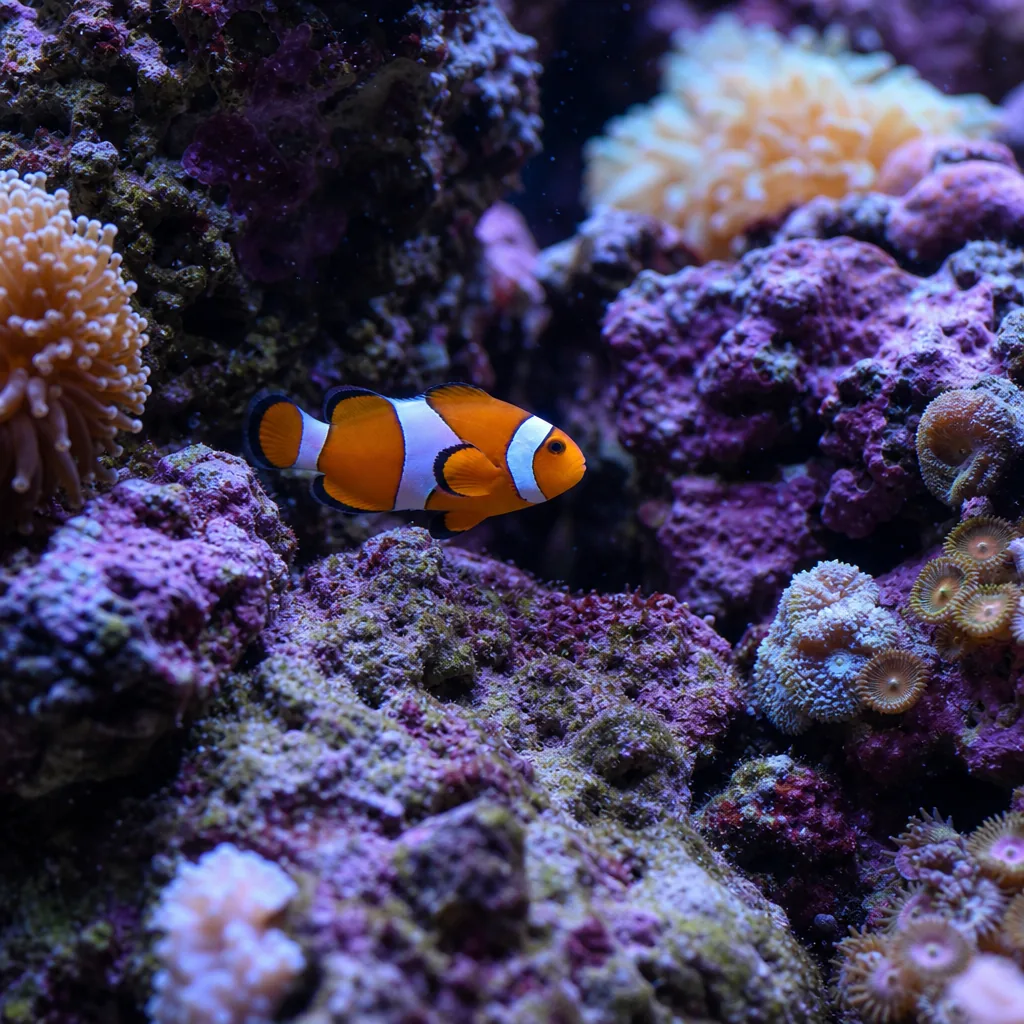
This is the question every new clownfish keeper asks: do I need an anemone? In the wild, clownfish live symbiotically among the stinging tentacles of host anemones, protected by a mucus coating that keeps them from being stung. It’s one of nature’s great partnerships.
But here’s the truth: clownfish do not need an anemone to thrive in captivity. Tank-bred clowns often have never seen one and live perfectly happy, healthy lives without one. In fact, anemones are more demanding than the clownfish — they need intense lighting, pristine water, and a mature, stable tank, and they can wander into powerheads. For a beginner, skipping the anemone is the wiser choice.
Clownfish will often “host” in something else instead — a frogspawn coral, a rock crevice, or even a powerhead. It’s common and endearing to watch them adopt a substitute home. If you do eventually want a true host anemone, wait until your tank is well established and you’ve gained experience.
Feeding
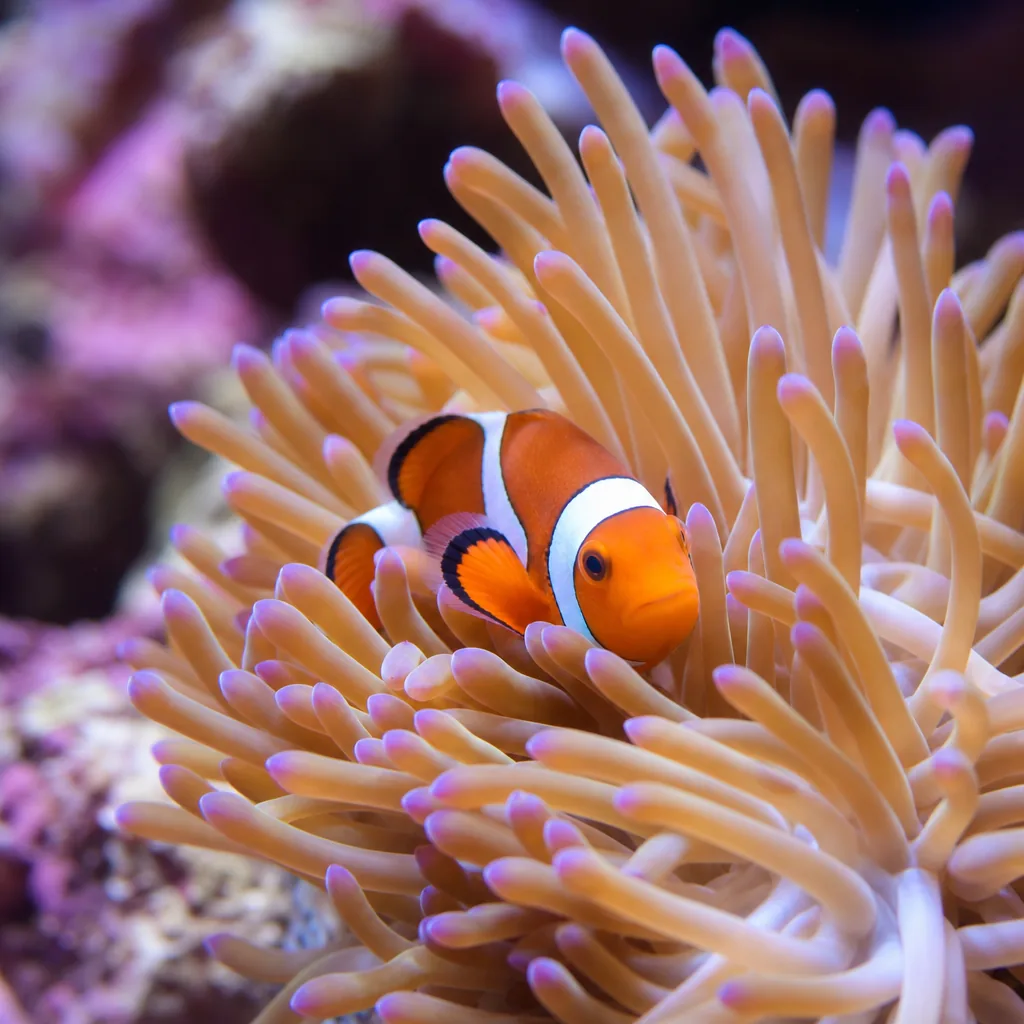
Clownfish are omnivores and easy to feed, which is part of their charm. A varied diet keeps them healthy and colorful:
- A quality marine flake or pellet as the staple.
- Frozen foods like mysis shrimp and brine shrimp for variety and condition.
- Occasional foods with marine algae content, since clowns benefit from some plant matter.
Feed small amounts once or twice a day — only what they finish in a couple of minutes. Overfeeding is a leading cause of water-quality problems in small tanks.
Behavior and Keeping Pairs
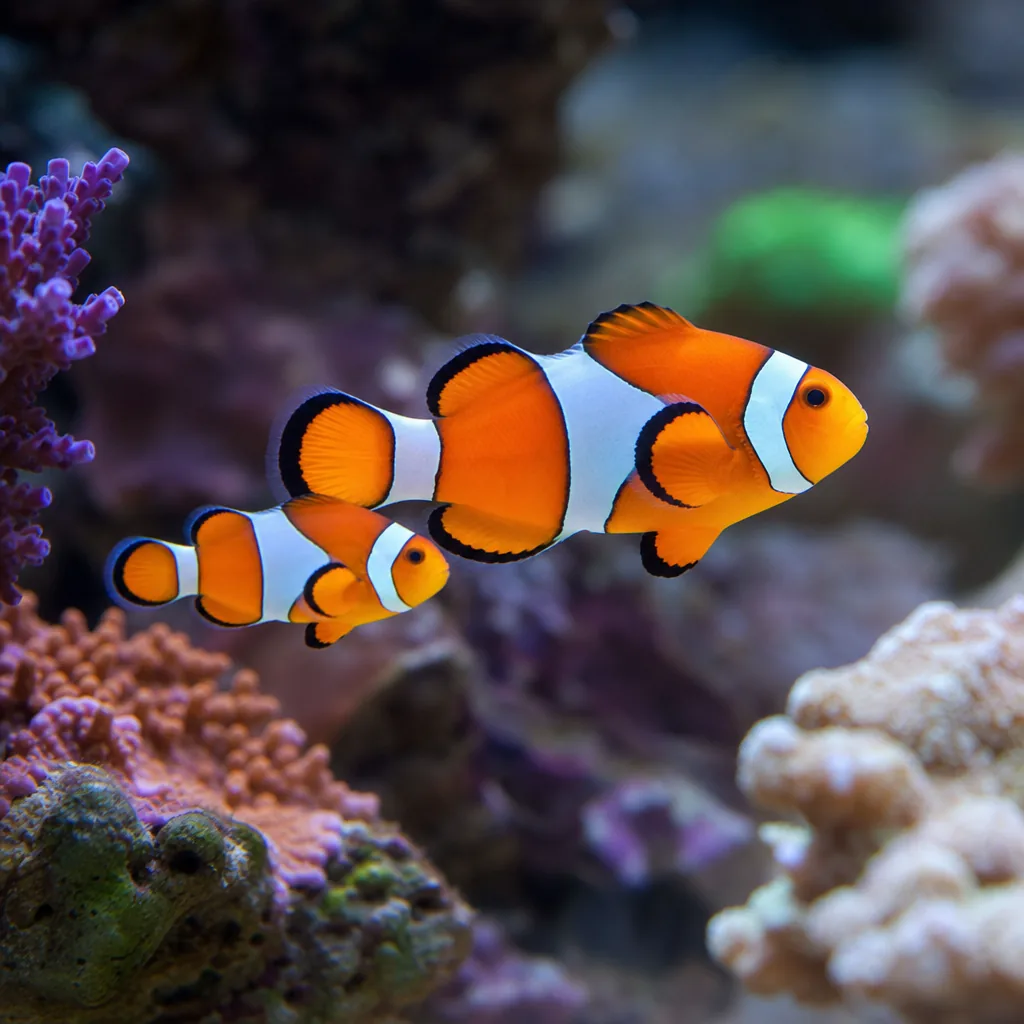
Clownfish have a fascinating social structure. All clownfish are born male, and within a group the dominant individual becomes female. A bonded pair consists of a large female and a smaller male — and the pair bond is for life.
Getting a pair
- The easiest route is to buy two small juveniles at once. The dominant one will mature into the female.
- Stick to one species per tank. Different clownfish species housed together often fight, sometimes fatally.
- Don’t add a second clownfish to an established single adult unless it’s clearly smaller — the resident may bully a same-size newcomer.
Once bonded, a pair will often pick a spot in the tank to call home and defend it, wiggling and dancing in a way that makes them endlessly watchable.
Health and Common Issues
Clownfish are hardy, but a few issues come up. Marine ich can appear after stress or a new addition — quarantine new fish to prevent it. Brooklynella, sometimes called clownfish disease, hits stressed, freshly imported wild fish, which is another reason tank-bred clowns are the safer buy. And as with any marine fish, most health problems trace back to unstable water or poor quarantine habits, so good husbandry prevents the majority of trouble. For more, see the AquaticRig health guides.
Conclusion
Clownfish earn their popularity honestly: they’re tough, beautiful, full of character, and ideal for someone learning the saltwater ropes. Give them a stable, fully cycled tank, a varied diet, and skip the demanding anemone until you’re experienced — and a bonded pair will reward you with years of bold, charming behavior. For most people, clownfish aren’t just a good first saltwater fish; they’re the one that hooks you on the hobby for good. Explore more saltwater care guides on AquaticRig.
Frequently Asked Questions
Do clownfish need an anemone?
No — tank-bred clownfish thrive without one and often never encounter an anemone in their lives. Anemones are actually more demanding than the clownfish, needing intense light and a mature tank, so beginners are better off skipping them.
How big a tank do clownfish need?
A single clown or bonded pair can live in a tank as small as 20 gallons, though a bit more space is always better. Avoid the tiniest desktop nanos, since small volumes are harder to keep stable.
Can I keep two clownfish together?
Yes, the easiest way is to buy two small juveniles of the same species at once so they pair naturally. Avoid mixing different clownfish species or adding a same-size newcomer to an established adult, as both often lead to fighting.
What do clownfish eat?
They’re omnivores that do well on a quality marine flake or pellet staple supplemented with frozen mysis and brine shrimp, plus some marine algae content. Feed small amounts once or twice a day, only what they finish in a couple of minutes.
Are clownfish good for beginners?
They’re one of the best beginner saltwater fish — hardy, tank-bred, small, and full of personality. Give them a fully cycled, stable tank and good husbandry, and they’re remarkably forgiving while you learn.