
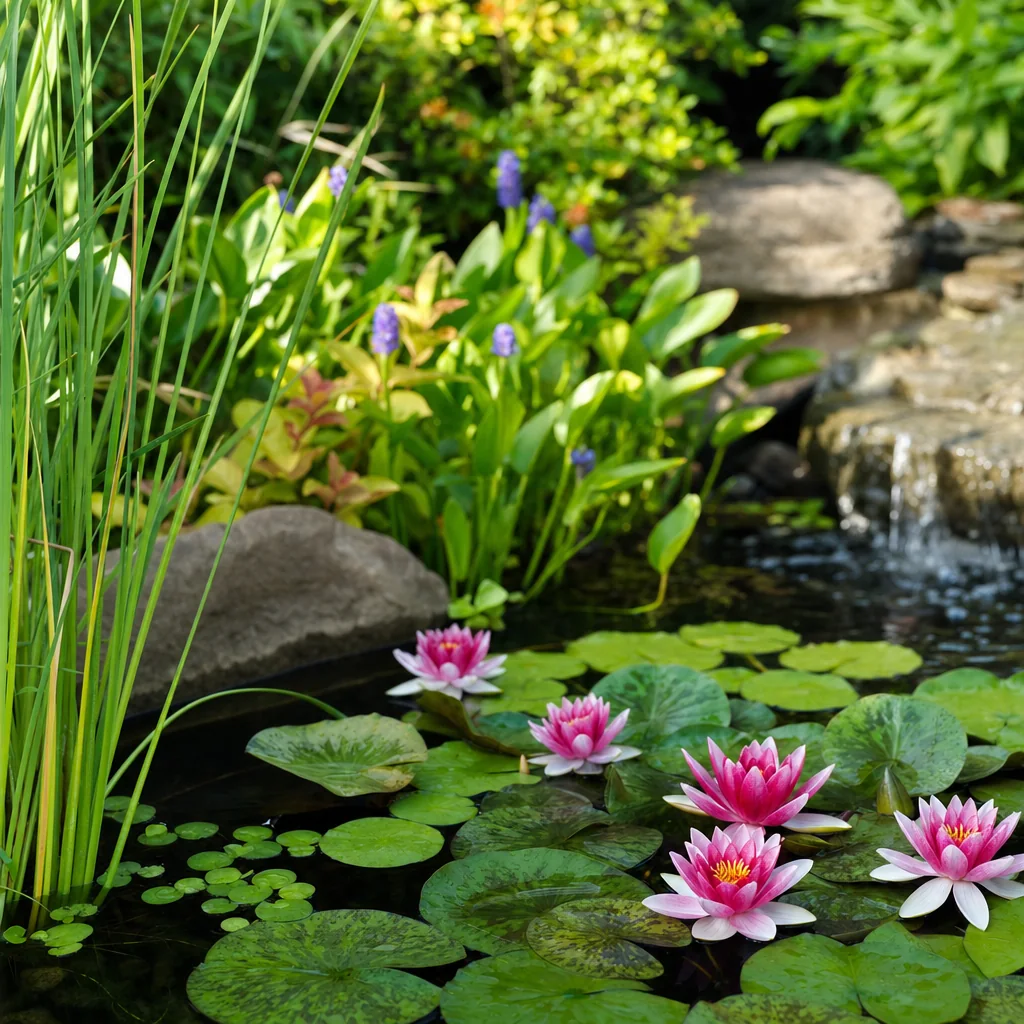
Pond plants are the most underrated piece of pond keeping. New pond owners tend to treat them as decoration, something to add once the water’s sorted out. In reality, plants are working filtration. They pull nutrients out of the water that algae would otherwise feed on, oxygenate the pond, shade the surface, and give fish cover. A well-planted pond is dramatically easier to keep clear and healthy than a bare one. Choosing the right mix is one of the smartest things you can do for the whole system.
The key is to plant in layers, using each of the three main categories of pond plant, because each does a different job. Here’s how to build that mix.
Why Plants Matter for Pond Health
Before the lists, it’s worth understanding what plants actually do for the pond:
- They starve out algae by competing for the same nutrients. This is the big one. Heavily planted ponds have less green water and string algae.
- They shade the water, reducing the sunlight that fuels algae and keeping summer temperatures down.
- They oxygenate, especially submerged species, supporting fish and beneficial bacteria.
- They provide cover and spawning habitat for fish.
Plant for these jobs, not just for looks, and the rest of pond care gets easier. For more on the payoff, see our guide on keeping pond water clear.
Marginal Plants (The Shelf Plants)
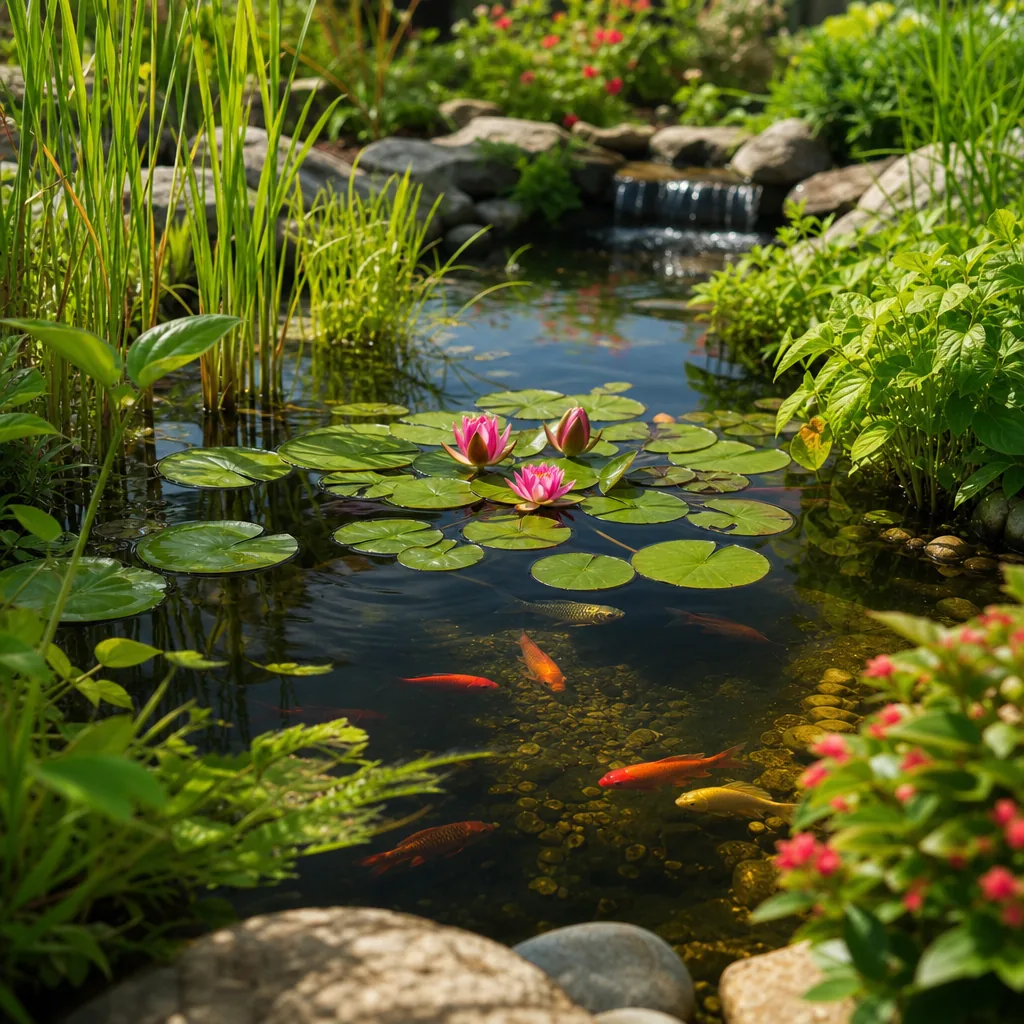
Marginal plants grow around the edges of the pond on the shallow shelf, with their roots submerged and their foliage above the water. They’re nutrient sponges and they soften the pond’s edges beautifully.
Good marginal choices
- Pickerel rush for upright structure and flowers
- Marsh marigold for early color
- Iris varieties suited to wet feet
- Rushes and sedges for vertical texture
- Watercress, which is also a strong nutrient remover
Place these on your marginal shelf in planting baskets so you can move and divide them easily.
Floating Plants (Surface Shade and Fast Filtration)
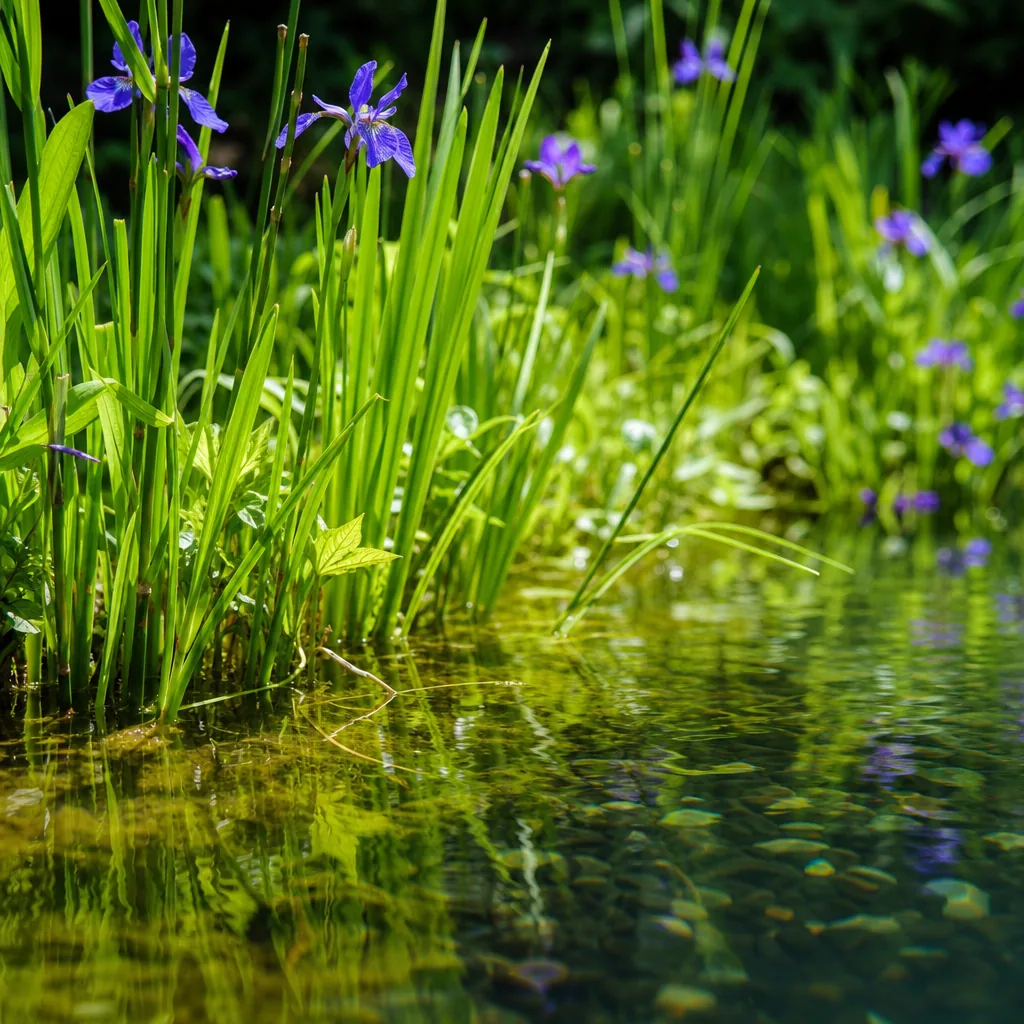
Floating plants drift on the surface with their roots dangling free in the water. They’re some of the fastest, most effective nutrient removers you can add, and they shade the surface to suppress algae.
- Water hyacinth and water lettuce are vigorous filterers and surface shaders, though they grow fast and need thinning. Note that these are restricted or banned in some regions because they’re invasive, so check local rules before buying.
- Frogbit is a smaller, well-behaved floater.
- Water lilies, while rooted rather than truly floating, deserve a mention here: their pads shade large areas of surface, cooling the water and shading out algae, and they’re the classic pond centerpiece.
Aim to cover a meaningful portion of the surface with floating leaves and pads, but not the entire thing, so gas exchange continues.
Submerged Plants (The Oxygenators)
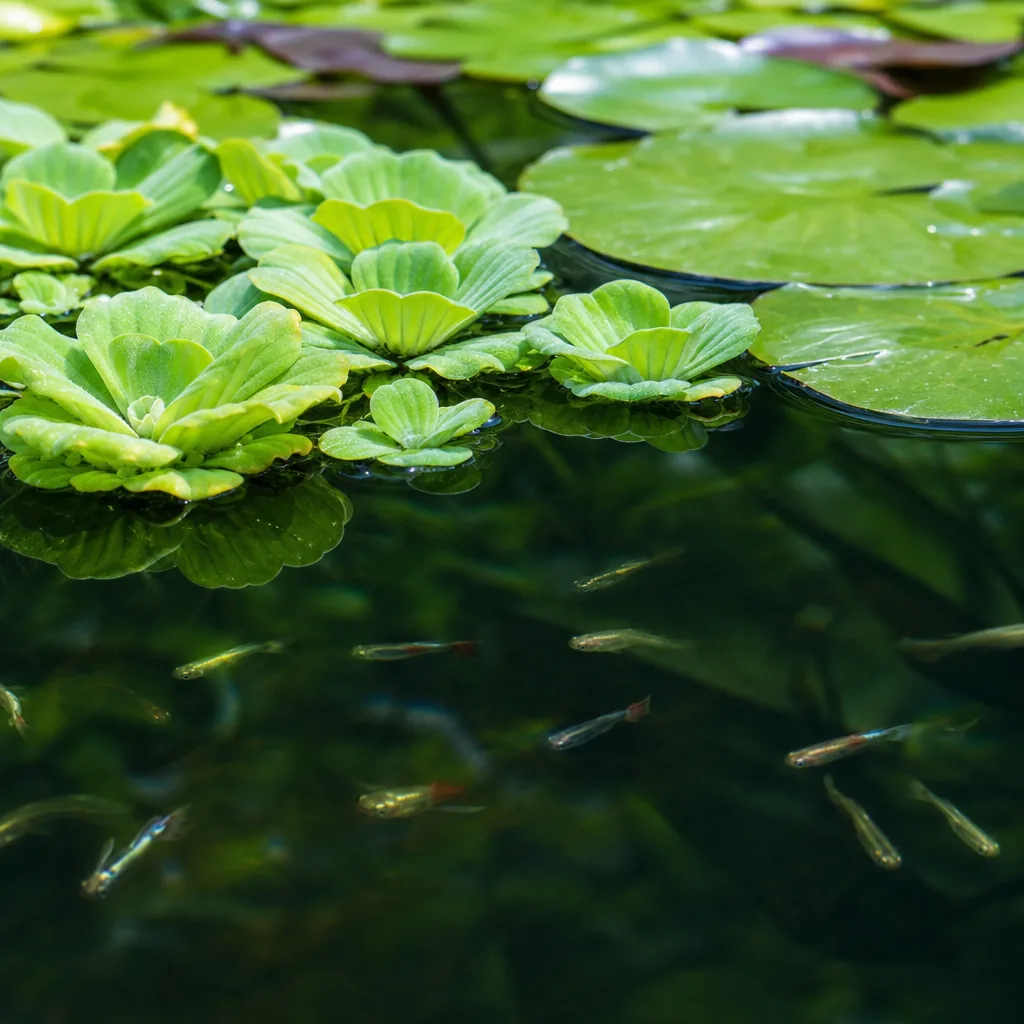
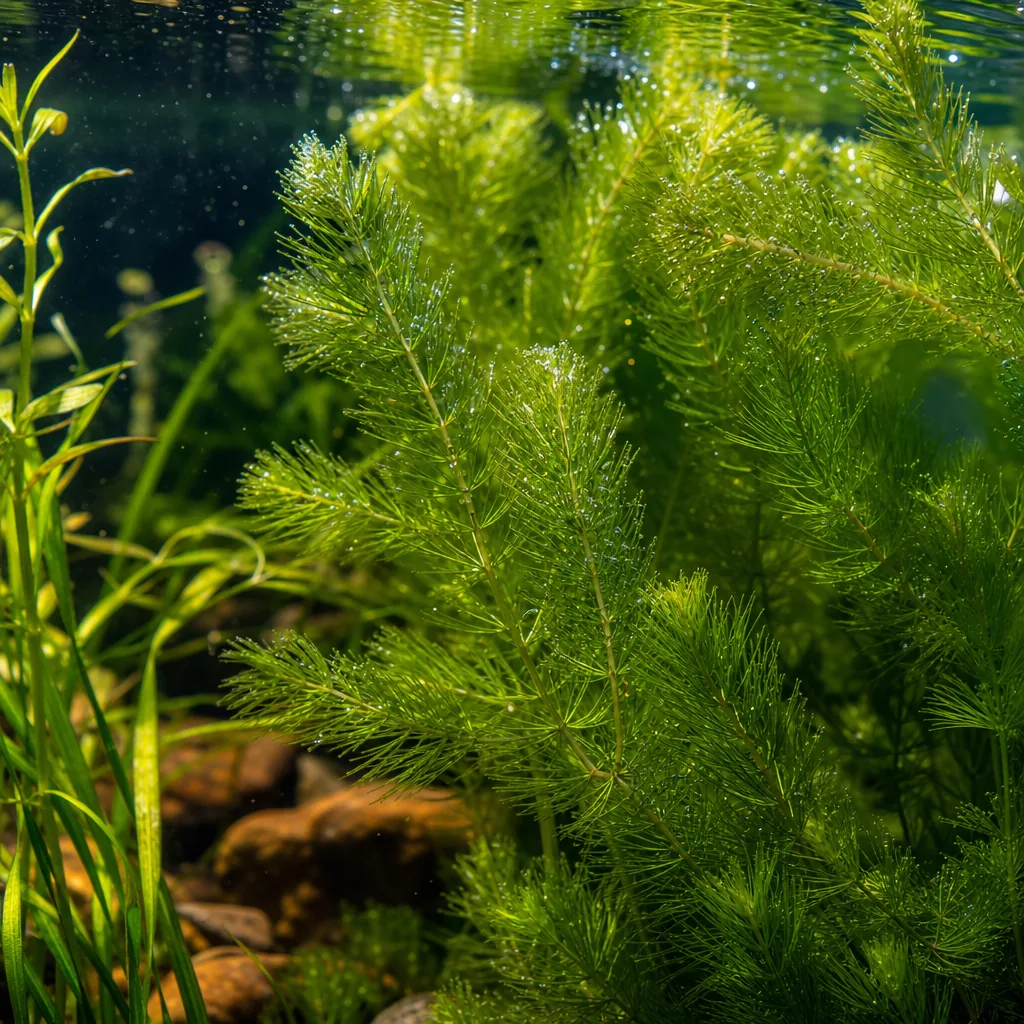
Submerged or oxygenating plants grow entirely underwater and are the quiet workhorses of pond clarity. Because they live in the water column, they compete directly with suspended algae for nutrients and add oxygen during the day.
- Hornwort, a fast-growing, rootless oxygenator that’s hard to kill
- Anacharis (elodea), a classic submerged oxygenator
- Eelgrass and other vallisneria-type submerged grasses
These often get overlooked because you barely see them, but they do a huge amount of the nutrient-competition work that keeps water clear. Don’t skip them.
How to Build a Balanced Planting Plan
The healthiest ponds use all three layers together. A simple approach:
- Ring the shelf with marginals for nutrient uptake and a natural edge.
- Add submerged oxygenators in the deeper zone to fight algae and oxygenate.
- Float surface plants and lilies to shade a good portion of the surface.
Plant generously from the start. It’s much easier to keep a heavily planted pond balanced than to add plants later while fighting an algae bloom. You can find pond plant baskets, aquatic planting media, and accessories in our pond gear picks.
A Few Planting Tips
- Use aquatic planting baskets and proper aquatic soil, not regular potting mix, which leaches nutrients and clouds water.
- Top baskets with gravel to keep fish from digging out the soil.
- Thin aggressive floaters regularly so they don’t blanket the surface.
- Check local regulations before adding any plant that may be invasive in your area.
The Bottom Line
Pond plants are filtration you can see. Layer marginals on the shelf, oxygenators in the deep zone, and floaters and lilies on top, plant generously, and your pond will be clearer, cooler, and healthier with far less effort. For the algae side of the equation, read our guide on controlling pond algae next.
Frequently Asked Questions
Do pond plants really help keep water clear?
Yes, significantly. Plants compete with algae for the same nutrients, so a heavily planted pond has far less green water and string algae. They also shade the surface and oxygenate the water. A good plant mix is one of the most effective clarity tools you have.
What are oxygenating plants and do I need them?
Oxygenating plants are submerged species like hornwort and anacharis that grow entirely underwater. They compete directly with suspended algae for nutrients and add oxygen during the day. They’re easy to overlook because you barely see them, but they do major clarity work, so include them.
How much of my pond surface should plants cover?
Aim to shade a meaningful portion of the surface with floating plants and lily pads to suppress algae and cool the water, but not the entire surface. Leaving open water ensures gas exchange continues and your fish have surface access. Thin aggressive floaters regularly.
Can I use regular potting soil for pond plants?
No. Regular potting mix leaches nutrients into the water, clouds it, and feeds algae. Use proper aquatic planting baskets and aquatic soil, then top the basket with gravel so fish can’t dig the soil out. This keeps the water clear and the plants fed.
Are any pond plants illegal to buy?
Some fast-spreading floaters like water hyacinth and water lettuce are restricted or banned in certain regions because they’re invasive. Always check your local regulations before purchasing aquatic plants, and never release any pond plant into natural waterways.