
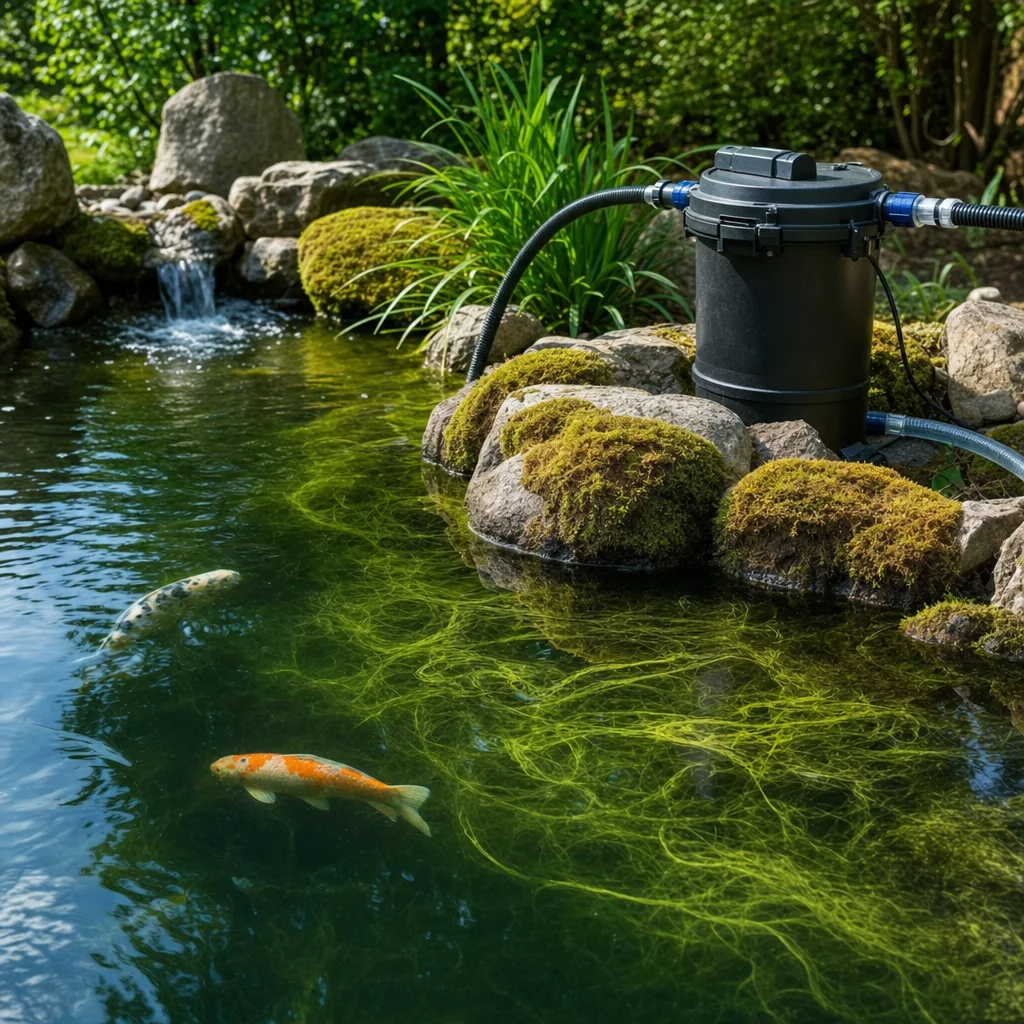
Every pond gets algae. A pond with zero algae would be a sterile, lifeless system, so the goal isn’t elimination, it’s control. The problem is when algae takes over: pea-green water you can’t see through, or thick mats of stringy green that clog pumps and smother plants. Both are signs the pond is out of balance, and both respond to the same fundamental approach. Once you understand why algae explodes, controlling it becomes a steady, manageable routine rather than a losing battle.
Let’s separate the two main types you’ll deal with, then go through the practical fixes that actually work.
The Two Algae Problems You’ll Face
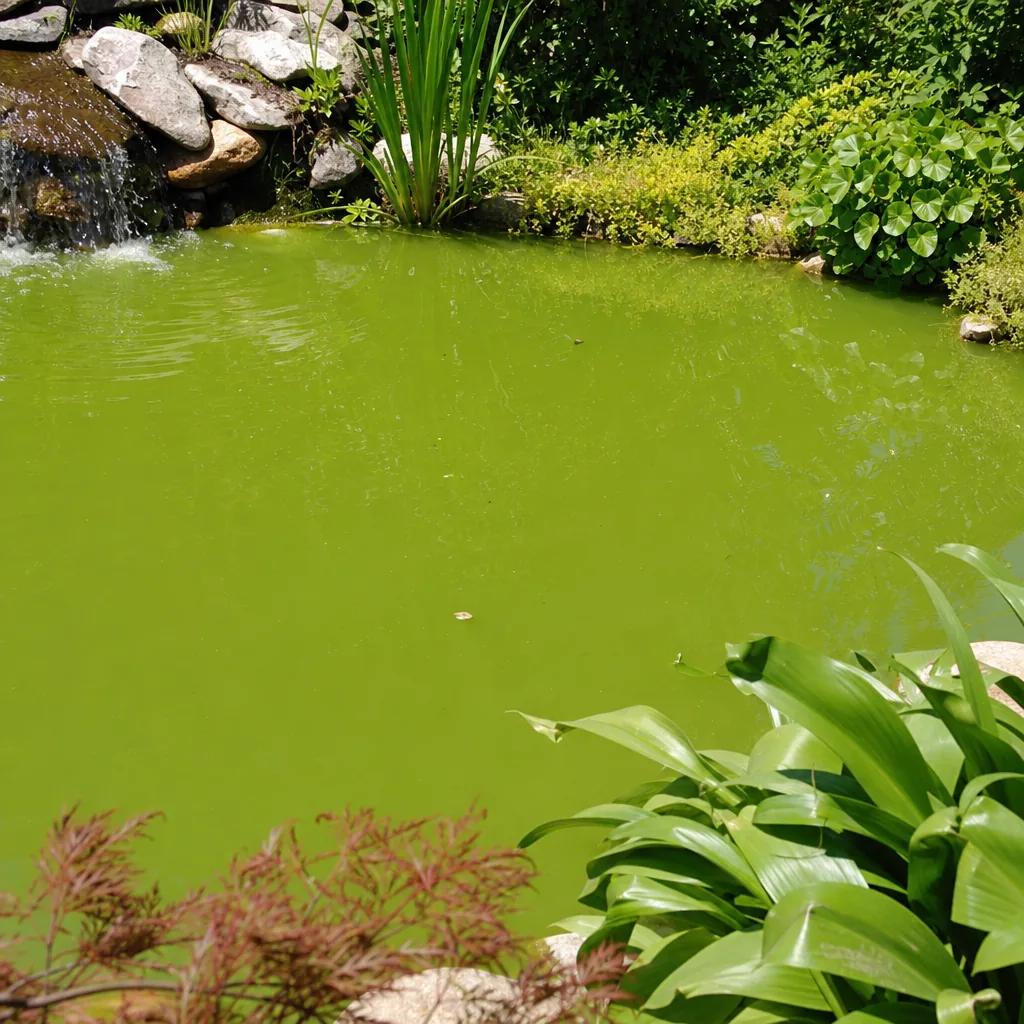
Green water (free-floating algae)
This is microscopic algae suspended in the water, turning the whole pond pea-soup green so you can’t see your fish. It’s most common in spring, in new ponds, and in heavily sunlit ponds with excess nutrients.
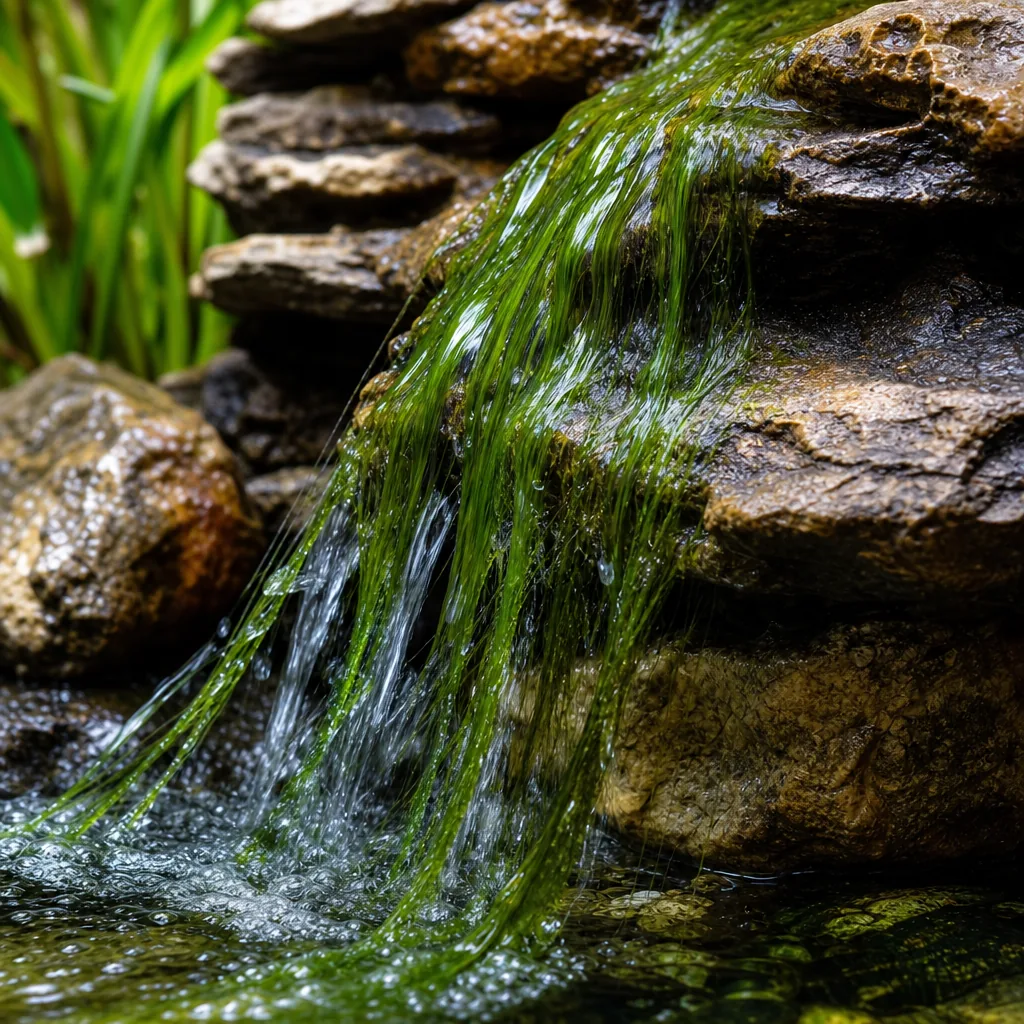
String algae (filamentous algae)
This is the stringy, hair-like or matted green algae that clings to rocks, waterfalls, and plants and can form thick floating mats. It’s stubborn and physical, and it tends to thrive in the same nutrient-rich conditions.
Different look, same root causes: too many nutrients, too much light, and not enough competition from plants.
Why Algae Takes Over
Algae is opportunistic. Give it food and light and it blooms. The usual culprits:
- Excess nutrients from overfeeding fish, overstocking, fish waste, and decaying leaves and debris.
- Too much direct sunlight, which fuels photosynthesis.
- Too few plants to compete for those nutrients.
- A new or immature pond that hasn’t established balance yet.
Notice these are the same factors behind cloudy water generally. Fix the underlying balance and you fix both. Our guide on keeping pond water clear goes deeper on that balance.
How to Control Green Water
Add a UV clarifier
For free-floating green water specifically, a UV clarifier is the most reliable fix. As water passes the UV bulb, algae cells clump together so your mechanical filter can trap them, clearing the water without harming fish or plants. It’s the go-to tool for stubborn green water and you can find pond UV units in our pond gear picks.
Starve it with plants
Plants compete for the exact nutrients algae needs. Submerged oxygenators, floating plants, and lily pads that shade the surface all reduce the resources and light available to algae. A well-planted pond resists green water naturally.
Cut the nutrient supply
- Feed fish only what they finish in a few minutes.
- Don’t overstock; fewer fish means less waste.
- Remove decaying leaves and debris before they break down.
How to Control String Algae
String algae is more physical, so the approach is part removal, part prevention.
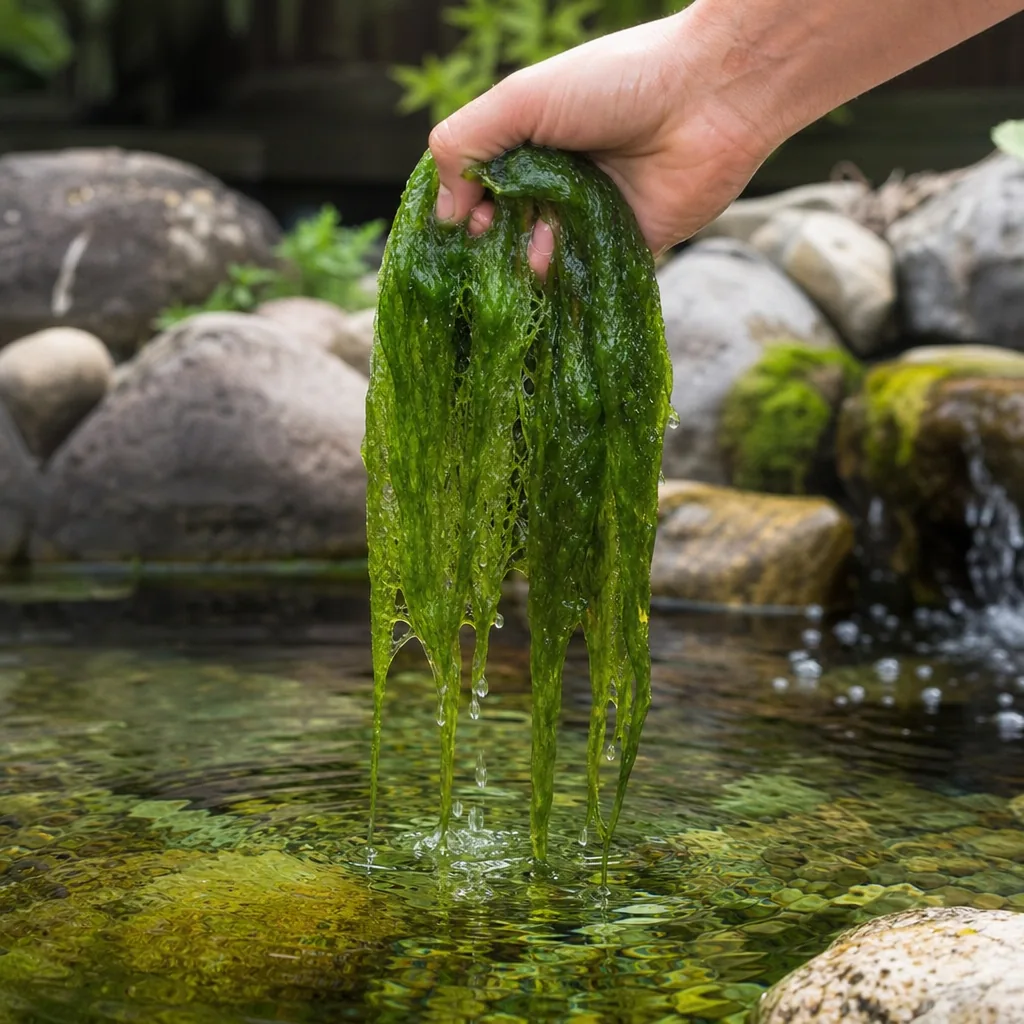
- Pull it out by hand. Twirl mats onto a stick or net and remove them. Physical removal gives instant relief and takes nutrients out of the pond with the algae.
- Shade and compete. The same heavy planting that fights green water deprives string algae of light and nutrients.
- Improve circulation. Stagnant zones let string algae establish; good flow makes the pond less hospitable to it.
- Consider beneficial bacteria treatments. Adding beneficial bacteria helps break down the organic muck and excess nutrients that feed algae, tilting the balance back toward clear water.
Note that UV clarifiers do not kill string algae, since string algae isn’t free-floating. For string algae, removal plus nutrient control is the answer.
A Word on Algaecides
Chemical algaecides can knock algae back fast, but treat them as a last resort, not a routine. When a heavy algae bloom dies off all at once, its decomposition consumes oxygen, which can stress or harm fish, and it dumps nutrients back into the water that fuel the next bloom. If you use one, follow directions carefully, treat in stages rather than all at once, and run aeration. Lasting control comes from balance, not chemicals.
The Long-Term Algae Strategy
- Plant heavily for nutrient competition and surface shade.
- Feed sparingly and stock conservatively.
- Run adequate filtration and good circulation.
- Use a UV clarifier for green water.
- Remove debris and string algae physically and regularly.
- Be patient with new ponds, which often green up before balancing out.
Stack these habits and algae stays at the healthy background level it’s supposed to, rather than taking over your pond.
The Bottom Line
You can’t eliminate algae, and you shouldn’t try. You control it by removing its fuel and competition: plant heavily, feed lightly, filter well, run a UV clarifier for green water, and pull string algae by hand. Build those habits and algae becomes a minor background detail instead of your summer nemesis. For more seasonal care, see our guide on winterizing your pond.
Frequently Asked Questions
What’s the difference between green water and string algae?
Green water is microscopic free-floating algae that turns the whole pond pea-soup green. String algae is the stringy, hair-like or matted algae that clings to rocks, waterfalls, and plants. They look different but share the same causes: excess nutrients, too much light, and too few competing plants.
Does a UV clarifier kill string algae?
No. A UV clarifier only treats free-floating green-water algae as it passes through the unit. String algae clings to surfaces and never reaches the UV bulb, so it isn’t affected. For string algae, physical removal plus nutrient control and heavy planting are the answer.
How do I get rid of string algae?
Pull it out physically by twirling the mats onto a stick or net, which instantly removes both the algae and its nutrients. Then prevent regrowth with heavy planting for shade and competition, good circulation, and reduced feeding. Beneficial bacteria treatments can help break down the muck that feeds it.
Are algaecides safe for my fish?
Use them cautiously and only as a last resort. When a large algae bloom dies off at once, its decomposition consumes oxygen and can stress or harm fish. If you use an algaecide, follow directions, treat in stages, and run aeration. Lasting control comes from balance, not chemicals.
Why does my new pond turn green so fast?
New ponds haven’t yet established the plants and beneficial bacteria that keep nutrients in check, so algae blooms easily, especially in spring sunlight. This is normal and often self-corrects as the pond matures. Adding plants, a UV clarifier, and patience will get it under control.