
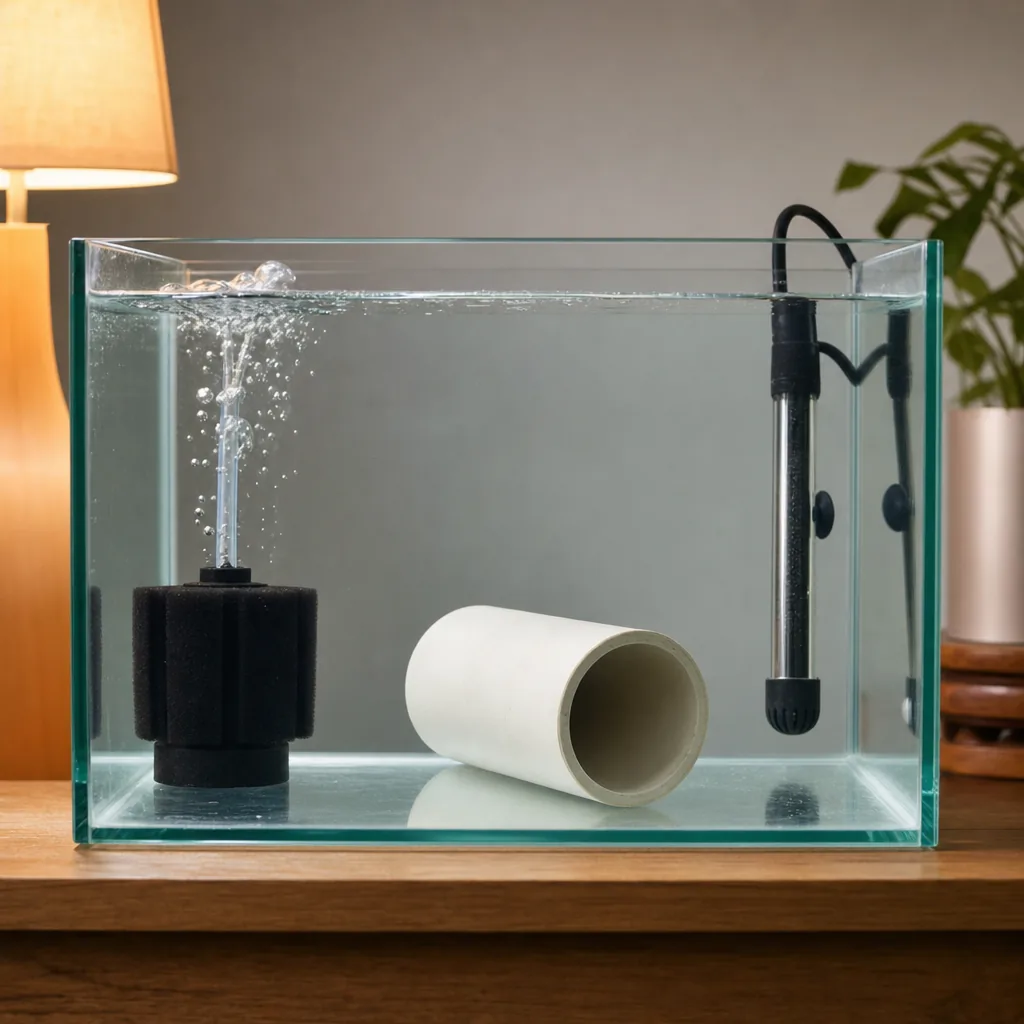
A small, simple quarantine tank is one of the most useful pieces of insurance a fishkeeper can own. This guide covers the gear, timing, and calm routine that protect a display tank before a new fish ever joins it.
This guide keeps the decision practical: start with the conditions you have, make one measured change at a time, and let the aquarium tell you whether the plan is working.
What You Need Before You Start
Preparation prevents most expensive mistakes. Gather the basics first so the work can be done calmly rather than in the middle of a problem.
- A bare tank or food-safe tub.
- Adjustable heater and thermometer.
- Seasoned sponge filter or air stone.
- Lid, net, and basic liquid test kit.
A Simple Step-by-Step Approach
Work through these steps in order. Slowing down early is usually faster than correcting a rushed setup later.
Step 1: Set the tank up before buying fish
Keep the change small enough that you can observe the result. Check the tank’s temperature, water movement, and livestock behavior as you go, then give the system time to settle before deciding what comes next.
Use the existing routine as your baseline. If a reading, flow pattern, or animal behavior changes after this step, pause there instead of stacking another correction on top. Steady progress is more useful than a rapid change that makes the source of a problem impossible to identify.
Step 2: Match temperature and water chemistry to the display
Keep the change small enough that you can observe the result. Check the tank’s temperature, water movement, and livestock behavior as you go, then give the system time to settle before deciding what comes next.
Use the existing routine as your baseline. If a reading, flow pattern, or animal behavior changes after this step, pause there instead of stacking another correction on top. Steady progress is more useful than a rapid change that makes the source of a problem impossible to identify.
Step 3: Give new fish a quiet observation period
Keep the change small enough that you can observe the result. Check the tank’s temperature, water movement, and livestock behavior as you go, then give the system time to settle before deciding what comes next.
Use the existing routine as your baseline. If a reading, flow pattern, or animal behavior changes after this step, pause there instead of stacking another correction on top. Steady progress is more useful than a rapid change that makes the source of a problem impossible to identify.
Step 4: Test ammonia and nitrite often
Keep the change small enough that you can observe the result. Check the tank’s temperature, water movement, and livestock behavior as you go, then give the system time to settle before deciding what comes next.
Use the existing routine as your baseline. If a reading, flow pattern, or animal behavior changes after this step, pause there instead of stacking another correction on top. Steady progress is more useful than a rapid change that makes the source of a problem impossible to identify.
Step 5: Move fish only when they are eating and symptom-free
Keep the change small enough that you can observe the result. Check the tank’s temperature, water movement, and livestock behavior as you go, then give the system time to settle before deciding what comes next.
Use the existing routine as your baseline. If a reading, flow pattern, or animal behavior changes after this step, pause there instead of stacking another correction on top. Steady progress is more useful than a rapid change that makes the source of a problem impossible to identify.
Common Mistakes to Avoid
Most problems come from trying to solve too much at once. Avoid these shortcuts:
- Adding new fish directly to the display.
- Using a filter with no biological media.
- Sharing nets between tanks without disinfecting.
If something looks wrong, test the water and correct the underlying condition before adding another product or changing the whole routine.
Keep the Routine Sustainable
A clean, ready quarantine setup makes careful fishkeeping easier, not harder. For more setup help and carefully chosen gear, explore our freshwater guides and the AquaticRig shop.
Frequently Asked Questions
What is the most important part of quarantine tank setup?
Start with stable water, appropriate equipment, and a measured routine. The exact details vary by setup, but rushing several changes at once is what creates most avoidable problems.
How often should I check on it?
Check daily when making a new change, then settle into a weekly routine once conditions are stable. Record unusual readings or behavior so you can spot a trend early.
Do I need expensive equipment?
No. Reliable basics used consistently matter more than a long list of premium gear. Spend first on the tool that solves a real need in your particular setup.
What should I do if something goes wrong?
Pause, test the water, confirm equipment is operating, and make the smallest safe correction first. Avoid stacking treatments or major adjustments before you know the cause.
How long does it take to see results?
Some improvements are immediate, but biological changes take time. Give the system several days or weeks as appropriate, while monitoring water quality and livestock response.