
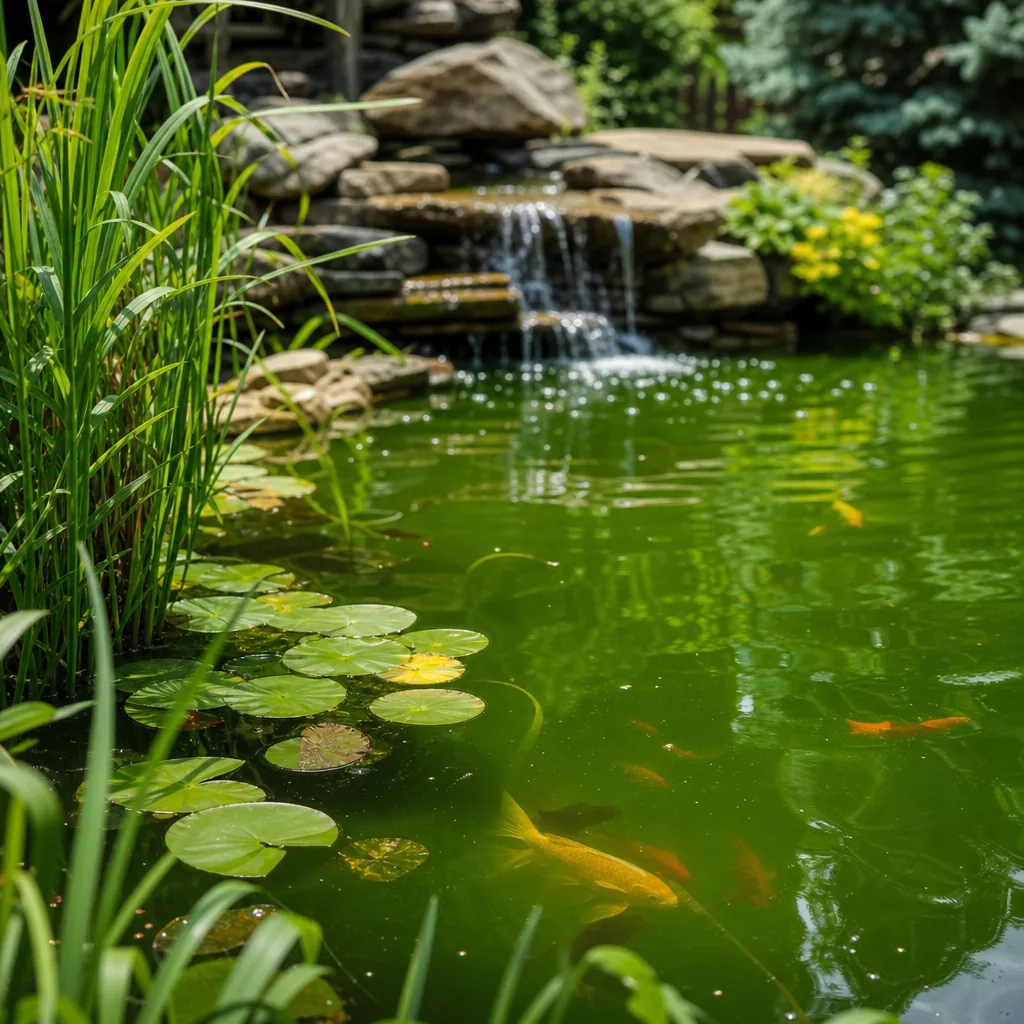
You built a pond so you could actually see your fish, and instead you are staring at a bowl of pea soup. Green water is one of the most common complaints in the hobby, and the good news is that it is almost always fixable once you understand what is really happening. The bad news is that most quick-fix products only treat the symptom, not the cause.
What Green Pond Water Actually Is
That green tint is a bloom of microscopic free-floating algae, usually single-celled species suspended throughout the water column. This is different from the stringy green mats you find clinging to rocks and liner, which is filamentous string algae. Green water is measured in millions of cells per liter, and once a bloom takes off it can turn a clear pond opaque in a matter of days.
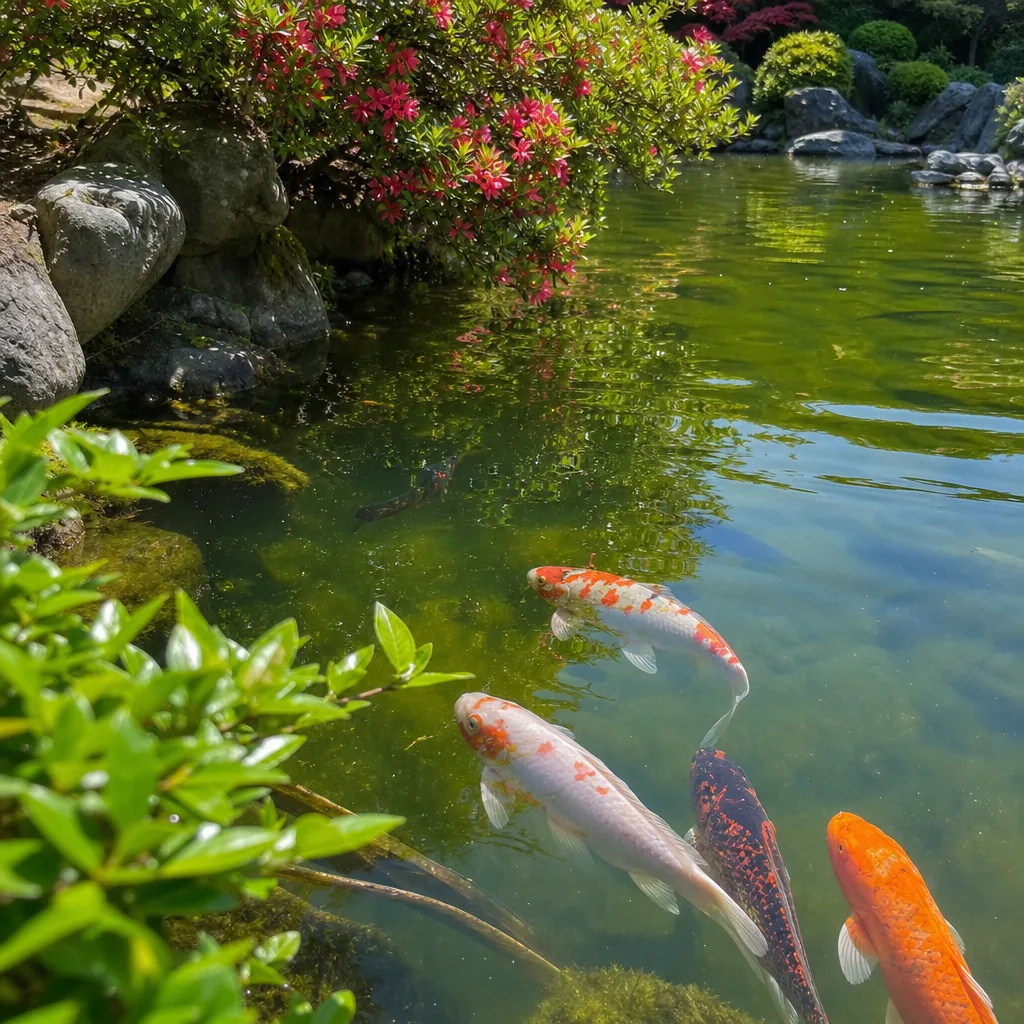
It is worth saying up front: green water rarely harms fish. In fact, a mild bloom can be a food source. The problem is aesthetic and, more importantly, it is a signal that your pond has more nutrients and light than it can balance on its own.
The Real Causes
Algae needs two things to explode: nutrients and sunlight. Almost every green-water problem traces back to an excess of one or both.
- Too many nutrients. Fish waste, uneaten food, decaying leaves, and runoff from a fertilized lawn all load the water with nitrogen and phosphorus. Overfeeding and overstocking are the top culprits.
- Too much direct sun. A pond in full sun all day is a greenhouse for algae, especially in warm months.
- A young or undersized filter. A new pond has not built up the beneficial bacteria that convert waste, and an underpowered filter cannot keep up with the bioload.
- Not enough plants. Plants compete with algae for the same nutrients. A pond with bare water and no competition hands algae an open buffet.
How to Clear It, Step by Step
1. Cut the nutrient supply
Start with feeding. Feed only what your fish finish in a couple of minutes, and skip a day or two while you rebalance. Net out fallen leaves and debris, and if you have a bottom layer of muck, a gentle clean-out will remove a huge nutrient reservoir. If lawn runoff reaches the pond, redirect it.
2. Add competition with plants
This is the single most effective long-term fix. Floating plants like water lettuce and water hyacinth, plus surface coverage from lilies, shade the water and pull nutrients straight out of it. Marginal and submerged plants help too. Aim to cover a good portion of the surface. Our pond section covers plant selection in more depth.
3. Add shade
If your pond bakes in sun all day, surface plant coverage does double duty by blocking light. Even partial shade slows a bloom considerably.
4. Support the filter and biology
Make sure your filter is sized for your pond volume and your fish load, and clean the mechanical media on schedule without sterilizing the biological media. A pond that is only a few weeks old often clears on its own once bacteria colonies mature. Rushing that process is the most common mistake new pond keepers make.
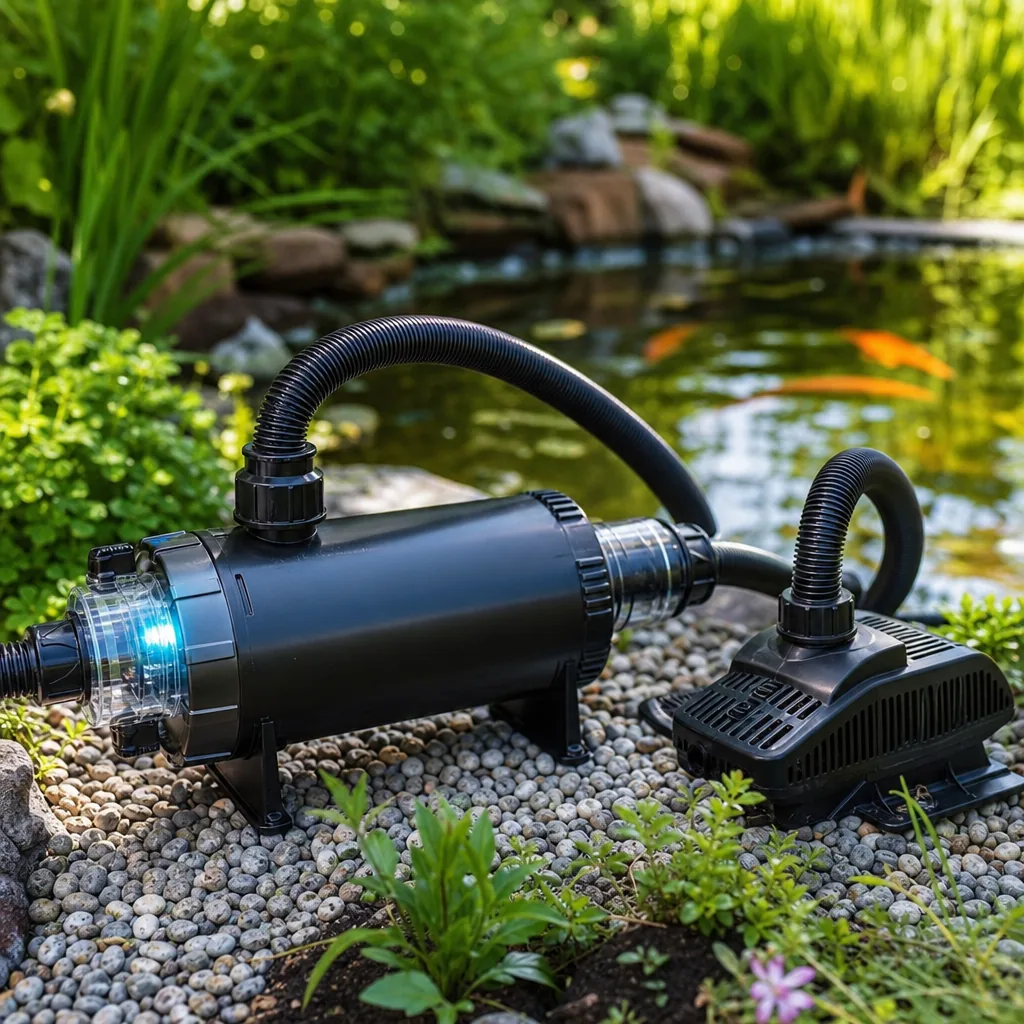
5. Consider a UV clarifier
A UV clarifier is the one tool that directly kills free-floating algae as water passes through it. It does not fix the underlying nutrient problem, but paired with plants and sensible feeding it will clear green water reliably. We break down whether one is worth it in our guide to pond UV clarifiers.
What About Chemical Algaecides?
Algaecides can knock down a bloom fast, but they come with a catch. When a large volume of algae dies at once, it decays and consumes oxygen, which can stress or harm fish. If you use one, dose conservatively, run aeration, and treat it as a temporary reset rather than a solution. The bloom will come right back if the nutrients and light are still there.
How to Keep It Clear
Once the water clears, prevention is mostly about restraint and balance:
- Do not overstock. A crowded pond produces more waste than any filter or plant load can absorb.
- Feed lightly and never leave uneaten food sitting.
- Keep the surface reasonably covered with plants through the growing season.
- Remove leaves and debris before they rot.
- Do partial water changes during warm spells to dilute nutrients.
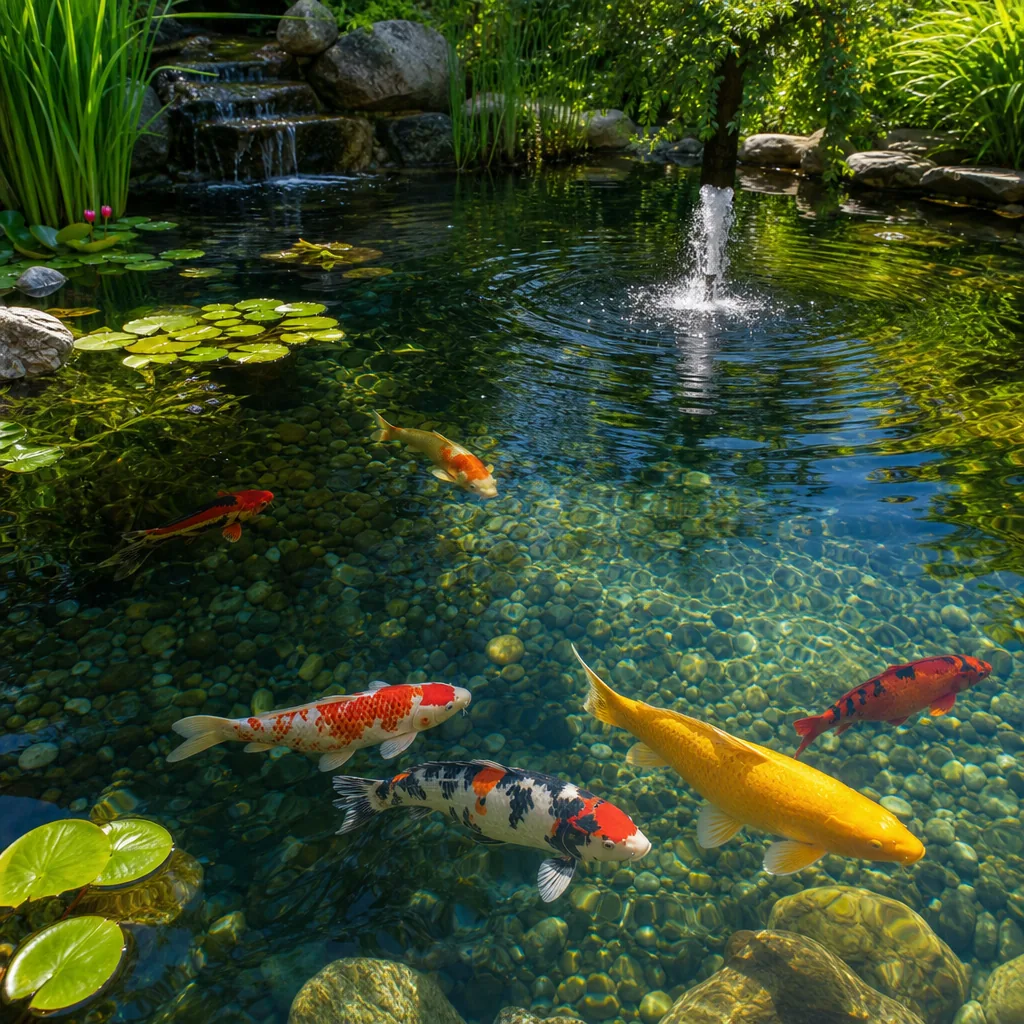
Green water is frustrating, but it is really just your pond telling you the inputs and the balance are off. Fix the nutrient load, add living competition, manage the light, and give the biology time to catch up. If you want to add a UV clarifier or upgrade your filtration, our gear picks can point you to sensible options for your pond size.
Frequently Asked Questions
Is green pond water harmful to my fish?
Usually not. A mild algae bloom is harmless and can even be a food source. It is an aesthetic issue and a sign of excess nutrients or light, not a direct danger to healthy fish.
How long does it take to clear green pond water?
With a UV clarifier you can see results in one to two weeks. Natural methods like adding plants and reducing feeding take longer, often several weeks, but produce a more stable long-term balance.
Will a bigger filter fix green water?
A properly sized filter helps by processing waste, but standard filters do not remove free-floating algae. You need to address nutrients, light, and competition from plants, or add a UV clarifier for a direct fix.
Do algaecides work on green pond water?
They can clear a bloom quickly, but the algae returns if the underlying nutrient and light problem remains. Dying algae also consumes oxygen, so aerate well and treat algaecides as a temporary reset only.
Why did my pond turn green after I cleaned it?
A deep clean can remove beneficial bacteria and disturb the balance, giving algae an opening. Avoid sterilizing biological media, and let the pond re-establish over a few weeks rather than cleaning too aggressively.