
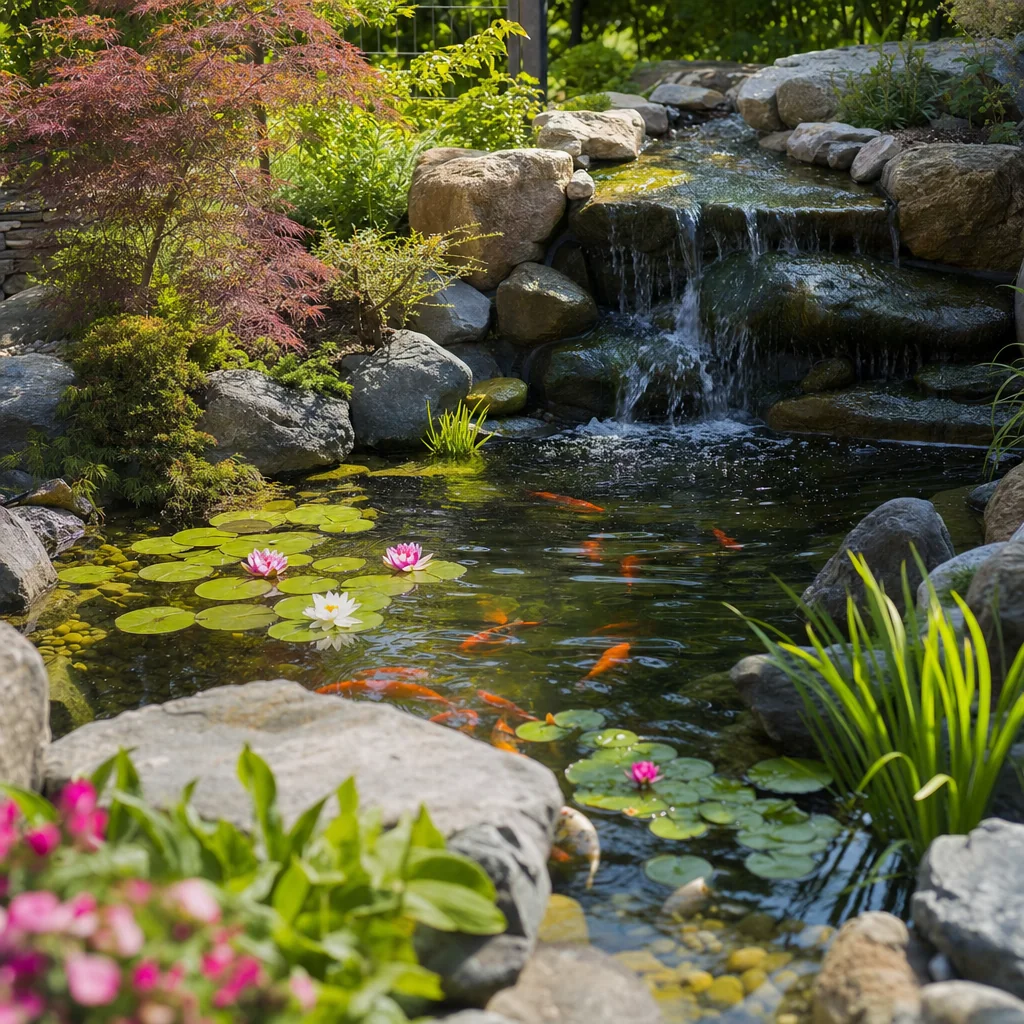
A backyard pond looks like a big project, and parts of it are real work, but the build itself is more straightforward than most beginners expect. Get the planning right and the digging, lining, and plumbing fall into place. Rush the planning and you’ll be re-digging, fighting leaks, and chasing green water all summer. This guide walks you through a beginner-friendly build from empty lawn to balanced, healthy water.
If you’re still deciding whether a pond is the right project for you versus an indoor aquarium, our comparison guide is worth a read first. If you’re committed, let’s dig in.
Step 1: Plan Before You Dig
The most important decisions happen before a shovel touches dirt.
Location
- Partial sun is ideal. Around four to six hours of light supports plants without cooking the water or fueling constant algae. Full all-day sun makes algae control harder.
- Avoid overhanging trees where practical; falling leaves rot and foul the water, and roots complicate digging.
- Keep it visible. A pond you can see from the house gets enjoyed and maintained. One tucked out of sight gets neglected.
- Check for utilities before digging. Call your local line-locating service. This is not optional.
Size and depth
Bigger ponds are actually easier to keep stable because water volume buffers temperature and chemistry swings. For a first pond, go as large as your space and budget reasonably allow. Depth matters too: if you want fish, you’ll need deeper zones, which we cover below.
Step 2: Mark Out and Excavate
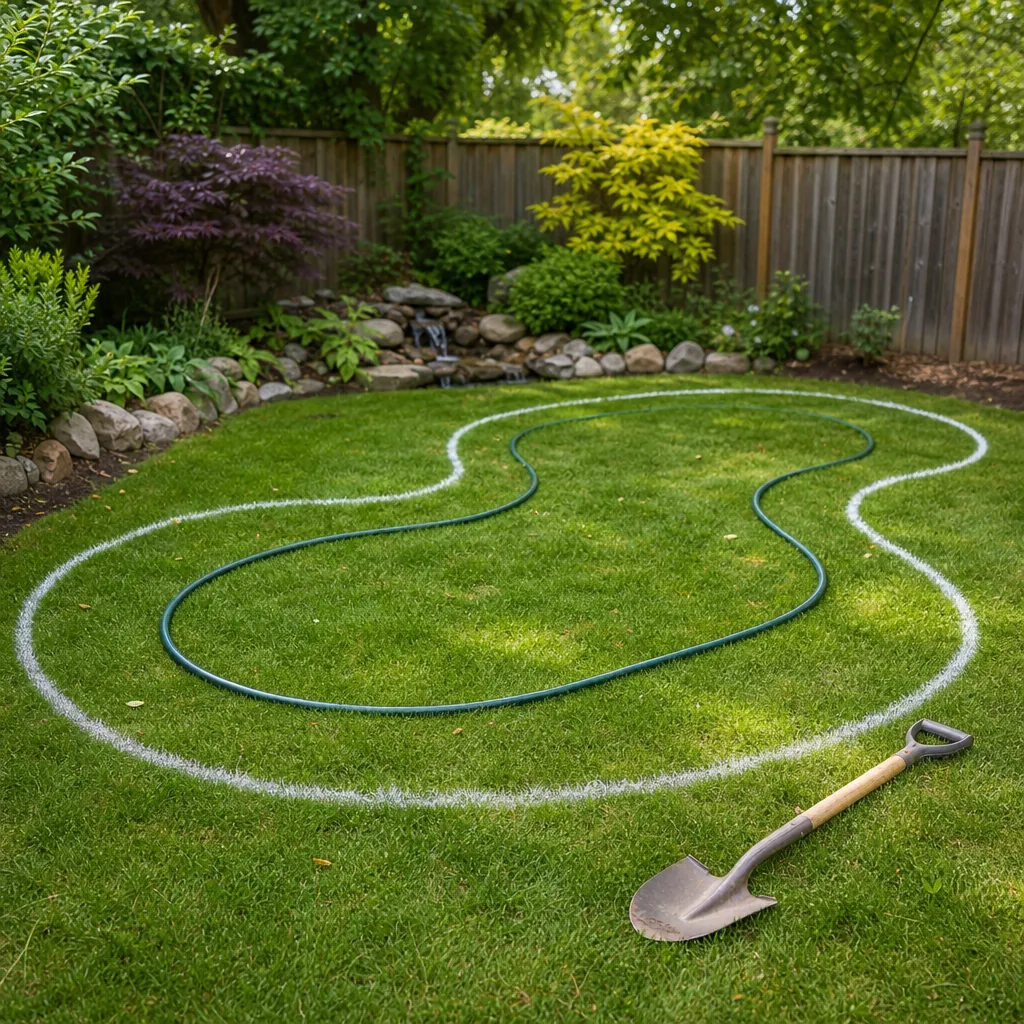
Lay a rope or garden hose on the ground to outline the shape, then live with it for a day or two and adjust. When you’re happy, start digging.
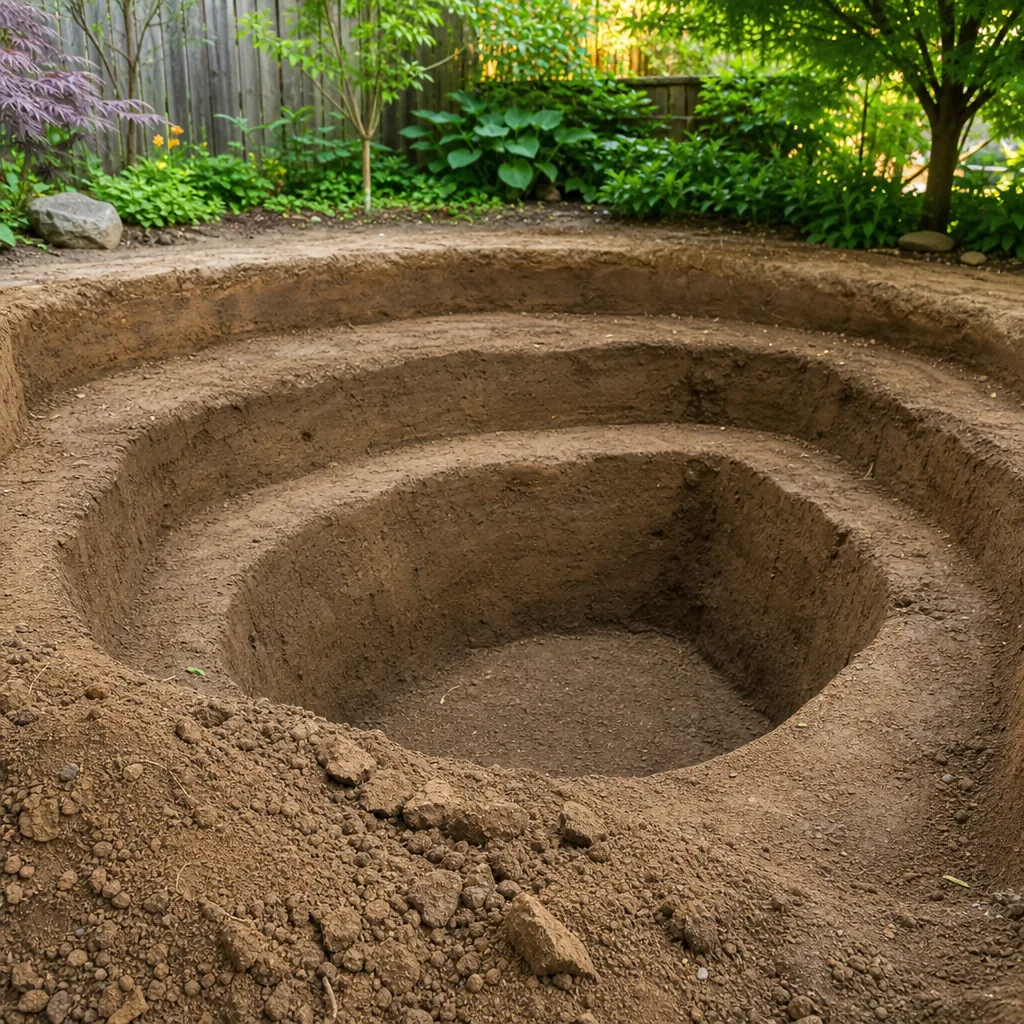
- Dig in shelves. Create a shallow marginal shelf around the edge (roughly 8 to 12 inches deep) for marginal plants, then a deeper central zone.
- Slope the walls slightly rather than cutting them vertical so they don’t collapse and the liner sits better.
- Remove sharp rocks and roots from the hole. Anything pointy can eventually puncture the liner.
- Check that the top edge is level all the way around with a board and a spirit level, or you’ll see liner on one side once it fills.
Step 3: Underlayment and Liner
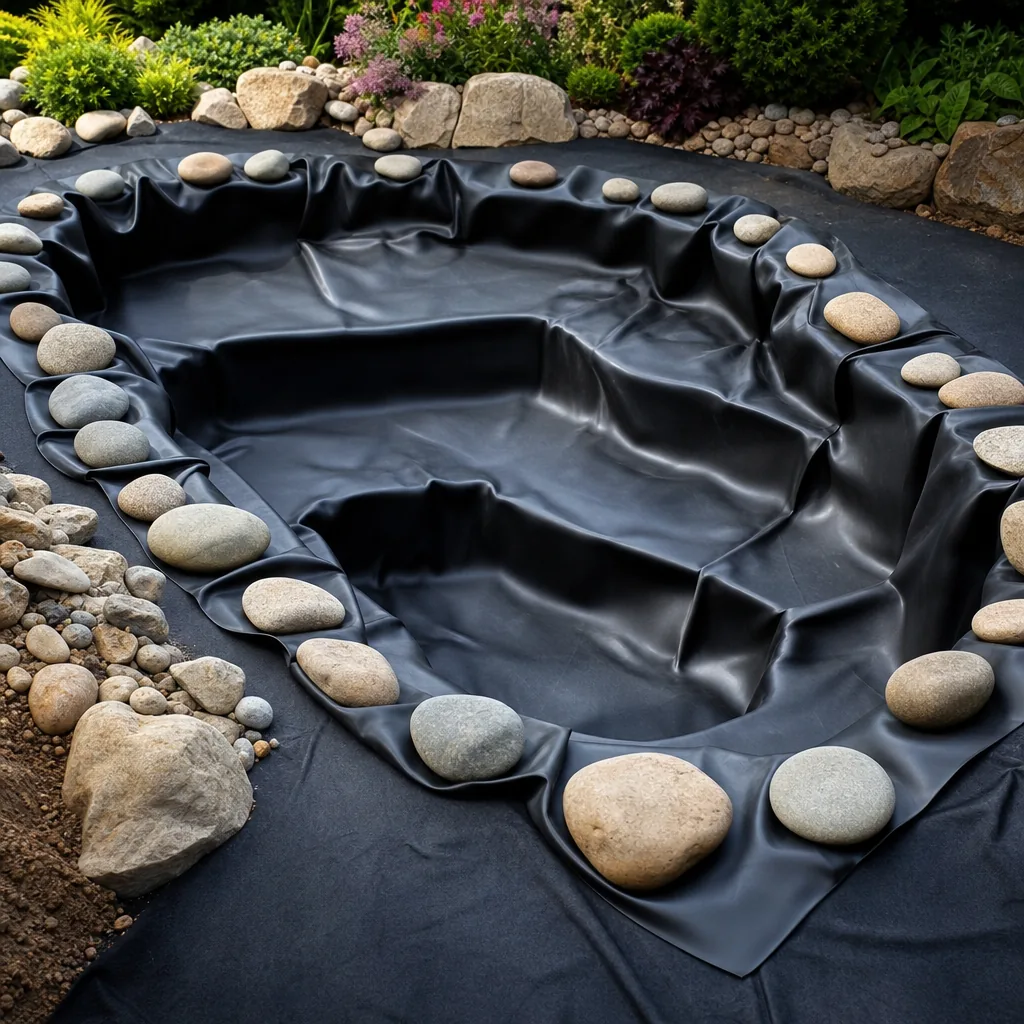
Line the excavation with a protective underlayment, an old carpet, sand, or purpose-made pond underlay, to cushion the liner against anything you missed. Then drape your flexible pond liner loosely into the hole, leaving plenty of overlap at the edges.
Don’t stretch it tight. Let it settle into the contours, then begin filling slowly with water. The weight of the water pulls the liner into shape; smooth out big wrinkles as it fills. Once full, trim the excess liner, leaving a generous border you can hide under edging stone.
Step 4: Pump and Filtration
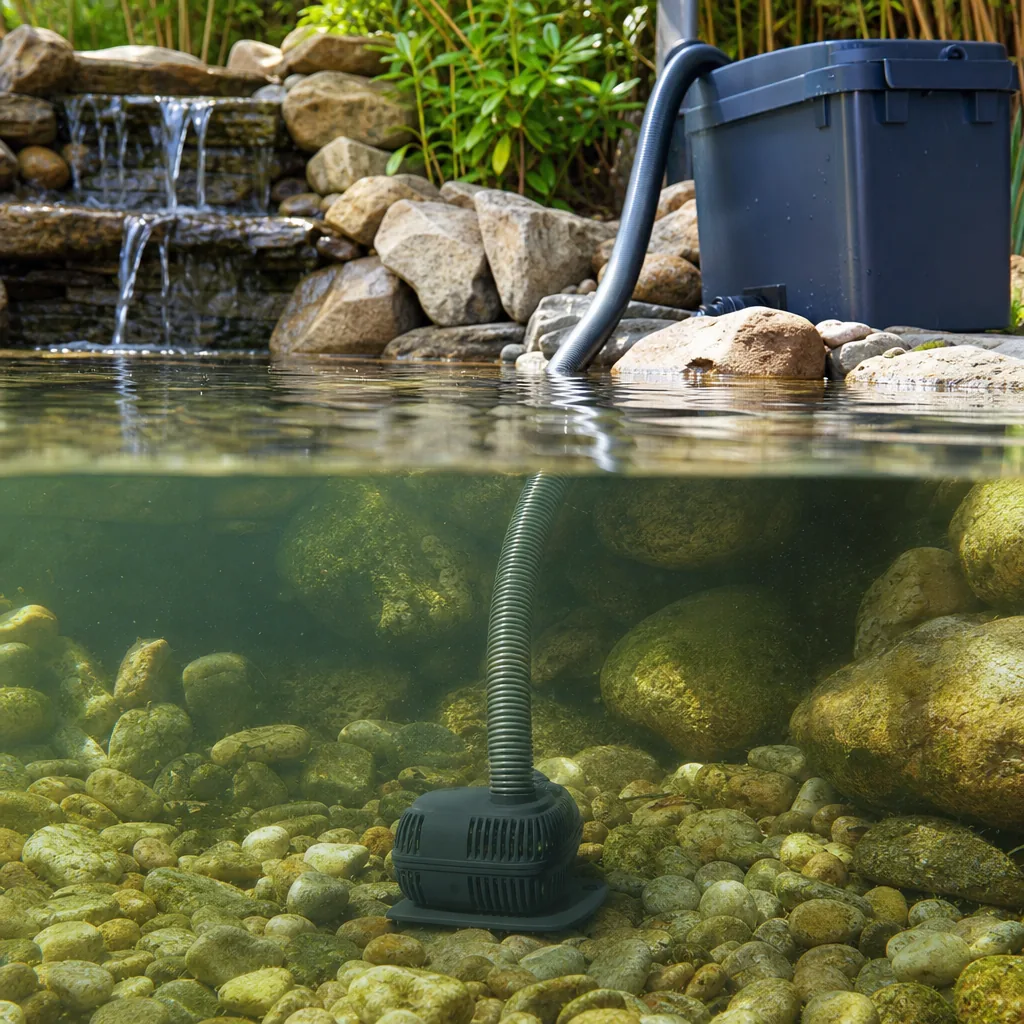
Moving, filtered water is what separates a healthy pond from a stagnant one. You’ll want two things working together:
- A pump sized to circulate the pond’s full volume roughly once an hour at minimum, more if you keep fish.
- A filter that provides mechanical filtration (trapping debris) and biological filtration (housing the bacteria that process fish waste). Many beginners add a UV clarifier here to knock out the green-water algae that turns ponds pea-soup.
If you plan to keep fish, lean toward more filtration than the minimum. You can browse pond pumps and filter kits in our pond gear picks.
Step 5: Edging, Plants, and Aeration
Finish the rim with stone, pavers, or plants to hide the liner and protect it from sunlight. Then start planting. Pond plants aren’t decoration; they’re working filtration that competes with algae for nutrients. A mix of marginal plants on the shelf, submerged oxygenators, and a few floaters does a lot of the water-clarity heavy lifting.
Adding an air stone or aeration kit is a smart upgrade, especially if you’ll have fish or hot summers. Oxygen keeps both fish and beneficial bacteria healthy.
Step 6: Cycle the Water Before Adding Fish
This is the step beginners skip and regret. A brand-new pond hasn’t built up the beneficial bacteria colony that processes ammonia and nitrite into harmless nitrate. Add fish too soon and that waste poisons them.
- Let the pond run with pump and filter for a few weeks before adding fish.
- Add a few hardy plants early; they help establish balance.
- Stock fish gradually, not all at once, so the filter can keep pace with the rising bioload.
Once it’s established, the pond largely runs itself with routine maintenance. For your next steps, our guides on keeping pond water clear and controlling algae will keep it looking its best.
The Bottom Line
Build in shelves, protect your liner, oversize your filtration a little, plant generously, and let the water cycle before fish go in. Nail those fundamentals and you’ll spend your summers enjoying the pond instead of fixing it.
Frequently Asked Questions
How deep should a backyard pond be?
It depends on your goals. A simple plant pond can be fairly shallow, but if you want fish, especially overwintering them in cold climates, you’ll want a deeper zone of at least two feet, often more. Deeper water stays more stable in temperature and chemistry.
Do I need a filter for a backyard pond?
If you’re keeping fish, yes, a filter is essential to process their waste and keep the water safe. A plant-only pond can sometimes balance naturally, but most ponds benefit from circulation and filtration to stay clear and healthy. A UV clarifier also helps prevent green water.
How long before I can add fish to a new pond?
Wait a few weeks while the pond runs and beneficial bacteria establish in the filter. Adding fish too early exposes them to ammonia and nitrite spikes the immature filter can’t handle. Stock gradually rather than all at once to avoid overloading the system.
Why is my new pond water green?
Green water is a free-floating algae bloom, common in new ponds before plants and beneficial bacteria establish. It usually clears as the pond balances. Adding plants for nutrient competition and a UV clarifier on the filter both help control it.
Where is the best place to put a pond?
Choose a spot with partial sun (about four to six hours), away from overhanging trees that drop leaves, and visible from your house so you actually enjoy and maintain it. Always check for buried utility lines before digging.